Featured Active Ingredients & Raw Material Exports
Sourced from Shaanxi's advanced extraction clusters with strict pharmacopeial monograph compliance, verified batch COAs, and global logistics dispatch.
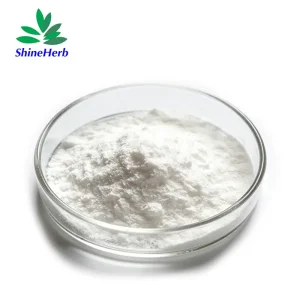
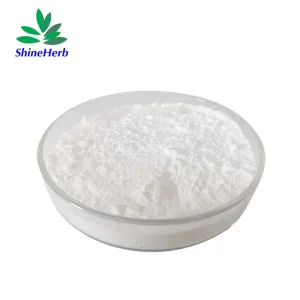
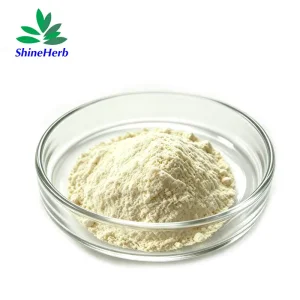
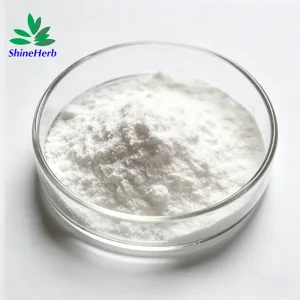
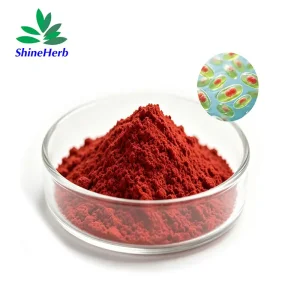
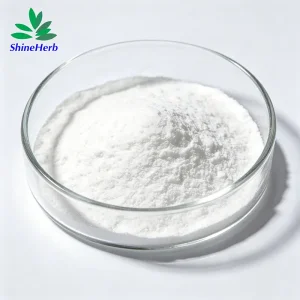
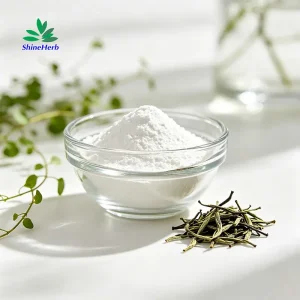
Natural Sclareolide: The Essential Chiral Terpenoid Architecture
Natural Sclareolide (synonyms: Norambreinolid, (3aR,5aS,9aS,9bR)-decahydro-3a,6,6,9a-tetramethylnaphtho[2,1-b]furan-2(1H)-one) represents one of the most commercially coveted bicyclic sesquiterpene lactones in modern industrial biotechnology.
Stereospecific Integrity
Unlike petroleum-derived racemic mixtures that contain inactive stereoisomers, natural Sclareolide extracted from clary sage retains pure chiral configuration (optical rotation [α]D20 = +45° to +48°). This exact three-dimensional orientation is indispensable for downstream cyclization into authentic (-)-Ambroxan.
Precursor To Ambrox
Sclareolide serves as the definitive direct green chemical intermediate for manufacturing Ambrox (Ambroxan). Global flavor and fragrance houses require plant-origin Sclareolide to achieve stable, warm, woody, and persistent ambergris sensory notes without marine wildlife impact.
Cosmeceutical Lipolysis
Beyond fine fragrances, clinical studies highlight Sclareolide's bio-activity in activating adenylate cyclase, elevating intracellular cyclic adenosine monophosphate (cAMP), suppressing adipogenesis, stimulating microcirculation, and soothing UV-induced cutaneous irritation.
Macroeconomic Shifts in Natural Sclareolide Supply Chains
Understanding the geopolitical, agronomic, and green chemical dynamics establishing China as the world's primary manufacturing hub for standardized Sclareolide.
Agricultural Clustering
China's Shaanxi and Xinjiang agricultural corridors provide unique continental microclimates ideal for high-yield Salvia sclarea cultivation. With over 60,000 acres under standardized Good Agricultural and Collection Practices (GACP), China guarantees stable botanical biomass input, insulating international buyers from European crop failures.
Clean Extraction Transition
Historic manufacturing utilized toxic organic solvent extraction protocols. Modern leading Chinese facilities have completely replaced benzene and chlorinated solvents with food-grade anhydrous ethanol, subcritical butane extraction, and high-efficiency supercritical CO2 systems, meeting stringent European REACH regulations.
Decarbonization & Circular Bioeconomy
Multinational FMCG enterprises face aggressive Science-Based Targets (SBTi) mandates. Natural Sclareolide produced by certified Chinese manufacturers presents a substantially lower cradle-to-gate carbon footprint compared to fully synthetic petrochemical pathways derived from nerolidol.
| Analytical Parameter | Pharmacopeial / Industrial Specification | Testing Methodology | Commercial Impact |
|---|---|---|---|
| Assay Purity | ≥ 98.0% (Cosmetic) / ≥ 99.0% (Perfumery Grade) | GC-FID / HPLC Normalized Area | Ensures stoichiometric yield in Ambrox synthesis |
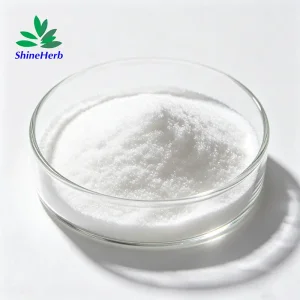
| Physical Appearance | White crystalline powder, needle-like crystals | Visual / Microscopic Inspection | Eliminates color distortion in transparent fine fragrances |
| Melting Range | 124.0 °C to 127.0 °C | Capillary Melting Point (USP <741>) | Thermal confirmation of crystalline polymorph integrity |
| Optical Rotation [α]D20 | +45.0° to +48.0° (c=1 in Chloroform/Ethanol) | Chiral Polarimetry (EP 2.2.7) | Guarantees natural botanical origin, zero synthetic racemates |
| Residual Solvents | Ethanol < 5000 ppm, Hexane < 290 ppm, Acetone < 500 ppm | Headspace GC-MS (USP <467> Class 2/3) | Full compliance with EU Cosmetic Regulation 1223/2009 |
| Heavy Metals Total | Pb < 2.0 ppm, As < 1.0 ppm, Cd < 0.5 ppm, Hg < 0.1 ppm | ICP-MS Inductively Coupled Plasma | Certified safe for topical dermocosmetics and oral formulations |
Global Procurement Benchmarks & Critical Quality Attributes (CQAs)
Procurement executives and R&D formulators must navigate strict validation tiers before approving a Chinese Sclareolide manufacturer onto their qualified supplier list (QSL).
Batch-to-Batch Homogeneity
Industrial distillation towers and continuous vacuum crystallization equipment ensure crystalline size distribution remains constant (typically 80-100 mesh). Consistent particle size accelerates dissolution kinetics during subsequent industrial oxidation, protecting downstream batch yields.
Off-Note Elimination
Residual essential oils (such as linalool, linalyl acetate, or germacrene-D) can alter the neutral olfactory profile of cosmetic-grade Sclareolide. Advanced multi-stage fractional crystallization guarantees the absence of harsh terpene off-notes, ensuring purity for fragrance chemistry.
Complete Dossier Transparency
Top-tier Chinese exporters must provide comprehensive regulatory support: full Certificate of Analysis (COA) per lot, Safety Data Sheet (SDS) according to GHS Rev 8, TSE/BSE Free statements, Non-GMO verification, Vegan attestation, and Kosher/Halal valid certs.
Industrial Solutions: From Fragrance Chemistry to Cosmeceuticals
How world-class manufacturers utilize Natural Sclareolide across distinct industrial verticals to formulate high-performance finished products.
Fine Fragrance Fixatives
Sclareolide acts as an exceptional fixative with intrinsic woody, amber, and tobacco-like facets. It stabilizes highly volatile citrus and floral top notes in premium perfumes, extending fragrance longevity on human skin beyond 48 hours without allergic sensitization risks associated with synthetic nitro-musks.
Dermocosmetic Lipolysis
Applied at 0.1%–0.5% concentrations in slimming lotions and firming creams, Sclareolide activates cellular hormone-sensitive lipase (HSL) via non-adrenergic pathways. Clinical assessments prove significant reduction in subcutaneous adipocyte diameter and improvement in skin surface roughness.
Flavors & Taste Modulation
In food and beverage systems, natural Sclareolide functions under FEMA GRAS provisions as a potent sensory modifier. It harmonizes high-intensity sweeteners, masks astringent aftertastes in plant-based proteins, and elevates mouthfeel in low-calorie nutritional beverages.
Technology Roadmap: 2026–2030 Process Innovations
How Chinese bio-botanical pioneers are advancing extraction engineering, continuous crystallization, and enzymatic catalysis to achieve ultra-pure Sclareolide.
99.5% Solvent Recirculation
Implementing negative-pressure falling-film evaporation and vapor recompression (MVR) systems that recycle extraction solvents with near-zero fugitive VOC emissions.
In-Line NIR Crystallization
Continuous crystallization monitored in real-time by Near-Infrared (NIR) and Focused Beam Reflectance Measurement (FBRM) to enforce strict supersaturation boundaries.
Biomimetic Cyclization
Coupling natural clary sage sclareol intermediate streams with engineered squalene-hopene cyclase (SHC) enzymes for accelerated, non-acidic conversion into pure Sclareolide.
Full Farm-to-Drum QR Auditing
Integrating tamper-proof isotopic ratio mass spectrometry (IRMS) fingerprints into export batch documentation, conclusively proving 100% natural agricultural origin.
B2B Buyer FAQ: Commercial & Analytical Queries
Straightforward technical answers formulated to resolve compliance, quality testing, and supply chain questions for institutional procurement managers.
Additional Standardized Ingredients & Raw Material Supplies
Complementary dietary ingredients, vitamins, pharmaceutical intermediates, and bio-nutritional extracts produced under ISO 9001 and cGMP-aligned manufacturing controls.