High-Purity Active Ingredients & Bioactive Compounds
Verified assay standards, low-impurity profiles, and batch-traceable release documentation engineered for commercial scale nutritional and pharmaceutical manufacturing.
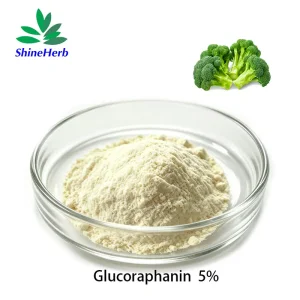
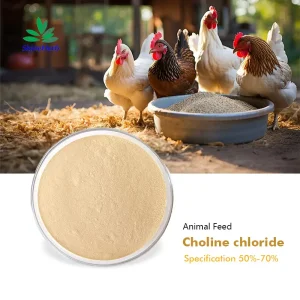
Macro-Industry Challenges & Advanced Supply Chain Architectures
Analyzing critical friction points in international vitamin synthesis, multi-jurisdictional compliance divergence, and end-to-end supply chain de-risking.
Synthesis vs. Biosynthetic Fermentation
The global vitamins market faces profound structural transformations. Traditional chemical synthesis pathways (such as the classic Roche route for Ascorbic Acid or chemical couplings for Thiamine and Pyridoxine) are being rigorously cross-evaluated against microbial submerged fermentation and enzymatic bio-transformations.
As environmental scrutiny tightens across primary chemical production belts, global suppliers must deliver verified carbon-footprint telemetry and closed-loop effluent management without compromising crystalline integrity, optical rotation values, or active assay percentages.
Oxidative Degradation & Kinetic Decay
Vitamins present complex thermo-kinetic degradation profiles. Fat-soluble vitamins (such as Tocopherols, Retinol variants, and Cholecalciferol) are acutely susceptible to photo-oxidation, radical chain peroxyl formation, and matrix-induced isomerization under sub-optimal ambient conditions.
Enterprise exporters must implement nitrogen-purged fluid beds, vacuum-sealed barrier laminate packaging, and tailored micro-beadlet agglomerations using modified starch or gelatin matrix systems to guarantee that labeled active concentrations hold firm throughout international maritime transit.
Trace Contaminant & Genotoxic Profiling
Modern regulatory surveillance leaves zero margin for non-target chemical residues. Beyond classical USP/EP heavy metal thresholds, global health authorities mandate exhaustive screenings for residual catalyst elements, organic volatile impurities (OVIs), nitrosamines, and ethylene oxide (ETO).
Leading vitamin exporters deploy Headspace GC-MS/MS and ICP-MS verification per lot, ensuring that ingredients intended for infant formulas, prescription pharmaceuticals, or clean-label supplements clear entry inspections instantly.
Global Industrial Status & B2B Procurement Economics
Evaluating trade channel consolidation, strategic inventory buffering, and dual-sourcing imperatives across North American, European, and Asia-Pacific industrial corridors.
Geographic Clustering
Over 75% of global bulk water-soluble and B-complex vitamin production capacity is concentrated within consolidated Asian chemical-biotechnology industrial clusters. This provides unparalleled economies of scale, vertical precursor integration, and competitive raw material cost baselines for world markets.
Cross-Border Tariff Hedging
Shifting tariff structures and unpredictable freight indices require agile commercial export structures. Experienced export conglomerates utilize bonded warehousing hubs, strategic inventory buffers in Rotterdam and Chicago, and flexible Incoterms (DDP/CIP) to shield buyers from spot-market volatility.
Demand Surge in Premixes
Industrial livestock feeds, aquaculture feeds, and specialized sports drinks demand custom vitamin-mineral blends. Standardized single-entity vitamins are increasingly procured alongside functional carriers such as Choline Chloride, Corn COB, and Caseinates to optimize direct downstream blending operations.
Dual-Track Quality Strategy
Procurement teams are shifting away from single-source dependencies. By qualifying direct primary manufacturers capable of delivering both high-speed bulk feed-grade material and validated USP/EP/FCC pharma-grade actives, global brands preserve supply chain resilience against geopolitical disruption.
Regulatory Compliance Architecture & Local Market Validation
Harmonizing international production standards with domestic market mandates: comprehensive validation suites that eliminate regulatory hurdles at border control.
Pharmacopoeial Monograph Conformance
Every production batch is mapped against strict multi-compendial requirements:
- USP (United States Pharmacopeia): Rigorous identification assays, infrared absorption verification, and chromatographic purity analysis.
- EP (European Pharmacopoeia): Granular identification of related substances, specific optical rotation ranges, and heavy metal bounds.
- FCC (Food Chemicals Codex): Stringent thresholds for fluorine, arsenic, lead, and microbial limits tailored specifically for functional foods.
Comprehensive Regulatory Dossiers
Commercial shipments are backed by a complete compliance dossier designed for frictionless regional qualification:
- cGMP & ISO 9001/22000: Complete facility audits, air-handling zoning records, and validation batch records.
- BSE/TSE Free Statements: Verifying non-animal origins or validated synthetic processing controls.
- Non-GMO Project Alignment: Comprehensive PCR assay reports confirming genetic purity across all biological precursors.
Regional Dietary Access & Import Licensure
Ensuring immediate consumer and statutory acceptance across key geographic economic zones:
- Halal & Kosher Certified: Inspected processing lines with dedicated, alcohol-free cleaning regimes for Islamic and Jewish markets.
- US FSMA & Foreign Supplier Verification: Dedicated technical support for FDA FSVP compliance documentation.
- EU REACH & Novel Food Support: Technical dossiers, toxicological profiling, and tonnage band registration coverage.
| Ingredient Parameter | Pharma Grade (USP / EP) | Food & Beverage Grade (FCC) | Feed & Premix Grade |
|---|---|---|---|
| Assay Purity (Titration / HPLC) | 98.5% – 101.5% Dry Basis | ≥ 98.0% Dry Basis | ≥ 60.0% – 90.0% Standardized |
| Heavy Metals (Pb, As, Cd, Hg) | < 5 ppm Total (ICP-MS) | < 10 ppm Total | < 20 ppm Total (Target Species Controlled) |
| Residual Solvents (ICH Q3C) | Class 1 Excluded; Class 2/3 Under Limits | Compliance with Food Safety Max | Monitored for Agricultural Safety |
| Microbiological Bioburden | TAMC < 100 CFU/g; Pathogens Absent | TAMC < 1,000 CFU/g; Salmonella Negative | Conforms to Animal Feed Sanitation |
| Primary Documentation Supplied | Full DMF / CEP Support, COA per Lot, Impurity Data | COA, Allergen, GMO, Halal, Kosher, FSMA Docs | COA, Feed Safety Certificate, Bulk Handling Spec |
High-Performance Localized Application Ecosystems
Addressing specialized physical-chemical properties required for stable integration across diverse commercial manufacturing platforms.
Solid Dose: Tablets & Two-Piece Hard Capsules
Direct compression tableting demands superior powder rheology, low friability, and consistent particle size distribution. Poor bulk density leads to weight variation and capping during high-speed rotary press operations.
We supply specialized DC-grade granulations of water-soluble actives (such as Thiamine Mononitrate and Vitamin C DC97) co-processed with microcrystalline cellulose or starch binders to guarantee rapid flowability, uniform blend homogeneity, and rapid dissolution times.
Pectin & Gelatin Gummy Confectionery
The rapid expansion of the gummy delivery format presents unique processing challenges: high thermal stress during cook cycles (over 100°C), low pH pectin gelling environments (pH 3.2–3.6), and intense moisture interactions.
Our microencapsulated vitamins feature lipid-matrix barriers that guard sensitive micronutrients against heat-induced degradation, mask metallic off-notes, and prevent active ingredients from interfering with gummy gel setting kinetics.
Beverage Emulsions & Liquid RTDs
Formulating functional beverages, energy drinks, and dairy-alternative RTDs with fat-soluble vitamins requires complete, stable, and crystal-clear aqueous dispersion. Unmodified hydrophobic vitamins rapidly separate, creating unappealing "oil rings" on packaging necks.
Utilizing specialized food emulsifiers such as Sodium Caseinate and Polysorbate Tween-60, our water-dispersible formulations form sub-micron colloidal emulsions that withstand pasteurization, UHT processing, and extended shelf lives without phase separation.
Technical Roadmap & Next-Generation Delivery Innovations
Pioneering advancements in synthetic biology, liposomal nanotechnology, and clean-label biocatalysis shaping the next decade of ingredient manufacturing.
Precision Fermentation & Genetic Strain Optimization
The future of industrial vitamin synthesis is moving decisively beyond petrochemical building blocks. Through engineered *Pichia pastoris* and *Escherichia coli* microbial strains, next-generation biosynthesis yields bio-identical Vitamin B12, Riboflavin, and active Menatetrenone (Vitamin K2-MK7) with exceptional stereospecific purity.
This clean biotech trajectory slashes carbon intensity by over 45%, eliminates toxic petroleum intermediaries, and delivers 100% all-trans configurations for optimal biological uptake.
Phospholipid Liposomal Nanotechnology
Standard oral vitamins suffer from significant gastrointestinal clearance and low cellular permeability. Our research into phospholipid encapsulation creates bilayer vesicular liposomes (100–180 nm) using non-GMO sunflower phosphatidylcholine.
These nanoscale vesicles shield fragile actives from harsh gastric acids, facilitating direct trans-epithelial absorption via chylomicron pathways and driving systemic bioavailability increases of up to 450% compared to standard powders.
Synergistic Longevity & Metabolic Networks
The boundary between traditional vitamins and advanced longevity nutraceuticals is disappearing. Next-generation supplement architectures combine foundational vitamin cofactors with cellular energizers such as Urolithin A, PQQ Disodium Salt, and Coenzyme Q10.
By supporting coenzyme precursors alongside mitochondrial enhancers, integrated formulas stimulate mitophagy, promote ATP regeneration, and provide holistic solutions for metabolic vitality.
Frequently Asked Questions: Quality, Compliance & Export Logistics
Direct technical answers addressing commercial contracting, analytical validation methods, storage parameters, and international documentation.
What analytical methods are utilized to verify assay potency and purity per shipment? +
How do you maintain stability and prevent oxidation during international ocean transport? +
Can your manufacturing facilities support customized mesh sizes, bulk densities, or premix granulations? +
What standard regulatory compliance documentation accompanies commercial export orders? +
What are your standard commercial order volumes (MOQ), lead times, and sample protocols? +
Functional Nutrients, Emulsifiers & Synergistic Bioactives
Explore our specialized range of carriers, functional peptides, metabolic minerals, and complementary botanical derivatives.