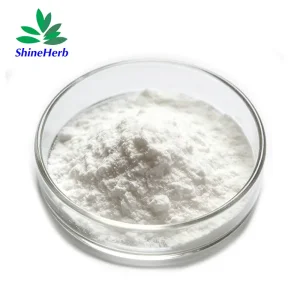
Essential Amino Acid
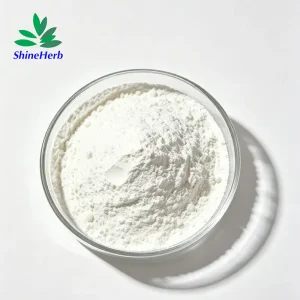
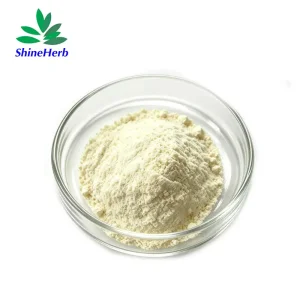
Buy Food Grade L-Tryptophan Powder 99% CAS 73-22-3
Validated high-potency APIs, botanical extractions, and core metabolic building blocks direct from primary cGMP manufacturing installations.
The transition from rudimentary herbal decoctions to validated phytochemical molecular entities dictates modern manufacturing excellence.
Global nutraceutical enterprises no longer procure generic botanical biomass. Modern regulatory audits mandate precise analytical quantification: titrated polyphenols, trans-resveratrol isomers, and standardized ginsenosides verified via validated HPLC-DAD and LC-MS/MS platforms.
Cross-border regulatory directives such as European Pharmacopoeia (EP 2.8.13) and USP <561> impose near-zero tolerances for organochlorine pesticides, aflatoxins, ethylene oxide (EtO), polycyclic aromatic hydrocarbons (PAHs), and toxic residual solvents.
Institutional buyers require documented supply chain transparency from geographic origin (GPS coordinates of wild harvest or GAP-compliant cultivation) to continuous process parameter telemetry, ensuring complete batch segregation.
Examining how Shaanxi's industrial cluster leverages automation, process analytics, and Qinling geographic endowments to mitigate international sourcing risks.
Legacy open-vat boiling causes severe thermolabile degradation. Our Industry 4.0 plant extracts factory architecture employs closed-loop, multi-stage continuous dynamic countercurrent extraction tanks. Real-time SCADA systems calibrate solvent-to-material ratios, temperature windows (accurate to ±0.5°C), and extraction kinetics to isolate target molecules without thermal denaturation.
For lipophilic fractions, high-density supercritical CO₂ systems bypass volatile petrochemical solvents entirely. Complementary ceramic microfiltration and polymeric ultrafiltration cascades fractionate active molecular weight segments prior to low-temperature vacuum crystallization, preserving native stereochemistry.
| Critical Sourcing Metric | Legacy Botanical Extraction Plants | China Factory 4.0 Standardized Facilities |
|---|---|---|
| Process Telemetry | Manual valve operations & batch logs | DCS/SCADA real-time PLC monitoring with immutable audit trails |
| Solvent Recovery | Atmospheric evaporation (>45% loss) | Closed-loop dual-column thin film vacuum recovery (>98% recycle rate) |
| Analytical Verification | Basic spectrophotometry (UV-Vis only) | UHPLC, GC-MS/MS, ICP-MS, 2D NMR, and DNA Barcoding |
| Contaminant Control | Variable terminal radiation | Clean-in-Place (CIP) automated sanitization & clean-room spray drying (Class D) |
How leading formulators engineer plant extract active ingredients into finished dosage vehicles.
Incorporation of standardized Quercetin, Pterostilbene, and Urolithin into targeted longevity capsules, requiring precise particle micronization (<80 mesh) for uniform dissolution.
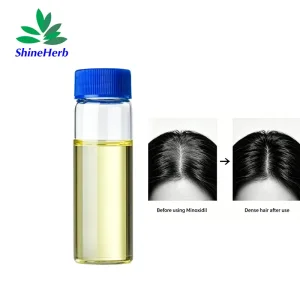
Formulating Niacinamide, Aminolevulinic Acid Phosphate, and Minoxidil into transdermal serums and dermal hair-retention solutions with zero crystallization risk.
Dispersible Shilajit Extract, Pearl Powder, and water-soluble Vitamin A formulations engineered for clear RTD functional beverages without organoleptic bitterness.
Supplying Sodium Taurocholate, Folic Acid, and custom chiral building blocks for downstream synthetic transformations compliant with cGMP API monographs.
How qualified botanical extraction facilities eliminate adulteration risks through institutional chemistry.
Macroscopic, microscopic, and DNA Barcoding to eliminate species substitution (e.g., distinguishing Panax ginseng from adulterant species) prior to warehouse intake.
Spectrophotometric and chromatographic mapping of extraction liquor at hourly intervals to establish maximum recovery of active target markers while arresting extraction before inert tannins co-elute.
Finished lots evaluated by High-Performance Liquid Chromatography (HPLC) with photodiode array detection (PDA) against reference standards to ensure batch chemical consistency.
Inductively Coupled Plasma Mass Spectrometry (ICP-MS) tests for heavy metals (Pb, As, Cd, Hg), accompanied by GC-MS screening for 400+ pesticide residues and EtO clearance.
Direct insights from senior biochemical engineers to assist supply chain managers in qualifying plant extract factories.
Ratio extracts (e.g., 10:1 or 20:1) denote the dry mass of raw biomass processed to produce one unit of finished powder. However, biological variations in wild harvests mean active molecular concentrations can fluctuate significantly. In contrast, standardized extracts guarantee a specific percentage of bioactive markers (such as 95% Quercetin by HPLC or 50% Fulvic Acid in Shilajit), providing predictable physiological efficacy and consistent formulation behavior across batches.
Our extraction facilities operate Class D clean environments and use multi-column continuous vacuum stripping systems. Organic solvent fractions (ethanol, ethyl acetate, or isopropanol) are captured and distilled in real time. Final spray-drying and vacuum oven desiccation stages reduce solvent residues well below the stringent ICH Q3C limits—often dropping ethanol below 500 ppm and achieving non-detectable levels for Class 1 and Class 2 solvents on headspace GC-FID/MS testing.
Hygroscopic extracts (such as pure amino acid powders, fruit-derived organic acids, and fulvic acid derivatives) are processed via specialized low-temperature spray dryers with dehumidified closed-loop air injection. Downstream milling and screening take place within clean rooms maintained at less than 30% relative humidity. For sensitive formulations, we offer liposomal encapsulation, micro-granulation, and multi-layer vacuum foil packaging with internal inert nitrogen purging.
Institutional audit dossiers include a lot-specific Certificate of Analysis (COA) with chromatographic run overlays (HPLC/GC), a Technical Data Sheet (TDS), Safety Data Sheet (SDS/MSDS) under GHS standards, manufacturing flowcharts with Critical Control Points (HACCP), Allergen Declarations, BSE/TSE-Free Certificates, Non-GMO verification, and valid copies of ISO 9001, cGMP, HALAL, and KOSHER credentials.
Accelerated and long-term stability trials are conducted in accordance with ICH Q1A guidelines (e.g., 25°C/60% RH for long-term and 40°C/75% RH for accelerated stress). Samples are sealed in commercial-grade packaging barrier films and analyzed at 0, 3, 6, 9, 12, 24, and 36-month intervals for physical appearance, active marker retention via HPLC, related impurities, moisture gain (Karl Fischer), and microbial counts.
Explore certified nutraceutical ingredients, specialized minerals, and functional plant powders with complete batch traceability.