
Primary Portfolio Catalog
High-Purity Verified Actives & Intermediates
Batch-traceable synthesis, validated organometallic chelates, and monograph-tested bioactive ingredients engineered for global brand formulations.
Best Undecylenoyl Phenylalanine Sepiwhite MSH Powder Cosmetic Skin Brightening Raw Material Manufacturers, Companies
Order Monograph & Sample
Best Bulk Vitamin A Palmitate Powder Manufacturer for Supplement Manufacturer, Company
Order Monograph & Sample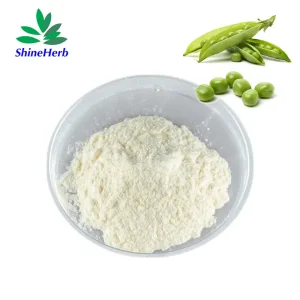
High-Quality Natural Pea Protein Peptide Powder Hydrolyzed Pea Protein Bulk Manufacturers, Supplier
Order Monograph & Sample
Best Vitamin B1 Powder 59-43-8 Thiamine Wholesale Price Manufacturers, Suppliers
Order Monograph & Sample
High-Quality High quality Copper Glycinate Manufacturer spot supply Manufacturer, Exporters
Order Monograph & Sample
Buy Cephalotaxine 98% Powder CAS 24316-19-6 Manufacturer Manufacturer, Companies
Order Monograph & Sample
Buy 100% Natural D Alpha Tocopherol ingredient Vitamin E Oil Antioxidative Supplier, Companies
Order Monograph & Sample
Technical Monograph
Coordination Chemistry of Amino Acid Chelates
Understanding bio-transport mechanisms, cyclic chelate ring stability, and the molecular elimination of antagonistic gastrointestinal interactions.
Coordination Ring Formation
Unlike simple electrostatic salts (e.g., oxides, sulfates, carbonates), true chelates utilize both the alpha-amino and carboxylate groups of an amino acid ligand (such as glycine or methionine) to form stable, heterocyclic five-membered rings with a central transition metal ion. This covalent coordinate bond insulates the metal cation, dramatically preventing premature ionization in gastric acids.
Intestinal Dipeptide Pathway
True amino acid chelates traverse the acidic stomach intact, circumventing the conventional mucosal DMT1 (Divalent Metal Transporter 1) pathway. Instead, they leverage PEPT1 (Peptide Transporter 1) systems as intact dipeptide-like molecules. This bypass prevents metallic competition with iron, zinc, and calcium while completely neutralizing hydroxyl-radical mediated mucosal damage.
FTIR & XRD Validation
Every genuine organic chelate possesses distinct infrared vibrational shifts (COO- asymmetric stretching shifts from 1590 cm⁻¹ down to 1570 cm⁻¹, and primary amine -NH2 shifts from 3300 cm⁻¹). We reject simplistic physical dry-blends by running full FTIR fingerprinting, powder X-ray diffraction (XRD), and potentiometric titration on every produced industrial batch.
Application Engineering
Cross-Sector Formulation Architectures & Regional Applications
Strategic deployment of pure crystalline amino acids and biologically available chelates across varied commercial and regional sectors.
Sports & Clinical Nutraceuticals
Formulation of branched-chain recovery matrices (L-Leucine, L-Isoleucine, L-Valine) and endogenous glutathione precursors (USP-grade N-Acetyl-L-Cysteine). When combined with bisglycinate minerals (Magnesium L-Threonate, Zinc Bisglycinate), these formulas enhance cellular membrane permeation without causing the osmotic diarrhea or gastric distress commonly induced by raw mineral oxides.
Advanced Cosmeceuticals & Peptides
Bio-conjugated amino acids such as Undecylenoyl Phenylalanine (Sepiwhite MSH) and Copper Glycinate complexes trigger melanotropin receptor inhibition and stimulate procollagen-1 synthesis. These lipophilic and coordinated molecules optimize trans-epidermal penetration, driving clinical anti-pigmentation and dermis-restoration results across luxury skincare systems.
Precision Agriculture & Bio-Chelation
In high-pH alkaline soils across Southern Europe, Latin America, and MENA regions, inorganic iron and copper precipitate irreversibly as insoluble hydroxides. Our plant-derived amino acid chelates (enzymatically hydrolyzed pea peptides coordinated with micronutrients) prevent mineral lock-out, boosting foliar absorption efficiency by over 320% relative to standard synthetic EDTA chelates.
Technology Roadmap
The 2026–2030 Mineral Chelation & Synthesis Evolution
A multi-generational benchmark illustrating the structural evolution from raw inorganic salts to modern synthetic biology coordinates.
| Generation | Structural Complex | Bioavailability | Gastric Tolerance | Industrial Synthesis Route |
|---|---|---|---|---|
| Gen 1 (Legacy) | Inorganic Salts (Sulfates, Oxides, Carbonates) | 10% – 18% (Poor) | Low; causes metallic nausea, reactive cramps, and mucosal lesions | Direct acid neutralization and crude evaporation crystallization |
| Gen 2 (Synthetic) | EDTA, Citrates, Gluconates | 30% – 45% (Moderate) | Moderate; non-selective cation displacement in bile | Synthetic organic acid complexation |
| Gen 3 (Modern Standard) | True Bisglycinate & Amino Acid Coordination Salts | 75% – 90% (High) | Excellent; bypasses gastric ionization via PEPT1 intestinal uptake | Aqueous liquid-phase multi-stage coordination; spray-drying refinement |
| Gen 4 (Next-Gen) | SynBio Enantiopure Chelates & Neuro-Crossers (e.g. Magnesium L-Threonate) | 95%+ (Exceptional) | Perfect; non-reactive target tissue and blood-brain barrier transport | Precision engineered microbial fermentation, continuous membrane separation |
Supply Chain Architecture
Chinese Manufacturing Ecosystem: Resilience, Traceability & Scale
Our centralized production cluster in Xi'an bridges advanced biocatalysis engineering with raw material access across Eurasia and Asia-Pacific.
Upstream Petrochemical & Sugar Decoupling
China commands over 78% of the world's upstream microbial fermentation precursors (corn starch hydolysates, molasses, and synthetic organic intermediates). Our supply footprint remains resilient to global commodity shocks through integrated backwards-linkages from feedstocks to finished pharma-grade crystals.
Continuous Closed-Loop Automation
Our 8,600 m² cGMP Xi'an production hub operates fully automated closed-loop reaction vessels. Temperature, ligand-to-metal molar stoichiometric ratios, and pH are constantly monitored using AI-driven industrial sensors to eliminate uncoordinated free metal salts.
Dual-Track Clean Room Packaging
Hydrophobic amino acids and highly hygroscopic chelates (such as Copper and Zinc Glycinates) are spray-dried with controlled mesh distributions (80 to 200 mesh) inside ISO Class 7 clean rooms. Vacuum barrier multi-layer aluminum packaging preserves chemical stability across humid marine transit.
20+
Years Sourcing & Export Mastery
8,600m²
Modern cGMP Extraction & Synthesis Hub
≥99.2%
Average Monograph Assay Purity
100%
Traceable Multi-Stage Batch Release
Compliance & Reliability
Stringent Regulatory Portfolios for Regulated Jurisdictions
Accelerating border clearance and product registrations across the United States, European Union, APAC, and the Middle East.
North American Compliance (FDA / USP)
Full support for 21 CFR Part 111 cGMP compliance audits. Every lot of N-Acetyl-L-Cysteine, Magnesium L-Threonate, and related amino derivatives is supplied with quantitative elemental analysis, residual solvent screens according to USP <467>, and heavy metal profiles tested via ICP-MS matching USP <232>/<233>.
European Union Standards (EFSA / EP)
Rigid monitoring of ethylene oxide (ETO), polycyclic aromatic hydrocarbons (PAH4), and pyrrolizidine alkaloids. All raw materials conform to Regulation (EC) No 1881/2006. Chelates and active peptides strictly reflect the European Pharmacopoeia (EP) and authorized forms under Regulation (EC) No 1925/2006.
Global Cultural & Safety Registrations
Our plants hold ongoing certifications under ISO 9001, ISO 22000, and HACCP frameworks. To support international distribution in diverse markets, production lines feature recognized HALAL and Kosher verification protocols, ensuring non-animal, BSE/TSE-free purity across every processing run.
Secondary Portfolio Catalog
Advanced Nutritive, Cellular & Botanical Derivatives
Direct supply line for high-potency co-factors, active cosmetics, and specialized longevity molecules produced under pharmaceutical protocols.
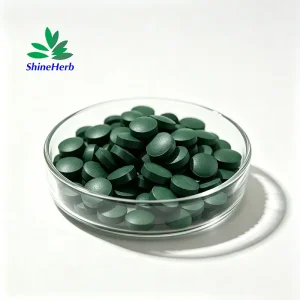
High-Quality Factory Supply Spirulina Powder High Quality Natural Spirulina Tablet Companies, Company
Order Monograph & Sample
China China Manufacturer L-Carnitine Powder USP Standard API Raw Material Supplier, Exporter
Order Monograph & Sample
Buy Cosmetic Grade Tranexamic Acid Powder CAS1197-18-8 Skin Brightening Raw Material Manufacturers, Exporters
Order Monograph & Sample
Buy Wholesale Sulbutiamine 99% Powder for Dietary Supplement Suppliers, Supplier
Order Monograph & Sample
Best Magnesium L-Threonate Supplement Boost Memory Focus & Deep Sleep Manufacturers, Suppliers
Order Monograph & Sample
Best High Purity D-Biotin Powder Vitamin B7 for Hair Growth & Dietary Supplement Ingredient Manufacturer, Exporter
Order Monograph & Sample
Buy Apigenin 98% Natural Flavonoid Ingredient for Dietary Supplements Manufacturers, Factory
Order Monograph & Sample
Best High Purity Fullerene C60 Cosmetic Grade wholesale Companies, Factories
Order Monograph & Sample
Procurement & Technical FAQ
Frequently Asked Questions for Formulation Chemists & Global Importers
Straight answers regarding structural verification, chelate authenticity testing, minimum run economics, and lead-time frameworks.
How do you analytical-chemically distinguish a true amino acid chelate from a physical dry-blend of oxide and amino acids?
A simple dry blend reveals unreacted metal crystals under Powder X-Ray Diffraction (PXRD) along with distinct FTIR spectra for free amino acid carboxyl and amine terminals. In an authentic, chemically coordinated chelate (such as Copper Glycinate or Magnesium Bisglycinate), coordinate bonding creates a distinct heterocyclic 5-membered ring. This shifts the asymmetric carbonyl (COO-) stretch in FTIR spectroscopy and forms an amorphous or altered crystalline matrix under XRD. We verify every batch via potentiometric titration and multi-stage FTIR fingerprinting.
Why does Magnesium L-Threonate show superior central nervous system bioavailability compared to traditional Magnesium Citrate or Glycinate?
L-Threonic acid is a specialized downstream metabolite of ascorbic acid. When coordinated with magnesium, the resulting complex crosses lipid bi-layers via carrier-mediated channels and traverses the blood-brain barrier (BBB) far more effectively than other salt forms. Peer-reviewed research demonstrates that Magnesium L-Threonate elevates cerebrospinal fluid magnesium concentrations by up to 15% within key neural regions (like the hippocampus), enhancing synaptic density without inducing the osmotic laxative effects common to magnesium oxide or citrate.
What documentation accompanies ShineHerb Biotech bulk shipments to satisfy FDA and EU custom audits?
Every shipment arrives with a batch-specific Certificate of Analysis (COA) cross-referenced against USP/EP/FCC criteria. Our standard export compliance file includes: 1) Full Heavy Metal ICP-MS report (Pb, As, Cd, Hg); 2) Gas Chromatography residual solvent profiles matching USP <467>; 3) Verified Microbiological testing sheets (Total Plate Count, Yeast/Mold, E. coli, Salmonella); 4) Detailed Allergen and Non-GMO declarations; and 5) Certificate copies covering ISO 9001, HACCP, HALAL, or Kosher certification where required.
How do you solve the oxidation issues common to active amino acids like N-Acetyl-L-Cysteine (NAC) and Vitamin E compounds?
N-Acetyl-L-Cysteine contains a reactive free sulfhydryl (-SH) group prone to dimerization into di-NAC when exposed to moisture and oxygen. We process pure NAC powders in humidity-controlled rooms (<35% RH) and package them under pharmaceutical nitrogen flushes inside triple-barrier moisture-proof aluminum foil bags. For heat- and light-sensitive fat-soluble nutrients like D-Alpha Tocopherol and Vitamin A Palmitate, we use antioxidant-stabilized matrices and microencapsulation technologies to deliver shelf life exceeding 24 months.
Can custom particle distributions, bulk densities, or OEM formulations be engineered at the factory level?
Yes. We provide precision air-jet milling and fluidized-bed granulation. Whether you need ultrafine 200-mesh powders for smooth beverage dissolution or directly compressible (DC grade) granules for high-speed tableting lines, we calibrate particle size distributions, bulk densities (0.45 g/ml to 0.85 g/ml), and flowability metrics to your production specifications.