
Active Ingredients Portfolio
Featured Bulk Raw Materials & Precursors
Procure pharmaceutical-grade and functional food additives manufactured under strict cGMP protocols, verified by HPLC and fully certified for international export.
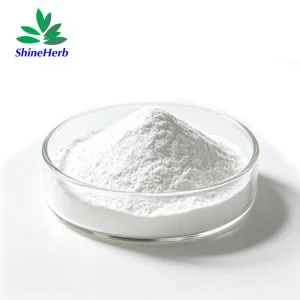
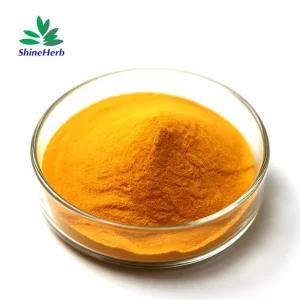
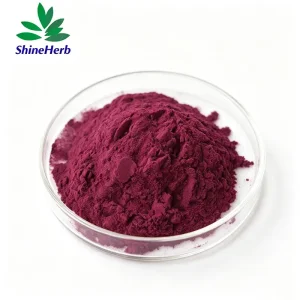
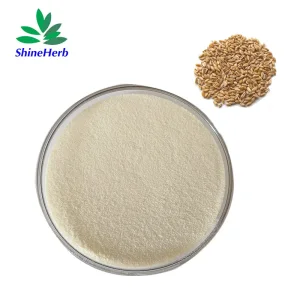
Technical Specification & Monograph
Industrial Monograph: Lyophilized Honey Powder
Understanding the sublimation science behind vacuum freeze-drying versus conventional spray-drying in apicultural raw material processing.
Cryogenic Preservation
Unlike thermal spray-drying which subjects crude honey to air temperatures between 140°C and 180°C (degrading thermolabile diastase, invertase, and glucose oxidase enzymes), lyophilization operates at -45°C to -50°C under high vacuum (<0.1 mbar). This ensures complete molecular integrity of fragile flavonoids, bioactive polyphenols, and essential amino acids.
Carrier Optimization Matrix
Crude honey is naturally high in fructose and glucose with an exceptionally low glass transition temperature (Tg ≈ -40°C to -45°C), making it prone to high hygroscopicity and caking. Our proprietary manufacturing incorporates pharmaceutical-grade cyclodextrins, maltodextrin (DE 10-12), or gum arabic carriers to stabilize amorphous sugars into free-flowing, non-stick crystalline structures.
HMF & Diastase Standard
Thermal degradation generates Hydroxymethylfurfural (HMF), a key indicator of degraded or adulterated honey. Our lyophilized powder maintains HMF levels below 15 mg/kg (far exceeding the EU standard of <40 mg/kg) and preserves native diastase activity numbers (>8 Schade units), providing undeniable laboratory proof of cold-chain preservation.
| Analytical Parameter | Lyophilized (Freeze-Dried) Honey Powder | Standard Spray-Dried Honey Powder | Testing Method |
|---|---|---|---|
| Operating Temperature | -45°C to +35°C Sublimation | 140°C to 190°C Hot Air Flash | In-line SCADA Probe |
| Carrier Concentration | Minimal (20% – 30% or 100% Pure available) | High (40% – 60% Maltodextrin required) | Calculated Solid Yield |
| Diastase (Amylase) Retention | > 92% of original raw honey | < 15% (Extensive thermal denaturation) | Ph. Eur. / Schade Method |
| Hydroxymethylfurfural (HMF) | < 10 mg/kg (Zero thermal degradation) | 40 – 80 mg/kg (Elevated Maillard reactions) | HPLC-DAD (285 nm) |
| Reconstitution Kinetic | Instant dissolution in cold liquids (<10s) | Clumping tendency; requires shear mixing | Laser Diffraction Turbidimetry |
Supply Chain Resilience
Strategic Manufacturing Advantages of Chinese Facilities
Leveraging indigenous apicultural biodiversity, deep vertical integration, and advanced cryogenic vacuum technology in Xi'an and adjacent ecological corridors.
Qinling Ecological Nectar
Our raw botanical supply chain draws from uncontaminated apiaries situated across the Qinling Mountains, ensuring wild floral diversity including Acacia, Linden, and Vitex nectars completely free of industrial synthetic pesticides and agricultural runoff.
Continuous Industrial Lyophilizers
Equipped with automated 200m² industrial freeze-drying chambers with automated tray charging, isolated condensing surfaces, and SCADA-controlled sublimation loops that lower processing utility costs while scaling tonnage throughput exponentially.
Isotope & Adulteration Defense
To comply with stringent EU and US FDA import mandates, our on-site laboratories employ Elemental Analyzer - Isotope Ratio Mass Spectrometry (EA-IRMS) and LC-MS/MS testing to detect and rule out C4 sugar adulteration (corn, cane) and exogenous C3 syrup blending.
Economies of Scale & Fast Transit
Centralized freight lanes via the Eurasia Rail Link and direct deep-water port access (Qingdao, Shanghai) facilitate consistent FOB and CIF deliveries with streamlined customs documentation, including phytosanitary health clearance and certificate of origin endorsements.
Industry Macro Trends
Market Evolution & Emerging Formulation Drivers
Global B2B procurement patterns are shifting rapidly toward non-GMO, functional sweetening systems with verified biological activity.
Clean-Label Reformulation Wave
Major food conglomerates are systematically replacing synthetic high-fructose corn syrup, refined sucralose, and artificial flavor complexes with lyophilized honey powder. Modern consumers demand transparent, recognizable back-of-pack declarations where pure honey acts simultaneously as a natural sweetening agent, humectant, and bioactive enhancer.
Microbiome & Prebiotic Synergies
Contemporary clinical research demonstrates that native honey oligosaccharides (such as isomaltulose, maltulose, and kestose) behave as exceptional prebiotic fuels for intestinal Bifidobacterium and Lactobacillus colonies. Freeze-dried honey powder is experiencing exponential adoption in synbiotic dietary supplements and gut-health sachets.
Waterless & Powder Cosmetics (Clean Beauty)
The global luxury cosmetics industry is accelerating toward anhydrous and powdered skin-care formats to eliminate synthetic preservatives and lower shipping weight footprints. Lyophilized honey delivers potent natural gluconic acid, hydrogen-peroxide generating enzymes, and trace minerals for direct reconstituting face masks, cleansers, and solid beauty bars.
Cross-Sector Applications
Industrial Solutions & Formulation Paradigms
Engineered physical properties (mesh size, bulk density, instantaneous solubility) solved for precise industrial dosing parameters.
Solid Dosage Nutraceuticals
Liquid honey cannot be directly compressed into dietary tablets or packaged in hygroscopic gelatin capsules. Lyophilized powder solves capping, sticking, and die-friction during rotary tablet compression, allowing high inclusion rates (>350 mg per tablet) with excellent mechanical hardness and fast disintegration times.
Sports & Endurance Powders
Possessing a low glycemic variability compared to pure glucose, honey offers an optimal 1:1 ratio of fructose to glucose that optimizes carbohydrate uptake pathways (SGLT1 and GLUT5 transporters) simultaneously. It eliminates GI distress in ultra-endurance instant drink blends, electrolyte sachets, and energy powder mixes.
Industrial Dry-Mix Baking & Coatings
Replaces synthetic glaze systems and liquid syrups on commercial cereal processing lines. Its fine mesh granulation (80–120 mesh) guarantees homogenous distribution across bulk dry flour matrices, enhancing non-enzymatic golden browning reactions and moisture retention in frozen par-baked products.
Anhydrous Derma-Cosmetics
Acts as an anti-inflammatory, hygroscopic humectant in sterile post-procedure wound ointments, exfoliating powder cleansers, and soothing clay facial masks. Reconstitutes instantly in water or active plant hydrosols without residual crystalline sediment or gritty mouthfeel.
Auditing & Quality Control
Global Procurement Criteria: Meeting International Compliance
How qualified manufacturers mitigate risks concerning pesticide residues, heavy metals, microbial safety, and antibiotic limits.
Zero Veterinary Residue Standard
Global pharmaceutical auditors require comprehensive LC-MS/MS antibiotic screening. Every batch is certified non-detectable for Chloramphenicol, Nitrofurans (AOZ, AMOZ, AHD, SEM), Sulfonamides, Fluoroquinolones, and Tetracyclines, compliant with EC Regulation No 37/2010.
Heavy Metal & Pyrrolizidine Alkaloids
Inductively Coupled Plasma Mass Spectrometry (ICP-MS) guarantees compliance with California Proposition 65 and European Commission thresholds: Lead (Pb) < 0.1 ppm, Arsenic (As) < 0.1 ppm, Cadmium (Cd) < 0.05 ppm, and Mercury (Hg) < 0.01 ppm, alongside strict PA alkaloids monitoring.
Physical-Chemical Reproducibility
Procurement teams receive full COA documentation per production lot detailing water activity (aw < 0.25 to prevent Osmophilic yeast growth), moisture content (< 3.0%), bulk density, tapped density, and particle size distribution curves for precise packaging line automation.
cGMP Verified
ISO 9001:2015
ISO 22000 / HACCP
Kosher Certified
Halal Certified
Non-GMO Project Verified
Specialty Actives Portfolio
High-Purity Bio-Functional Ingredients
Explore our companion specialty catalog designed for nutraceutical innovators, cosmetic chemists, and institutional contract manufacturing organizations.
Technical Support & Due Diligence
Frequently Asked Technical Questions (FAQ)
Clear, scientific, and commercial guidance addressing common technical, regulatory, and logistics queries for international procurement teams.
What is the fundamental technical difference between spray-dried and lyophilized honey powder?
Spray-dried honey powder is produced by atomizing honey into high-temperature hot air (140°C–180°C). This thermal flash deactivates native honey enzymes (such as invertase, diastase, and glucose oxidase) and triggers Maillard reactions that elevate HMF (Hydroxymethylfurfural) levels while requiring upwards of 50% carrier maltodextrin. Lyophilized (freeze-dried) honey powder is processed via vacuum sublimation below -45°C. At this cryogenic temperature, moisture is sublimated directly from solid ice to vapor, preserving 90%+ of the native enzymes, aromatic volatiles, delicate bioflavonoids, and natural golden color with minimal carrier addition.
Why is a carrier matrix necessary for commercial-grade honey powder?
Pure natural honey contains approximately 70%–80% low-molecular-weight monosaccharides (fructose and glucose). Fructose has an extremely low glass transition temperature (Tg ≈ 13°C), meaning pure dehydrated honey rapidly transforms from an amorphous powder into a sticky, gummy state upon minimal exposure to ambient moisture or room temperature. By adding tailored amounts of pharmaceutical-grade Tapioca Maltodextrin, Cyclodextrins, or Gum Acacia, the glass transition temperature is raised well above ambient storage levels (>50°C), ensuring long-term free-flowing properties and preventing agglomeration.
How do you verify authenticity and detect foreign syrup adulteration?
Our factory testing protocols strictly adhere to international AOAC and EU guidelines. Every lot undergoes EA-IRMS (Elemental Analysis - Isotope Ratio Mass Spectrometry) testing to calculate the delta 13C isotope value, comparing whole honey protein with raw honey solids to detect C4 plant additions (cane or corn syrup) down to 7%. Additionally, High-Performance Anion-Exchange Chromatography with Pulsed Amperometric Detection (HPAEC-PAD) and LC-HRMS are utilized to screen for extraneous C3 beet sugars, rice syrups, and industrial starch adulterants.
What are the optimal storage conditions and shelf-life metrics for bulk containers?
Lyophilized honey powder is packaged in multi-barrier aluminum foil vacuum pouches enclosed in fiber drums with food-grade silica desiccants. The product maintains a guaranteed shelf life of 24 months when stored unopened in a cool, dry warehouse below 25°C and under 50% relative humidity. Because the powder is intrinsically hygroscopic, bulk packaging containers should be resealed immediately after dispensing in cleanroom manufacturing environments.
Can customized particle mesh sizes or carrier types be manufactured for OEM contracts?
Yes. We provide flexible OEM/ODM manufacturing solutions. While our standard specification is 80 mesh with non-GMO maltodextrin (DE 10), we can mill to ultrafine 120 mesh for cosmetic water-soluble suspensions or modulate the mesh to granular 40 mesh for direct tableting blends. We also support custom carrier formulations including certified organic tapioca starch, inulin, or carrier-free vacuum-crystallized batches for high-potency applications.