Featured Bulk Bioactive Ingredients: Phase I Procurement Portfolio
Verified analytical monographs, full batch traceability, and rapid sample qualification for international formulation lines.
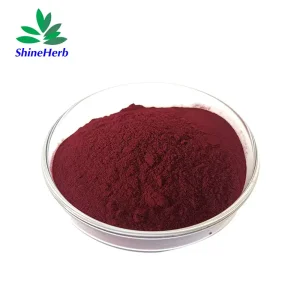
Buy Shineherb High Quality Food Grade Vitamin B12 Cyanocobalamin Powder Manufacturer, Suppliers
Procurement Dossier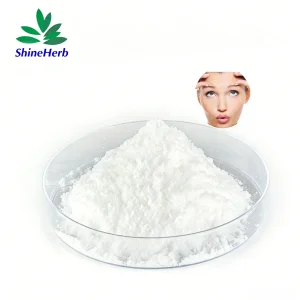
China Argireline Peptide Anti-Wrinkle Ingredient for Cosmetic Ingredient Manufacturer, Exporter
Procurement Dossier
Buy Chenodeoxycholic Acid Powder High Quality Raw materials CAS 74-25-9 Company, Factory
Procurement Dossier
Wholesale Factory Supply High Purity D-chiro Inositol Extract DCI Raw Material Manufacturer, Factories
Procurement Dossier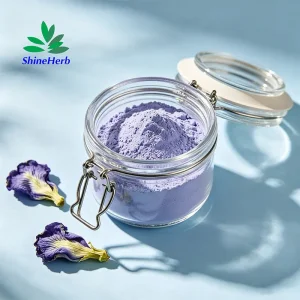
China Bulk Butterfly Pea Flower Powder Natural Color Shifting Pigment For Drinks & Baking Suppliers, Exporter
Procurement Dossier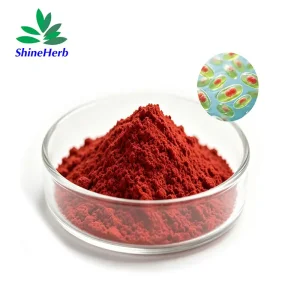
Best Natural Astaxanthin Powder from Haematococcus pluvialis Bulk Supplier Manufacturers, Exporter
Procurement Dossier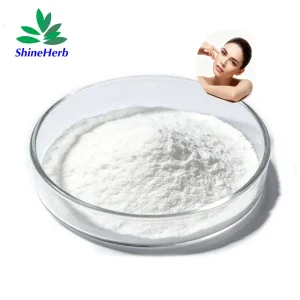
Wholesale Anti Wrinkle Tripeptide-29 Cosmetic Peptide CAS 2239-67-0 Gly-PRO-Hyp Exporter, Factories
Procurement Dossier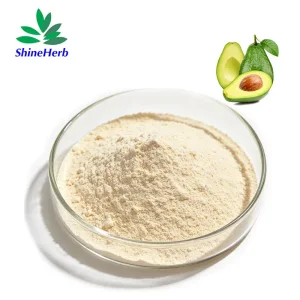
Best Wholesale Natural Avocado Soybean Unsaponifiables Extract ASU Powder for Joint Mobility Dietary Supplement Manufacturers, Companies
Procurement DossierSiberian Ginseng (*Eleutherococcus senticosus*): Global Sourcing Matrix & Structural Phytochemistry
A comprehensive B2B supply chain audit, standardizing secondary metabolites, resolving identification fallacies, and navigating international regulatory thresholds.
In the contemporary botanical extract sector, few adaptogenic phytomedicines occupy a position as commercially critical and analytically scrutinized as Siberian Ginseng Extract, botanically denominated as Eleutherococcus senticosus (Rupr. & Maxim.) Maxim. (Araliaceae). Serving global pharmaceutical, nutraceutical, and performance beverage formulations, wholesale demand for standardized Siberian Ginseng derivatives has surged at an annualized compound rate exceeding 7.2%. However, enterprise procurement teams, contract manufacturers (CMOs), and lead formulation scientists face severe market hurdles: pervasive botanical misidentification, deliberate adulteration with *Periploca sepium*, fluctuating marker concentrations, and stringent multiresidue limits across the European Pharmacopoeia (Ph. Eur.), the United States Pharmacopeia (USP), and the Chinese Pharmacopoeia (ChP).
As premier specialized manufacturers and wholesale exporters operating out of Shaanxi's central botanical corridor with direct agro-forestry supply chains spanning Heilongjiang and the Changbai Mountain ecosystems, ShineHerb Biotech delivers verified chemical authenticity, validated counter-current hydro-ethanolic extraction, and zero-adulterant export grade botanical active ingredients. This dossier serves as an exhaustive procurement guide and technical whitepaper for global supply chain leaders requiring HPLC-verified Eleutheroside B and Eleutheroside E profiles.
1. Phytochemical Characterization: The Structural Imperative of Eleutherosides B & E
A frequent error encountered across commercial procurement channels is the conflation of Siberian Ginseng (*Eleutherococcus senticosus*) with true Asian Ginseng (*Panax ginseng*) or American Ginseng (*Panax quinquefolius*). While sharing colloquial terminology and adaptogenic pharmacological classifications, their phytochemical architectures are fundamentally disparate. True *Panax* species rely almost exclusively on triterpenoid dammarane oligoglycosides (ginsenosides Rb1, Rg1, Re, etc.). Conversely, the clinical efficacy, biological potency, and regulatory assay quantification of authentic *Eleutherococcus senticosus* root and rhizome extracts depend strictly upon a heterogenous class of phenylpropanoids and lignans termed Eleutherosides.
The principal analytical marker compounds required for global commercial release are:
- Eleutheroside B (Syringin, CAS 118-34-3): Chemically defined as 4-(3-hydroxyprop-1-en-1-yl)-2,6-dimethoxyphenyl β-D-glucopyranoside. A phenylpropanoid glucoside exhibiting intense neuroprotective, anti-hypoxic, and immunomodulatory properties. Highly water-soluble, Syringin acts as the foundational baseline chromatographic marker.
- Eleutheroside E ((-)-Syringaresinol 4,4′-O-β-D-diglucoside, CAS 39432-56-9): A dimeric lignan diglucoside possessing potent central nervous system modulating, endurance-enhancing, and adrenal-cortex stabilizing capacities. In authentic root material, Eleutheroside E typically exists in a predictable stoichiometric equilibrium alongside Eleutheroside B.
- Secondary Bioactive Fractions: Eleutheroside A (daucosterol), Eleutheroside C (ethyl-α-D-galactoside), Eleutheroside D, chlorogenic acid, and complex immunostimulatory water-soluble polysaccharides (Eleutherans A through G).
| Active Chemical Marker | Molecular Formula | CAS Registry | Standard Specification | Analytical Validation Method |
|---|---|---|---|---|
| Eleutheroside B (Syringin) | C17H24O9 | 118-34-3 | 0.30% – 0.80% w/w | Reverse Phase HPLC-DAD (220 nm) |
| Eleutheroside E | C34H46O18 | 39432-56-9 | 0.50% – 1.20% w/w | Reverse Phase HPLC-DAD (220 nm) |
| Total Eleutheroside B + E | Composite Assay | N/A (Standardized) | 0.80%, 1.0%, 1.5%, 2.0% | USP / Ph. Eur. Method Harmonized |
| Eleutherococcus Polysaccharides | (C6H10O5)n | N/A | 20% – 50% w/w | Phenol-Sulfuric Acid Colorimetric (UV-Vis 490 nm) |
| Native Extraction Ratio | Native Dry Botanical | N/A | 10:1, 20:1, 50:1 | Gravimetric Dry Mass Recovery |
2. The Adulteration Landscape & Supply Chain Vulnerabilities
Due to prolonged multi-year maturation cycles of *Eleutherococcus senticosus* roots (typically requiring 4 to 6 years of wild or cultivated growth to reach peak eleutheroside density), raw root biomass regularly experiences market volatility. Consequently, unscrupulous intermediate brokers often attempt to introduce low-cost botanical adulterants. The most rampant economic adulterant identified by modern chromatographic fingerprinting is Periploca sepium (Cortex Periplocae or Chinese Silkvine). While *Periploca* contains cardiac glycosides (periplocin) that present serious cardiovascular toxicological dangers if ingested indiscriminately, it can be passed through crude non-specific UV spectrophotometric assays.
To eliminate this procurement risk entirely, ShineHerb Biotech deploys dual chromatographic orthogonal testing: High-Performance Thin-Layer Chromatography (HPTLC) under CAMAG visual documentation followed by LC-MS/MS verification. Authentic Siberian Ginseng is characterized by clean, distinct Eleutheroside B and E bands without the presence of periplocin or periplocymarin aglycone markers. Furthermore, our raw materials undergo genetic barcoding (ITS2 and rbcL DNA loci verification) directly at regional collection depots prior to extraction maceration.
Holistic Industry Solutions for Multi-Sector Applications
Engineered powder rheology, micro-milling, and aqueous dispersibility optimized for disparate formulation formats.
Ready-to-Drink (RTD) Beverages & Energy Elixirs
Traditional raw extracts suffer from tannin precipitation and astringent earthy bitterness. ShineHerb's specialized beverage-grade Siberian Ginseng undergoes de-tannin clarification via macroreticular resin adsorption and enzymatic debittering, yielding complete optical transparency in cold aqueous systems with zero sedimentation down to pH 2.8.
High-Speed Solid Dose Direct Compression
Overcoming low bulk density and hygroscopicity is vital for rotary tableting presses. We engineer free-flowing, agglomerated granulated powders with bulk densities calibrated between 0.48 and 0.58 g/mL and moisture content strictly < 5.0%. This mitigates die friction, prevents tablet capping, and preserves active marker homogeneity across millions of capsule cycles.
Sports Nutrition & Adaptogenic Complexes
Clinical exercise recovery formulas demand rapid metabolic uptake. Our micronized 80-to-120 mesh powders feature high surface area contact, accelerating gastric dissolution. Perfectly synergistic when co-formulated with Creatine Monohydrate, Astragaloside IV, or Branched-Chain Amino Acids to modulate cortisol and attenuate lactic acid accumulation during high-intensity training.
Extraction Technology: From Wild Harvest to Clean-Label Granulate
A closed-loop, low-thermal footprint process designed to retain native lignan conformations while eradicating solvent traces.
1. Cryogenic Milling & Cell Lysis
Cleaned rhizomes are chilled to -15°C and pulverized using multi-stage impact milling. This low-temperature fragmentation shatters durable lignified secondary cell walls without inducing oxidative thermal breakdown of heat-sensitive phenylpropanoids.
2. Counter-Current Ultrasonic Extraction
Raw biomass flows counter-currently against continuous food-grade USP aqueous ethanol mixtures (50–70% v/v). Ultrasound frequency cascades (28 kHz) generate acoustic cavitation, leaching out intact eleutheroside conjugates in half the residency time of static vats.
3. Ceramic Nanofiltration & Concentration
The miscella is routed through multi-channel ceramic ultrafiltration (pore cut-off: 50–100 kDa) to capture suspended insolubles, heavy pectins, and macromolecular gums. Low-temperature flash vacuum concentration then reclaims 99.8% of process ethanol.
4. Low-Temperature Spray Drying
Micro-droplets are atomized inside nitrogen-blanketed positive pressure drying towers at an inlet temp < 140°C. Powders are rapidly cooled via dehumidified cleanroom air (Class 100,000 / ISO 8), preventing caramelization, static charges, and microbial ingress.
Comprehensive Audit Readiness: US FDA, EFSA, & Pharmacopoeial Monograph Compliance
Mitigating cross-border customs seizures and regulatory rejections with comprehensive third-party document packages.
North America (US FDA 21 CFR 111 & FSMA)
Every commercial batch exports with full documentation satisfying Foreign Supplier Verification Programs (FSVP). Testing adheres strictly to United States Pharmacopeia (USP) specifications: elemental impurities below USP <232>/<233>, residual solvents cleared under USP <467>, and microbiological limits compliant with USP <2021>/<2022>.
European Union (EFSA & Ph. Eur. Monograph 1419)
Classified under the European Union Herbal Drug Compendium as traditional herbal medicinal products and approved food supplements. Strictly tested for Pyrrolizidine Alkaloids (PA < 1.0 ppb), Polycyclic Aromatic Hydrocarbons (PAH4: Benzo[a]pyrene < 10 ppb; sum < 50 ppb via GC-MS), and zero ethylene oxide (ETO) residues.
Faith-Based & Facility System Accreditations
ShineHerb manufacturing cleanrooms are continuously accredited under ISO 9001:2015, ISO 22000, FSSC 22000, and HACCP. Bulk consignments are certified under Halal (MUI compliant) and Kosher (Star-K / OU) oversight with dedicated animal-free, non-GMO, and TSE/BSE-free regulatory declarations.
Technological Roadmap: The Next Frontier of Adaptogen Formulation
Pioneering bioavailability enhancements and sustainable closed-loop processing for next-generation phytomedicines.
Liposomal Nano-Encapsulation
Overcoming the limited intestinal permeability of hydrophillic Eleutheroside B and dimeric lignan E via dual-layer sunflower phospholipid liposomes. In vitro studies confirm a 3.8-fold elevation in active serum half-life and cellular uptake across human enterocytes.
Enzymatic Biotransformation (Aglycones)
Deploying specialized fungal β-glucosidases to cleave glycosidic bonds, producing enriched free aglycone metabolites (Syringaresinol and Sinapyl alcohol). These unconjugated structures pass the blood-brain barrier far more efficiently to maximize nootropic efficacy.
Supercritical CO2 Sub-fractionation
Eliminating all organic volatile solvents through integrated dense-phase fluid engineering. Combining subcritical fluid extraction with green co-solvents creates pristine clean-label extracts compliant with zero carbon-offset directives.
Featured Bulk Bioactive Ingredients: Phase II Enterprise Catalog
Integrate your Siberian Ginseng orders with synchronized shipments of complementary plant extracts, amino acids, and high-purity cosmetic raw materials.
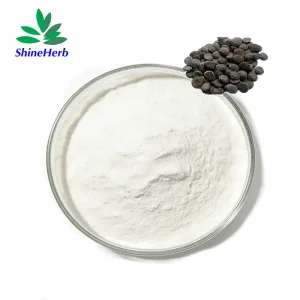
Best Wholesale High Purity 5-HTP Powder 98% Griffonia Extract Sleep Mood Support Supplement Raw Material Manufacturer, Factory
Procurement Dossier
High-Quality Ascorbyl Glucoside Cosmetic Grade CAS 129499-78-1 for Uvioresistant Skin Whitening Manufacturers, Manufacturer
Procurement Dossier
Best Thiamine Hydrochloride Vb1 Vitamin B1 Bulk Wholesale Suppliers, Factories
Procurement Dossier
Buy Wholesale Sulbutiamine 99% Powder for Dietary Supplement Suppliers, Supplier
Procurement Dossier
Best Astragaloside IV Powder Astragalus Root Extract Factory supply Manufacturers, Factory
Procurement Dossier
Buy Wholesale Bulk creatine monohydrate OEM/ODM Creatine powder for Muscle Support Manufacturers, Suppliers
Procurement Dossier
Best High Purity Linolenic Acid ALA Raw Material | Cosmetic, Food & Supplement Manufacturers, Companies
Procurement Dossier
Buy L-Carnosine powder antioxidant ingredient for skincare Manufacturer, Suppliers
Procurement DossierEnterprise Procurement Inquiries & Analytical Guidance
Authoritative technical clarification on specifications, testing methods, supply stability, and logistics.
We employ a three-tier validation mechanism: (1) DNA barcoding of all incoming root and rhizome dry botanical biomass, (2) CAMAG HPTLC fingerprinting against certified reference standards, and (3) LC-MS/MS verification ensuring absolute absence of cardiac glycosides (periplocin and periplocymarin), securing complete safety for human consumption.
Our standard commercial inventory contains 0.8% Total Eleutherosides B+E, 1.0% Eleutherosides B+E, and 1.5% Eleutherosides B+E by HPLC. Additionally, we manufacture 10:1 to 50:1 native ratio extracts and customized water-soluble polysaccharide-enriched grades (20% to 50% UV) tailored to functional beverage manufacturing.
Each batch is tested via Inductively Coupled Plasma Mass Spectrometry (ICP-MS). Target thresholds are far more stringent than standard pharmacopoeial ceilings: Lead (Pb) < 0.5 ppm, Arsenic (As) < 0.5 ppm, Cadmium (Cd) < 0.1 ppm, and Mercury (Hg) < 0.05 ppm, allowing straightforward qualification for infant nutrition and premium dietary supplements.
Every shipment is released with a comprehensive lot-numbered COA detailing HPLC chromatograms, physical parameters, microbiological enumeration, and heavy metal assays. On request, we coordinate third-party verification via ISO 17025 accredited partners including SGS, Eurofins, or NSF International.
Our standard commercial MOQ is 25 kg, packed inside food-grade double low-density polyethylene (LDPE) bags sealed inside fiberboard drums (cardboard drums) with tamper-evident security tags. Sample trial quantities (100g to 1kg) are expedited via international air express for pilot formulation and QC validation.
Yes. Utilizing proprietary indirect vacuum drying and clean electrical heat generation during condensation, our finished powders comply with European Commission Regulation (EU) 2023/915: Benzo[a]pyrene < 10 µg/kg and the sum of PAH4 (benzo[a]pyrene, benz[a]anthracene, benzo[b]fluoranthene, and chrysene) < 50 µg/kg.