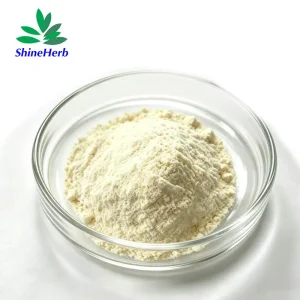
Featured Nutritional & Cosmetic Core Actives
Precision-manufactured bio-compounds audited to USP, EP, CP, and FCC monographs with complete lot-specific Certificate of Analysis (COA) verification.
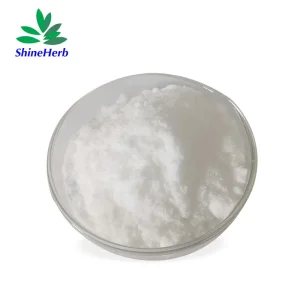
Wholesale Vitamin C Ethyl Ether 3-O-Ethyl Ascorbic Acid CAS 86404-04-8
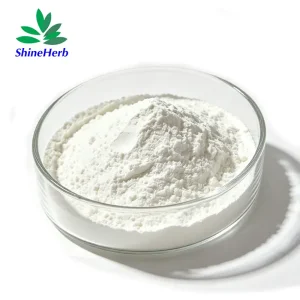
China Niacinamide Vitamin B3 Powder 99% for Skin Care & Supplements
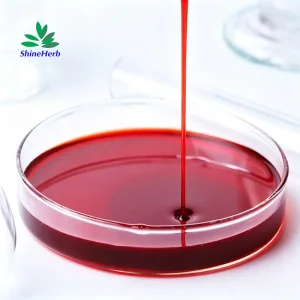
High-Quality Low Viscosity High Phospholipid Antarctic Krill Oil
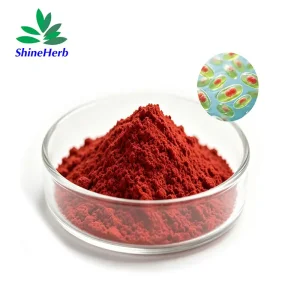
High-Quality Natural Astaxanthin Powder/Oil Haematococcus Pluvialis Extract
Wholesale High Quality Adenosine Triphosphate ATP Factory Price Exporter
Wholesale Hot Sale Hydrolyzed Gluten Peptide Food Grade Wheat Protein
High-Quality Supplements Magnesium Taurate & Magnesium Acetyl Taurate
China Manufacturer L-Carnitine Powder USP Standard API Raw Material
Natural Capsanthin: Bioactive Xanthophyll Chemistry & Industrial Relevance
An authoritative evaluation of (3R,3'S,5'R)-3,3'-dihydroxy-β,κ-caroten-6'-one (CAS 465-42-9) derived from Capsicum annuum, detailing conjugated polyene bond structures, stereochemistry, and advanced bio-availability dynamics.
Molecular Architecture and Photochemical Stability
Natural Capsanthin is a premier lipophilic ketocarotenoid predominantly isolated from the pericarp of mature red chili peppers (Capsicum annuum L.). Structurally distinct within the carotenoid family, capsanthin possesses an unusual keto-conjugated cyclopentane ring along with nine conjugated carbon-carbon double bonds. This distinctive chemical structure gives capsanthin its remarkable deep-red spectral absorption ($\lambda_{max} \approx 468\text{ nm}$ in hexane) and extraordinary free-radical scavenging capacity that significantly exceeds that of standard β-carotene and α-tocopherol.
Unlike simple carotenoids, natural capsanthin naturally occurs as both free xanthophylls and mono- or di-esterified fatty acid forms (esterified with lauric, myristic, palmitic, and stearic acids). For advanced functional food, beverage, and topical skincare formulations, maintaining precise control over the esterification ratio determines thermal stability, photolytic durability, and liposomal cellular incorporation. As an export-oriented manufacturer, our facility optimizes separation parameters to preserve structural trans-isomeric integrity while eliminating unwanted residual pungent capsaicinoids (<1 ppm, non-pungent guaranteed).
Antioxidant Potency & Metabolic Mechanisms
Peer-reviewed biochemical literature underscores that capsanthin acts as an exceptional singlet oxygen ($^1O_2$) quencher, demonstrating physical quenching rate constants ($k_q$) substantially higher than lycopene and lutein. In vivo and in vitro bio-assays confirm that capsanthin directly downregulates lipid peroxidation, modulates pro-inflammatory cytokines (including TNF-α and IL-6), and activates the Nrf2-ARE antioxidant signaling pathway.
Furthermore, contemporary clinical research increasingly emphasizes capsanthin's dual utility: serving not merely as a replacement for synthetic colorants (such as Allura Red AC / Red 40), but as an active nutraceutical compound that supports eye health by mitigating macular oxidative stress, promoting high-density lipoprotein (HDL) functionality, and improving skin elasticity through microvascular photo-protection.
Global Industry Dynamics & Clean-Label Demand Drivers
Examining the structural migration from petroleum-derived artificial dyes (FD&C Red No. 40, Carmoisine) toward certified non-GMO, clean-label natural carotenoid colorants across North America, Europe, and Asia-Pacific.
The Clean-Label Regulatory Mandate
Global regulatory agencies, including the European Food Safety Authority (EFSA) and the US FDA, continue to tighten scrutiny on artificial azo dyes linked to behavioral concerns and allergenicity. Food and beverage brand owners are reformulating product lines to satisfy consumer demands for transparent ingredient declarations. Natural capsanthin (EU E160c) provides an inherently safe, plant-extracted alternative with a robust safety record.
Functional Cross-Industry Convergence
Capsanthin is no longer restricted to meat seasonings and savories. Modern product developers deploy our capsanthin in confectionery gummies, functional sports beverages, clean cosmetics (natural lipsticks, blush gels), and premium poultry feeds (for standardized, natural egg yolk pigmentation). Its dual status as a natural chromophore and high-potency antioxidant elevates its commercial value across multiple industries.
Supply Continuity & Agronomic Integration
Unpredictable climatic shifts and volatile raw crop markets require B2B buyers to partner with vertically integrated extractors. By managing high-capsanthin cultivar farming networks under contract agriculture, our enterprise mitigates price volatility, guarantees year-round buffer reserves, and assures total batch-to-batch traceability from seed genetics to refined extract.
Sector-Specific Industrial Formulation Solutions
Overcoming historical challenges in carotenoid chemistry: thermal stability, light degradation, matrix solubility, and dispersion kinetics across food systems, dietary supplements, and beauty formulations.
Beverage & Liquid Systems: Nano-Emulsification
Native capsanthin is inherently hydrophobic and oil-soluble. For crystal-clear or translucent functional drinks, ready-to-drink (RTD) teas, and fortified juices, our engineering team manufactures sub-micron water-dispersible capsanthin emulsions (droplet size <100 nm). These preparations prevent surface ringing, oil separation, and sedimentation, exhibiting remarkable stability under pasteurization ($95^\circ\text{C}$ for 30s) and across a broad pH spectrum (2.5 to 7.0).
Nutraceutical Softgels & Solid Dosages
For dietary supplements, softgel delivery demands high active-ingredient density with negligible oxidation. We provide refined, de-waxed, low-viscosity capsanthin oil standardizations (20,000 to 100,000 CU) stabilized with natural mixed tocopherols. For solid dosage forms such as two-piece hard capsules, tablets, and drink stick-packs, our microencapsulated capsanthin beadlets utilize modified starches or gum acacia matrixes to shield the chromophore from oxygen exposure.
Clean Cosmetics & Topical Skincare
Cosmetic formulators require complete absence of residual pungency (capsaicin < 0.1 ppm) and ultra-low heavy metal profiles. Our cosmetic-grade capsanthin serves as an eco-certified, skin-softening botanical pigment that imparts natural sunset-orange to ruby-red hues to lipsticks, serums, and BB creams, while mitigating UV-induced cutaneous lipid peroxidation and photoaging.
| Commercial Grade | Physical State | Color Value (E1% 1cm, 460nm) | Capsaicin Content | Solubility / Dispersion Profile | Key Target Application |
|---|---|---|---|---|---|
| Capsanthin Oil Standardized | Dark Red Viscous Liquid | 10,000 – 100,000 CU | < 5.0 ppm (Pungency-Free) | Lipophilic (Fats, Oils, Organic Solvents) | Meat Processing, Sauces, Dressings, Softgels |
| Capsanthin Water-Soluble Liquid | Micro-emulsion Fluid | 5,000 – 40,000 CU | < 1.0 ppm | Fully Water-Dispersible (Clear/Opalescent) | RTD Beverages, Fruit Jellies, Syrups, Confectionery |
| Capsanthin Beadlet / Powder | Free-Flowing Granular Powder | 10,000 – 50,000 CU | < 0.5 ppm | Cold-Water Dispersible (CWD) | Tablets, Solid Sachets, Dry Seasonings, Premixes |
| Pharma & Nutra Active Grade | Crystalline Oleoresin Extract | HPLC > 50% – 85% Active | Undetectable (< 0.1 ppm) | Lipophilic / Custom Liposomal Carrier | Clinical Ocular Formulations, Cellular Antioxidants |
Rigorous Quality Control, Testing Methodologies & Global Compliance
Demonstrating complete manufacturing control: every production batch is systematically qualified using validated HPLC, GC-MS/MS, and ICP-MS testing regimes to satisfy regional standards in the EU, USA, Japan, and the Middle East.
HPLC Fingerprinting
High Performance Liquid Chromatography verifies exact carotenoid profiles, ensuring natural capsanthin, capsorubin, and zeaxanthin ratios match pure botanical origin while detecting any unauthorized synthetic dye adulteration (e.g., Sudan dyes I-IV).
Zero Residue Solvents
Utilizing high-vacuum stripping and pure Supercritical Carbon Dioxide ($sCO_2$) extraction, our residual solvent levels (hexane, acetone, ethanol) consistently track well below the stringent limitations set by USP, FCC, and the European Commission.
Pesticide Screening
Over 450 distinct multi-residue pesticide screens are systematically executed via GC-MS/MS and LC-MS/MS in ISO 17025 accredited labs, guaranteeing absolute safety compliance with EP 2.8.13 and US FDA pesticide tolerance thresholds.
Audit-Ready Dossiers
We supply full regulatory documentation packets for overseas customs and quality audits: batch-specific COA, technical dossiers, Safety Data Sheets (SDS), Allergen Declarations, Non-GMO Statements, along with HALAL, KOSHER, ISO 9001, and FSSC 22000 certifications.
Extraction Technology Roadmap & Sustainable Manufacturing Outlook
Leading the natural ingredient sector toward carbon-neutral extraction, closed-loop processing, green enzyme-assisted bioprocessing, and targeted bio-accessibility enhancement.
Supercritical CO2 Continuous Separation
Our ongoing facility upgrades implement multi-stage fractional Supercritical Fluid Extraction (SFE-$CO_2$) systems. By continuously varying pressure and temperature stages without toxic petrochemical co-solvents, we achieve selective isolation of capsanthin from non-pigment lipids, decreasing thermal degradation by 40% and eliminating solvent recovery emissions.
Enzymatic Saponification & Bio-refining
Traditional chemical saponification uses high temperatures and harsh alkalis that can degrade thermolabile conjugated double bonds. Our R&D laboratories are standardizing immobilized lipase biocatalysts for selective ambient-temperature de-esterification, yielding ultra-high purity free capsanthin crystals with minimal organic waste generation.
Circular Zero-Waste Valorization
Committed to ESG environmental performance, our production chain repurposes extracted chili meal biomass into valuable co-products: isolated spicy capsaicin for pharmaceutical analgetic topical patches, alongside hydrolyzed agro-fertilizers and purified cellulose fibers, realizing a closed-loop zero-waste manufacturing stream.
Frequently Asked Technical & Sourcing Inquiries
Clear, technically verified responses regarding solubility properties, regulatory registrations, custom concentrations, and global shipping parameters.
What is the analytical distinction between Capsanthin and generic Paprika Oleoresin?
How does your extraction process guarantee the product is entirely non-pungent?
Which regulatory standards does your Capsanthin satisfy for European and US importation?
How do you protect natural capsanthin against photolytic and oxidative degradation?
Can you supply customized particle sizes, water-dispersible emulsions, or OEM specifications?
Complementary Nutra, Pharma & Cosmetic Ingredients
Expand your sourcing matrix with our verified high-purity vitamins, peptides, mineral chelates, and specialty pharmaceutical intermediates produced under certified GMP quality systems.
Buy Food Grade Zinc Glycinate Supplement Raw Material Supplier
Buy Cosmetic Grade Palmitoyl Tetrapeptide-7 Skin Repair Peptide
Wholesale Pure Dimethyl Sulfone 99% Food Grade MSM Supplement
Best USP Fluorescein Sodium Salt CAS 518-47-8 for Ophthalmology
High-Quality Kojic Acid Powder CAS 501-30-4 Skin Whitening Active
Buy Food Grade Magnesium Aspartate Powder CAS 62-52-2 Factory Supply
Wholesale Vitamin K1 Phylloquinone Powder for Dietary Supplements