Enterprise Bioactive Portfolio: Immediate Sourcing & Batch Traceability
Procure pharmaceutical, cosmetic, and nutraceutical raw ingredients backed by complete Certificate of Analysis (COA), HPLC purity assays, and international pharmacopeia alignment.
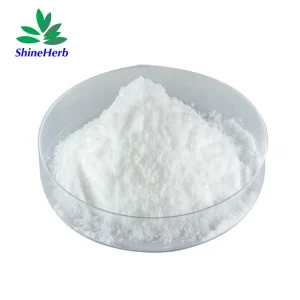
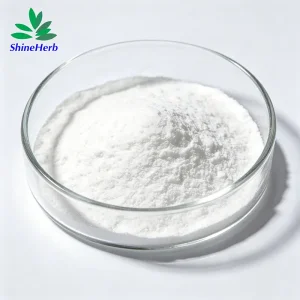
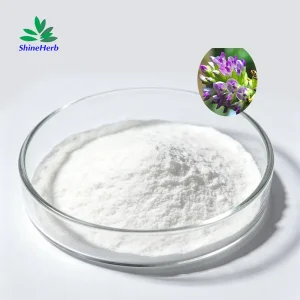
Natural Barley Grass Powder: Global Industrial Landscape & Supply Frameworks
A rigorous industrial perspective on botanical agronomics, active enzyme conservation, cellular micronization, and systemic supply chain integration for B2B procurement leaders.
Global Market Dynamics
The international demand for Hordeum vulgare (Barley Grass) derivatives has transitioned decisively from generic green powders to functionally standardized, bio-active ingredients. Global functional food, high-end beverage, and clinical nutraceutical formulators demand exact molecular profiles: preserved superoxide dismutase (SOD), chlorophyll-a/b ratios, and plant-based antioxidant capacity measured via calibrated ORAC assays.
Macro Agronomic Advantages
China's specialized cultivation belts—spanning high-altitude, unpolluted plateau territories and nutrient-dense river deltas—provide the geographical foundation for consistent chemical profiles. Strict soil baseline profiling ensures heavy metal content (As, Pb, Cd, Hg) complies natively with stringent EU 2023/915 and US California Proposition 65 thresholds prior to seedling planting.
Enzymatic Thermal Stability
Standard industrial drying degrades sensitive macromolecules like heat-labile SOD and catalase. Modern Chinese specialized extraction plants employ low-temperature microwave vacuum dehydration coupled with cryogenic airflow milling. This dual-phase engineering restricts thermal escalation to under 42°C, completely locking cellular bioactivity without resorting to synthetic preservatives.
Physicochemical & Microbiological Release Benchmark
Comprehensive analytical metrics governing premium export batches of Natural Barley Grass Powder (Hordeum vulgare L.). Every lot is verified via HPLC, UV-Vis, and ICP-MS instrumentation.
| Analytical Parameter | Technical Specification | Methodology / Standard | Compliance Grade |
|---|---|---|---|
| Botanical Identity | 100% Hordeum vulgare L. Young Leaves (Harvest: 15–20cm) | TLC / Microscopic ID | Pharma & Food |
| Superoxide Dismutase (SOD) | ≥ 1,200 U/g to 3,500 U/g (Custom Activity Available) | Enzymatic Kinetic Spectrophotometry | Bioactive Verified |
| Total Chlorophyll Content | ≥ 800 mg / 100g (Natural Chlorophyll-a / Chlorophyll-b) | UV-Vis Spectrophotometry | Pure Botanical |
| Physical Particle Distribution | 80 Mesh (Beverage Base) / 200 Mesh / 500 Mesh (Instant Micro-milled) | Laser Diffraction (Malvern Mastersizer) | Ultra Dispersion |
| Heavy Metals (Pb, As, Cd, Hg) | Pb ≤ 1.0 ppm, As ≤ 1.0 ppm, Cd ≤ 0.5 ppm, Hg ≤ 0.1 ppm | ICP-MS (Inductively Coupled Plasma) | EU / Prop 65 Clean |
| Pesticide Residue Limits | Zero Detection (Compliant with EC 396/2005 >500 compound panel) | GC-MS/MS & LC-MS/MS | Organic Certified |
| Microbiological Criteria | Total Plate Count < 10,000 cfu/g, Yeast & Mold < 100 cfu/g, Salmonella: Neg/25g | USP <2021> / <2022> Reference | Sterile Irradiated/Non-Irr |
Regulatory Compliance, Localization Support & Audit Architecture
Eliminating market access barriers across key regulatory domains: North America (US FDA FSMA), Europe (EFSA), Middle East, and Asia-Pacific through documented supply transparency.
Traceable Lot Documentation
Procurement teams receive an airtight validation package per batch: Detailed Certificate of Analysis (COA), Technical Data Sheet (TDS), Safety Data Sheet (SDS/MSDS) under GHS standards, Flow Chart of Synthesis/Milling, Allergen Matrix, Non-GMO Statements, and BSE/TSE declaration statements.
Ethylene Oxide & Radiation Control
To adhere unconditionally to strict European Union thresholds, our manufacturing hubs utilize clean, high-pressure low-temperature steam pasteurization or specialized non-thermal plasma decontamination instead of Ethylene Oxide (ETO) or synthetic chemical fumigation, leaving zero hazardous halogenated residues.
Factory Audits & Digital Clearance
Our processing nodes maintain cGMP, ISO 22000, HACCP, HALAL (MUI & JAKIM aligned), and KOSHER certifications. We support third-party facility audits (SGS, Eurofins, Intertek) and supply pre-shipment composite split-samples for independent domestic laboratory release prior to freight departure.
Industrial Application Scenarios & Formulation Engineering
Cross-industry material compatibility: optimizing organoleptic suspension, nutritional stability, and processability across dietary supplements, functional foods, RTD beverages, and cosmeceuticals.
Clean-Label Green Superfood Blends
Used as the primary alkaline backbone in commercial superfood dry beverage powders. Micro-milled 200–500 mesh options eliminate typical grittiness, providing velvety mouthfeel and steady suspension without requiring heavy synthetic hydrocolloid gums or artificial emulsifiers.
Solid Dose: Capsules & Direct Compression
Specially spray-granulated barley grass powder variations offer superior bulk density (0.45–0.65 g/mL) and angle of repose (<35°), preventing phase segregation in high-speed rotary tableting machines and automated hard-shell two-piece capsule filling operations.
Functional RTD Beverages
Soluble barley grass juice extracts (cold-pressed and vacuum-spray dried) provide 100% aqueous dissolution with zero phase precipitation. The high retention of bioavailable potassium, magnesium, and natural enzymes makes it an ideal fit for natural functional sports hydration and metabolic formulations.
Bio-Fermented & Topical Cosmeceuticals
Micro-fine barley leaf extract is deployed in cosmetic facial formulations to supply natural chlorophyll and catalase, counteracting photo-oxidative UV stress, calming dermal inflammation, and accelerating keratinocyte cellular turnover in clean-label anti-aging skincare lines.
Technological Roadmap & Innovation Trajectory
Anticipating next-generation manufacturing breakthroughs: molecular stability enhancement, intelligent continuous processing, and carbon-negative sustainable cultivation architectures.
Cryogenic Fluid Jet Milling
Transitioning manufacturing operations entirely to sub-zero nitrogen atmospheric jet milling. Producing D90 < 15 micron powders without localized friction heating, preserving over 98% of natural enzymic structures.
Microbial Co-Fermentation
Deploying specialized probiotic microbial consortia (e.g., Lactobacillus plantarum) directly onto fresh barley leaf mash to break down complex lignocellulose, dramatically liberating intracellular bioactive flavonoids and bio-polyphenols.
Liposomal Nano-Encapsulation
Engineering liposomal barley chlorophyll and peptide complexes to guarantee gastrointestinal survival through extreme gastric acid barriers, drastically amplifying human systemic bioavailability in premium nutraceutical therapeutics.
Automated Vertical Carbon-Capture Agro-Units
Establishing enclosed, fully autonomous indoor vertical aeroponic growing units powered by factory waste-heat recovery, ensuring absolute pesticide-free, heavy-metal-void botanical yields under real-time spectral LED tuning.
Technical & Commercial FAQ: Enterprise Buyer Inquiry Matrix
Authoritative guidance resolving critical compliance, production scalability, testing, and operational logistical parameters for global import teams.
How does Natural Barley Grass Powder differ fundamentally from Barley Grass Juice Powder?
Natural Barley Grass Powder is manufactured by gently drying and finely milling the complete aerial juvenile leaf tissue of the plant. This leaves insoluble and soluble dietary fibers completely intact alongside chlorophyll, proteins, and minerals. In contrast, Barley Grass Juice Powder involves cold-pressing the fresh young blades to extract only liquid nutrients, discarding the insoluble fibrous pulp prior to low-temperature spray or vacuum dehydration. Juice powder is 100% water-soluble with higher nutrient density by weight, whereas whole leaf powder delivers vital digestive prebiotic fiber profiles.
Is Natural Barley Grass Powder inherently Gluten-Free for commercial labeling?
Yes, provided harvesting protocols are strictly engineered. Gluten proteins exist exclusively within the mature barley grain kernel (seed), not in the juvenile green leaf blade prior to the jointing and reproductive heading phases. Our agricultural harvesting windows are rigorously monitored to ensure mowing takes place exclusively when young plants reach 15–20 cm in height, before any grain heads emerge. Furthermore, every production lot is subjected to validated ELISA competitive testing to assure gluten levels remain well below 20 ppm (often < 5 ppm), fully complying with FDA and European Commission gluten-free labeling laws.
What measures guarantee zero Ethylene Oxide (ETO) contamination for European entry?
ETO contamination is a major point of friction at EU border control posts. Our partner processing hubs have completely dismantled legacy gas fumigation setups in favor of validated clean-label physical sterilization protocols. We utilize high-temperature short-time (HTST) steam treatment or specialized low-temperature dielectric barrier discharge (DBD) processing. This reduces microbial biosurfaces to baseline requirements while strictly prohibiting synthetic chemical sterilants. All export batches undergo third-party GC-MS/MS testing for 2-chloroethanol and sum-ETO to confirm absolute compliance with EU 0.02 mg/kg limits.
What are standard export packaging configurations, MOQs, and shelf-life parameters?
Our standard bulk export packaging consists of food-grade, multi-layer aluminum vacuum-sealed inner barrier bags packed securely inside 25 kg fiber drums with double tamper-evident seals. For bespoke enterprise requirements, nitrogen-flushed bulk containers or custom 1 kg / 5 kg barrier pouches are readily configured. The typical Minimum Order Quantity (MOQ) is 25 kg (single drum) for standard formulations, and 500 kg for custom mesh or guaranteed-activity enzyme selections. The documented shelf life is 24 months when stored unopened in cool, dry conditions below 25°C away from direct photolytic exposure.
Associated Industrial Raw Materials Portfolio
Comprehensive wholesale inventory spanning anti-aging ingredients, high-purity vitamins, joint stabilizers, and cosmetic raw materials ready for consolidated container shipping.