Featured Bioactive Compounds & Primary Actives
Batch-certified industrial ingredients verified via HPLC/UV assay, compliant with international pharmacopoeias and exported directly from our automated facilities.
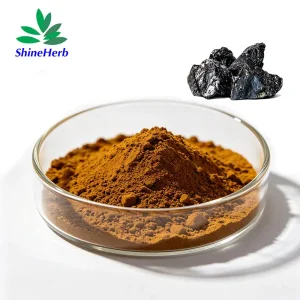
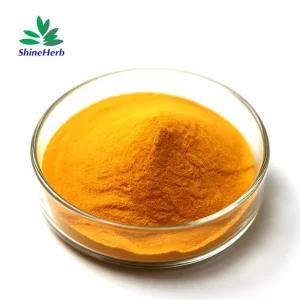
Engineering Clean-Label Microbial Colorants: Monascus Red Pigment Powder
As consumer packaged goods (CPG) brands, meat processors, and nutraceutical formulators systematically transition away from synthetic azo-dyes (such as Allura Red AC / Red 40 / E129) and animal-harvested carmine (E120 cochineal extract), Chinese bio-fermentation technology has elevated Monascus Red into a leading high-stability, vegan-compliant biological colorant.
Natural Chromophore Fingerprint
Monascus Red pigment consists predominantly of azaphilone compounds, specifically rubropunctatin and monascorubrin, which condense with endogenous amino acids to form stable, intensely red hydrophilic conjugates. Unlike beet powder (betalains) which degrade rapidly under pasteurization temperatures, our refined Monascus powder maintains thermal equilibrium up to 121°C for 20 minutes without chromophore shifting.
Citrinin Elimination Architecture
The primary barrier historically hindering global adoption was citrinin—a nephrotoxic mycotoxin co-synthesized by wild *Monascus purpureus* strains. Through precision gene cluster silencing and non-GMO mutagenic breeding, our bioprocessing units operate beneath high-affinity ceramic microfiltration loops that bring citrinin levels to ND (Non-Detectable) at <5 ppb thresholds, documented via validated triple-quadrupole LC-MS/MS testing.
Monacolin K Traceability & Safety
For food coloring applications, regulatory compliance requires the distinct absence or strict regulation of Monacolin K (lovastatin) to ensure the product functions strictly as a natural pigment rather than an unauthorized pharmaceutical active. Our dedicated red pigment strains are isolated specifically to maximize rubropunctatin output while keeping Monacolin K beneath 1 ppm, satisfying EFSA, US FDA, and APAC food standard thresholds.
China Factory 4.0: Bioreactor Engineering & Supply Resilience
Operating out of modern industrial biotechnology clusters in Shaanxi, our facilities integrate multi-stage submerged bio-fermenters and automated solid-state matrix beds to ensure batch homogeneity, cost efficiency, and year-round volume scalability.
Dual-Path Fermentation
Deploying automated shallow-bed solid fermenters for intense color value density, complemented by 150m³ submerged aerobic fermenters for high-speed batch turnover. Real-time control loops regulate oxygen, dissolved nitrogen, and internal temperature to ±0.2°C.
Non-GMO Substrate Sourcing
Upstream resilience begins with 100% identity-preserved (IP) non-GMO indica rice sourced directly from long-term contracted agricultural cooperatives. Batch-wise pesticide screening ensures our substrate conforms to strict heavy metal and pesticide residue monographs.
Closed-Loop Downstream
Cellular disruption, solvent-free hot water extraction, secondary centrifugal clarifiers, and ultra-high-vacuum low-temperature spray drying prevent active component carbonization, yielding an instantly dispersible, free-flowing, non-hygroscopic micro-powder.
Continuous Traceability
From rice grain intake to palletized warehouse release, every batch is tied to an end-to-end ERP batch production record (BPR). In-line NIR sensors monitor moisture, density, and color value variations to achieve exceptional inter-batch uniformity (<2.5% CV).
Monascus Red Technical Monograph & Quality Parameters
Every export shipment is released with an individualized, multi-point Certificate of Analysis (COA) audited against GB 1886.181, FCC standards, and customer-specified monographs.
| Analytical Parameter | Technical Specification Grade 1000 | Technical Specification Grade 2000 | Premium Export Grade 4000+ | Testing Methodology |
|---|---|---|---|---|
| Color Value (E 1% 1cm, λ 505nm) | ≥ 1,000 u/g | ≥ 2,000 u/g | ≥ 4,000 u/g | UV-Vis Spectrophotometry |
| Appearance & Physical State | Red to dark red fine powder | Deep red crystalline powder | Intense purple-red micro-powder | Visual / Organoleptic Inspection |
| Citrinin Content | < 50 ppb (< 0.05 mg/kg) | < 10 ppb (0.01 mg/kg) | Non-Detectable (LOD < 5 ppb) | HPLC-MS/MS Triple Quad |
| Monacolin K Content | < 10 ppm | < 2 ppm | Non-Detectable (< 1 ppm) | HPLC-DAD Photodiode Array |
| Moisture Content (Loss on Drying) | ≤ 7.0% | ≤ 6.0% | ≤ 5.0% | Vacuum Oven Drying at 105°C |
| Total Ash Content | ≤ 8.0% | ≤ 5.0% | ≤ 3.5% | Muffle Furnace Ashing at 550°C |
| Particle Size (Mesh) | 80 Mesh (100% pass) | 100 Mesh (100% pass) | 120–200 Mesh Micronized | Standard Analytical Sieve |
| Solubility Profile | 100% Water Soluble (Clear) | 100% Soluble in Water & Ethanol | Instant Dispersion (<30s) | 20°C Mechanical Dissolution |
| Heavy Metals (Pb / As / Cd / Hg) | Pb<1ppm, As<1ppm, Cd<0.5ppm | Pb<0.5ppm, As<0.5ppm, Cd<0.1ppm | USP <232> / <233> Conformance | ICP-MS Inductively Coupled Plasma |
| Microbiological Bioburden | Total Plate Count <1,000 CFU/g | Total Plate Count <500 CFU/g | Salmonella/E.Coli: Negative/25g | BAM / USP <61> & <62> |
Macro-Industry Solutions for Global Product Development
Engineered to excel in demanding food matrices, our Monascus Red Pigment powder delivers robust photostability, superior protein-binding kinetics, and neutral organoleptic profiles across diverse processing environments.
Traditional & Alternative Meats
Provides an authentic cured-meat hue without sodium nitrite dependency. The azaphilone chromophores bind tightly to myofibrillar proteins, preventing color leaching in emulsified sausages, hams, salamis, and modern plant-based protein analogs (soy, pea, mycoprotein) through high-heat retort processing.
Condiments, Sauces & Fermented Pastes
Demonstrates outstanding osmotic resistance and pH stability (effective range pH 3.5 to 10.0). Ideal for dark soy sauces, barbecue marinades, sweet bean pastes, and hotpot broth bases where high sodium ion concentrations and acidic environments precipitate or degrade other botanical extracts.
Confectionery, Bakery & Beverages
Delivers brilliant strawberry-red and cherry-red shades in pectin gummies, extruded hard candies, wafer fillings, and red bean pastry doughs. Fully compatible with non-alcoholic beverages, RTD flavored teas, and functional liquid sachets without generating sediment or turbidity during shelf life.
Meeting Global Corporate Sourcing & Compliance Standards
Multinational procurement teams evaluate raw material suppliers beyond pricing. We provide comprehensive supplier qualification packages designed to streamline QA/QC audits, import customs approvals, and corporate social responsibility (CSR) reviews.
Technical Document Packs
Every commercial order is accompanied by comprehensive DMF-ready dossiers: Batch-specific COA, Technical Data Sheets (TDS), Safety Data Sheets (SDS per GHS format), Process Flow Charts, Allergen Free Statements, and Non-Animal Origin Declarations.
Global Certifications
Our biomanufacturing plants operate with complete, internationally recognized third-party verifications: ISO 9001:2015, ISO 22000, FSSC 22000, HACCP, cGMP audits, alongside verified MUI/JAKIM Halal and Star-K/OU Kosher credentials.
Export Barrier Elimination
We supply strict ETO-Free (Ethylene Oxide) certificates, BSE/TSE statements, Non-Irradiation declarations, and Non-GMO Project verification to prevent international container rejections at European, US, or Australian container ports.
Hermetic Export Packaging
Standard packaging features double-layer sterile polyethylene inner liners enclosed in light-blocking aluminum foil barrier bags, packed within reinforced 25 kg fibre drums, palletized with stretch wrapping and desiccants for marine transit protection.
Technological Roadmap: The Future of Biopigments
Through industrial-academic partnerships with Shaanxi biological engineering institutes, our R&D pipeline is shaping next-generation biocolorant developments across four key vectors.
Metabolic Engineering
Utilizing targeted genome editing to completely excise the polyketide synthase (*pksCT*) gene responsible for citrinin biosynthesis, creating non-revertible zero-mycotoxin parent strains for food-grade safety assurance.
Acid-Stable Chromophores
Engineering novel peptide-conjugated monascus azaphilones capable of withstanding intense low-pH beverage environments (pH < 2.8) without color fading or protein hazing in clear isotonic beverages.
Carrier-Free Microencapsulation
Developing sub-micron liposomal and modified starch spray complexes to enhance photostability under high-intensity retail UV lighting displays by over 300% compared to un-encapsulated native pigments.
Carbon-Neutral Biorefineries
Transitioning manufacturing plant heating to renewable biomass thermal loops, capturing biological CO2 emissions from fermentation vessels, and reusing high-protein spent mycelial mass for agricultural bio-fertilizers.
Localized Regulatory Navigation Across Key Continents
Our dedicated scientific affairs desk collaborates with regional regulatory attorneys and food-science consultants in North America, the European Union, Southeast Asia, and the Middle East to facilitate seamless product importation.
North America (US & Canada)
Active support with US FDA Food Additive status petitions, GRAS (Generally Recognized As Safe) dossiers, INCI registrations for cosmetic grade rubropunctatin, and full Canadian Health Food regulatory substantiation.
European Union & UK
Providing analytical portfolios showing complete citrinin absence (below EU strict limits under Commission Regulation 2019/1901) and zero therapeutic Monacolin K active, matching European Clean-Label colorant requirements.
APAC & Middle East
100% compliant with China GB 1886.181, Japan Ministry of Health, Labour and Welfare (MHLW) Natural Additives list, South Korea MFDS food color monographs, and verified Halal protocols for GCC entry.
Frequently Asked Technical & Commercial Questions
Detailed answers addressing mycotoxin management, thermal stability, replacement calculations, and global supply chain logistics.
What is the definitive biochemical difference between Red Yeast Rice Powder and Monascus Red Pigment?
How does your laboratory guarantee citrinin levels below international threshold limits?
How does Monascus Red perform against synthetic Red 40 (Allura Red) and Carmine (Cochineal Extract)?
What is the dissolution rate and stability across varying pH environments?
What are the typical minimum order quantities (MOQ), packaging types, and lead times?
Can Monascus Red Pigment Powder be customized for OEM and private label formulations?
Integrated Global Nutraceutical & Cosmetic Raw Material Catalog
Consolidate your global supply chain with our audited active raw materials. Complete regulatory documentation, third-party verification, and rapid export logistics accompany every item.