High-Assay Botanical & Nutritional API Exports
Explore our certified catalog of high-purity phytochemicals, amino acid complexes, and specialized nutraceutical materials produced under verified cGMP and ISO manufacturing conditions.
Commercial Status & Global Supply Chain Evolution
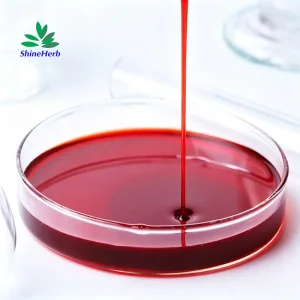
A strategic overview of industrial Beet Red Extract (Betanin/Beetroot Extract E162) manufacturing across China's leading botanical extraction zones.
The Global Paradigm: Synthetic Azo-Dye Replacement
The global natural food colorant market is undergoing a rapid clean-label transformation. Tightening EFSA directives and state-level FDA prohibitions against petroleum-derived azo-dyes (Red #40/Allura Red AC) have accelerated international commercial procurement of botanical betacyanins derived from Beta vulgaris. Industrial producers in China bridge the global supply deficit by operating integrated GAP farming clusters that guarantee uninterrupted access to non-GMO red beetroot harvests.
Supply Chain Architecture & Agricultural Moats
Unlike localized European crops subject to severe climate variations, Chinese extraction facilities leverage wide-acre geographic diversity across Shaanxi, Inner Mongolia, and Gansu. High-latitude growing conditions optimize betalain pigment biosynthesis, delivering raw tubers with enhanced natural chromophore density. This agricultural scale stabilizes factory pricing and guards against volatile international container shipping disruptions.
Export Economics & Value-Added Standardization
The traditional export of crude, high-sugar beet concentrates has evolved into precision-refined powders standardized by HPLC. Leading Chinese manufacturers engineer betanin concentrates from 0.4% up to high-potency 10% fractions. De-sugaring protocols and low-temperature membrane filtration suppress hygroscopicity, transforming bulk beet extract from a perishable seasonal commodity into a shelf-stable industrial raw material.
High-Performance Industrial Formulation Scenarios
Betanin complexes act as dual-functional bioactives: vibrant chromophores in mildly acidic matrices and robust natural antioxidants in sports nutrition formulations.
Beverages & RTDs
Provides vivid pink-to-magenta hues in plant milks, acidified dairy beverages, functional smoothies, and carbonated waters. Exhibits exceptional color rendition within the optimal pH window of 3.5 to 6.5.
Nutraceuticals & Nitric Oxide
Serving as an organic dietary precursor to endogenous nitric oxide (NO), standardized beetroot extract boosts vasodilation, athletic performance, and cardiovascular stamina in pre-workout blends.
Confectionery & Pectin Gummies
Delivers clean-label coloration across starch-molded candies, vegan pectin gummies, and chewable supplements. Prevents color bleed and withstands typical vacuum-cooking temperatures without caramel degradation.
Clean-Label Cosmetics
Replaces synthetic lakes in organic blushes, botanical lipsticks, tinted serums, and mineral face powders. Offers natural topical antioxidant scavenging benefits alongside stable botanical red coloration.
Technical Roadmap & Processing Innovations
How cutting-edge Chinese extraction technology resolves the historical thermal and photo-instability vulnerabilities of native betalain structures.
| Processing Parameter | Legacy Extraction Standard | Next-Gen AI-Assisted Vacuum Micro-Encapsulation | Commercial Buyer Benefit |
|---|---|---|---|
| Thermal Exposure | Long-duration steam evaporation (85°C–100°C) | Low-temperature multi-effect vacuum evaporation (<45°C) | Eliminates betanin decarboxylation into degraded yellow neobetanin. |
| Free Sugar Fraction | High residual sucrose and fructose (>45% w/w) | Ultrafiltration membrane chromatographic de-sugaring | Averts moisture caking; guarantees hygroscopic stability across transit. |
| Active Betanin Density | 0.2%–0.4% unstandardized natural slurry | Standardized 1.0% to 10.0% Betanin (HPLC/Spectrophotometric) | Lower formula addition rates, reduced shipping freight, and consistent batch color. |
| Oxidative Shelf Life | 6–9 months (rapid degradation under oxygen) | Maltodextrin/Gum Acacia lipid core-shell micro-encapsulation | Extends verified commercial shelf life to 24+ months at ambient storage. |
| Solvent Residue & Cleanliness | Ethanol washes requiring heavy distillation | 100% Deionized Aqueous Extraction (Physical Process) | Meets pristine Clean-Label, E162, FCC, USP, Kosher, and Halal specifications. |
Global Sourcing Assurance & Quality De-Risking
Enterprise buyers require verified analytical methodologies, transparent documentation packs, and batch traceability from root to final container.
Monograph-Level Analytical Verification
We test every commercial lot of Beet Red Extract against USP, Food Chemicals Codex (FCC), European Commission Regulation No 231/2012 (E162), and China GB 1886.181 standards. Complete batch documentation includes precise UV-Vis spectrophotometric absorbance curves (A1% 1cm at 535nm) and validated HPLC fingerprinting for betanin and isobetanin ratios.
Ultra-Low Contaminant Thresholds
Our extraction operations employ high-precision inductively coupled plasma mass spectrometry (ICP-MS) and GC-MS/MS platforms. We ensure non-detectable organochlorine and organophosphate pesticides, heavy metals controlled well below California Prop 65 thresholds (Pb <0.5 ppm, As <0.5 ppm, Cd <0.1 ppm, Hg <0.05 ppm), and complete absence of irradiation or ethylene oxide treatments.
Global Multimodal Logistics Integration
Perishable botanical powders demand stringent environmental controls during transit. We ship our vacuum-sealed, light-barrier aluminum bags within climate-stabilized shipping containers. In addition to custom palletization and nitrogen-flushed packaging, we provide real-time batch release tracking, DDP clearance options, and direct third-party testing integration with SGS and Eurofins.
Frequently Asked Questions for Enterprise Importers
Clear, technical, and regulatory answers designed for formulators, compliance officers, and international sourcing directors.
What is the standard chemical difference between Beet Juice Powder and Beet Red Extract (E162)?
Beet Juice Powder is produced through straight dehydration of whole beet juice, containing natural sugars (fructose, sucrose) with active betanin contents typically hovering under 0.1% to 0.3%. Beet Red Extract (E162) undergoes filtration, concentration, and selective de-sugaring to yield a standardized betanin color active fraction between 0.4% and 10.0%, offering far superior tinting strength and reduced moisture attraction.
How does your Beet Red Extract hold up under commercial thermal processing?
Betanin is heat-sensitive and exhibits optimal stability between pH 3.5 and 6.5. In continuous pasteurization processes (72°C–75°C for 15–30 seconds), degradation is minimal. For high-heat confectionery or baking applications, we supply micro-encapsulated spray-dried grades coated in acacia-maltodextrin matrices that shield the core chromophore against rapid degradation.
Which international regulatory standards and certifications govern your exports?
Our facilities and botanical ingredients comply fully with US FDA 21 CFR 73.40 regulations for certified color exempt status, EFSA E162 monographs, JECFA standards, and Food Chemicals Codex monographs. Production plants operate under certified ISO 9001, ISO 22000, cGMP, HACCP, Halal, and Kosher supervision.
Can you provide custom carrier percentages and customized mesh sizes?
Yes. We routinely engineer client-specific carrier ratios (10% to 50% non-GMO maltodextrin, gum arabic, or carrier-free vacuum-freeze-dried fractions). We also control milling tolerances from standard 80-mesh powders up to superfine 200-mesh specifications for rapid, transparent dissolution in clear beverages.
Functional Ingredients, Minerals & High-Purity Derivatives
Expand your formulation matrix with our globally exported range of chelated minerals, active pharmaceutical intermediates, and specialized cosmetic ingredients.