High-Purity Active Ingredients & Nutritional Intermediates
Verified assay standards, comprehensive Certificate of Analysis (COA) per lot, and immediate bulk export capabilities directly from our certified manufacturing suites.
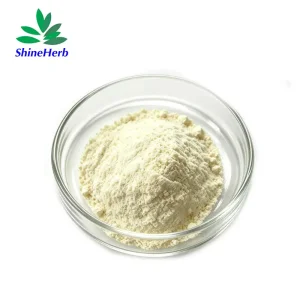
Bacillus Coagulans: Biological Architecture & Mechanism of Action
A deep technical review of spore-forming lactic acid-producing bacteria for formulation scientists, quality assurance managers, and global procurement specialists.
Endospore Morphology & Outer Coat
Unlike vegetative probiotics such as Lactobacillus and Bifidobacterium, Bacillus coagulans forms a protective proteinaceous keratin-like exosporium and dehydrated cortex containing high levels of calcium dipicolinate. This architecture protects genetic materials from physical pressure, osmotic shock, and enzymatic degradation.
Gastric Transit & Intestinal Germination
Spores remain biologically dormant through the aggressive human gastric barrier (pH 1.5–2.5) and duodenum bile salts. Upon entering the terminal ileum and colon (pH 6.5–7.5), hydration, nutrient triggering (L-alanine and purine nucleosides), and rapid germination activate vegetative cells within 4 to 6 hours.
L-(+) Lactic Acid & Bacteriocin Yield
Once germinated, vegetative B. coagulans selectively produces L-(+) lactic acid, reducing gut lumen pH to create an inhospitable zone for enteric pathogens like Clostridium difficile, E. coli, and Salmonella enterica, while secreting natural anti-microbial coagulins.
| Performance Parameter | Bacillus Coagulans (Endospore) | Lactobacillus Acidophilus | Bifidobacterium Longum | Industrial Advantage |
|---|---|---|---|---|
| Thermal Stability (Dry) | Up to 100°C (60 min) | Denatures > 45°C | Denatures > 40°C | Withstands baking, extrusion, hot-fill beverages |
| Gastric Acid Resistance (pH 2.0) | > 95% Survival Rate | < 15% Survival Rate | < 5% Survival Rate | No expensive enteric microencapsulation needed |
| Ambient Shelf-Life (25°C / 60% RH) | 36 Months (>90% retention) | Requires cold chain (2–8°C) | Requires deep frozen (-20°C) | Massive logistics and warehousing cost reduction |
| Shear Pressure Endurance | Tolerates Tablet Compression | Severe cell wall lysis | Complete viability destruction | Direct compressible into hard tablets & chewables |
Procurement Note: The Spore Viability Verification Protocol
A major error in bulk probiotic qualification is standard vegetative plate counting. Because Bacillus coagulans exists in a dormant endospore state in bulk powder, testing requires an initial heat-shock pre-treatment (75°C ± 1°C for 30 minutes) to eliminate vegetative contaminants and activate sporulated cells prior to serial dilution on Glucose Yeast Extract Agar (GYEA). ShineHerb Biotech provides validated ISO/USP-aligned enumeration protocols with each batch.
China Bio-Fermentation Facility & Supply Chain Dominance
Scaling precision fermentation from 500-liter seed bioreactors to 120,000-liter industrial fermenters in Xi'an's high-tech industrial bioscience corridor.
Automated Submerged Fermentation
Our facility operates multi-stage computer-regulated deep liquid fermentation units. Dissolved oxygen (DO), carbon-nitrogen ratios, agitation shear, and pH curves are optimized via automated real-time sensor loops to trigger sporulation efficiencies exceeding 98.5% prior to harvest.
Low-Temperature Vacuum Drying
Thermal damage during downstream concentration causes high loss in ordinary factories. We employ continuous disc centrifugation followed by low-temperature fluidized spray drying or cryo-freeze drying. Spore cell walls retain structural integrity with water activity maintained below 0.15 aw.
Xi'an Biotech Cluster Efficiencies
Strategically situated in Shaanxi's national bio-base, our factory integrates direct domestic non-GMO agricultural raw materials, cutting production costs by 35–45% compared to European or US custom fermentation, giving importers sustainable margins without sacrificing quality.
Standardized Grades, Custom Carriers & Formulation Chemistry
Engineered to resolve real-world manufacturing bottlenecks: caking, poor flowability, particle segregation, and loss of viability during high-speed packaging.
Standard Potency Titers & Mesh Grading
We supply concentrated bulk powders standardized to exact potency specifications to fit varying dosage forms:
- Concentrated Master Batch: 100 Billion to 200 Billion CFU/g (For high-potency capsules & drops)
- Direct-Blend Commercial Grade: 50 Billion CFU/g (Ideal for multivitamin & enzyme blends)
- Functional Food & Beverage Grade: 10 Billion to 20 Billion CFU/g (Standardized for gummies & powders)
- Granulation & Particle Mesh: 80 mesh standard to 200 mesh ultra-fine micro-powder for smooth dispersion.
Carrier Customization & Excipient Compatibility
Formulators require clean-label flexibility. We formulate customized carrier options based on downstream regional regulations and marketing claims:
- Non-GMO Corn Maltodextrin: Standard carrier offering supreme solubility and inert bulk properties.
- Prebiotic Inulin / FOS: Creates high-value "Synbiotic" combinations, synergistic for gut health marketing.
- Resistant Dextrin & Organic Tapioca: 100% clean-label, hypoallergenic, and certified gluten-free options.
- Microcrystalline Cellulose (MCC): Tailored for dry-granulation and direct-compression tablet presses.
Localization Support, Regulatory Compliance & Certifications
Facilitating customs clearance and local health ministry registrations across North America, the European Union, Southeast Asia, and the Middle East.
United States FDA & FSMA
Produced under certified cGMP (21 CFR Part 111 & Part 117). Full support for Self-Affirmed GRAS dossiers, Master Manufacturing Records, FSMA foreign supplier verification documentation, and California Prop 65 heavy metal compliance.
European Union & EFSA
Strain identity verified by 16S rRNA gene sequence matching. Compliant with EFSA Qualified Presumption of Safety (QPS) list requirements, verified free of transferable antimicrobial resistance genes (tetracycline, vancomycin, ampicillin).
Halal & Kosher Certified
Strictly porcine-free, ethanol-free processing environments. Fully certified by internationally accredited Halal certification boards (JAKIM, MUI compatible) and recognized Kosher supervision for global consumer reach.
Allergen & Non-GMO Testing
Batch-level PCR testing certifying zero detectable soy, dairy, gluten, nuts, or GMO DNA fragments. Heavy metals (Pb < 0.5 ppm, As < 0.5 ppm, Cd < 0.1 ppm, Hg < 0.1 ppm) and aflatoxin profiles conform to strict global standards.
Localized Application Scenarios: Beyond Traditional Dietary Supplements
How global food brands, cosmeceutical developers, and feed manufacturers exploit the thermotolerance and stability of bulk Bacillus Coagulans.
1. Functional Baked Goods & Cereals
Traditional probiotics cannot survive baking ovens. Bacillus coagulans spores withstand dough mixing, proofing, and baking temperatures of 180°C–200°C for short cycles, retaining over 85% viability in protein cookies, sliced breads, and extruded breakfast flakes.
2. Hot Beverage Blends & Coffee Pods
Ideal for instant functional coffee, matcha powders, herbal teas, and hot chocolate mixes. Spores survive immersion in boiling water (95°C–100°C) during cup brewing, remaining fully viable as they travel through the digestive tract.
3. Pectin & Gelatin Probiotic Gummies
Gummy production involves high-heat cook stages (100°C–115°C) and hot-depositing into starch molds. While standard strains face 99% kill rates, our resilient spores maintain high label claims with minimal overages needed.
4. Sports Protein & Amino Acid Formulas
Clinical trials demonstrate that Bacillus coagulans enhances protein absorption, digestive comfort, and recovery when co-formulated with whey isolate or plant proteins (pea/rice) by secreting digestive proteases inside the small intestine.
5. Animal Nutrition & Aquaculture Feeds
An essential non-antibiotic growth promoter (AGP replacement). Spores endure feed pelleting steam-presses (85°C–90°C), supporting gut flora, feed conversion ratios (FCR), and disease resistance in poultry, swine, shrimp, and companion animals.
6. Topical Cosmetics & Skin Microbiome
Post-fermentation bio-ferments and spore extracts are incorporated into anti-acne creams, soothing serums, and intimate care wipes to stabilize skin microflora, enhance the ceramide barrier, and down-regulate dermal inflammation.
Industry Trends: The Next Decade in Spore Biotics
Market projections indicate global demand for spore-forming probiotics will exceed USD 2.4 Billion by 2032, driven by key consumer shifts.
From Cold Chain to Ambient Shelf Distribution
Brands are shifting budgets away from expensive refrigerated retail cases to ambient center-aisle shelf space. Ambient spore stability eliminates logistics spoilage and consumer return risks worldwide.
Clean-Label Synbiotic Formulations
Formulators no longer sell standalone probiotics. Combining Bacillus coagulans with human milk oligosaccharides (HMOs), xylooligosaccharides (XOS), and polyphenols is dominating the digestive wellness category.
Postbiotic & Paraprobiotic Evolution
Thermal inactivation processing of B. coagulans allows manufacturers to market heat-killed paraprobiotics containing functional peptidoglycans and exopolysaccharides for instant carbonated drinks and sterile cosmetic lines.
Frequently Asked Questions: Technical Sourcing & Quality Control
Direct answers for procurement officers, regulatory compliance directors, and lead formulation scientists.
What exact analytical method should our QC lab use to verify CFU counts for Bacillus coagulans?
How does Bacillus coagulans handle thermal processing in gummy candy manufacturing?
What are the storage conditions, packaging standards, and shelf-life guarantees?
Can you customize carriers for allergen-sensitive or organic brand formulas?
What documentation do you provide to clear FDA, EFSA, or local health authority audits?
What is the minimum order quantity (MOQ) and production lead time for export?
Precision Pharmaceutical Intermediates & Specialty Nutrients
Explore our co-manufactured catalog of functional dietary actives, cosmetic raw materials, and pharmaceutical grade intermediates.