Industrial Core Portfolio
Featured Bio-Nutrients & Active Ingredients (Batch 01)
Explore high-purity active raw materials, specialty amino acids, enzymes, and bio-fermentation inputs fully tested under FCC, USP, and EP monographs.
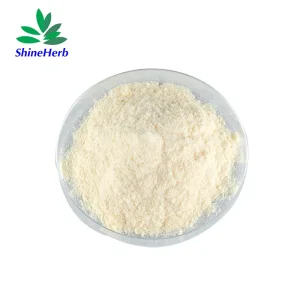
Arachidonic Acid Powder CAS 506-32-1 ARA Oil
Sourcing Details
Food Grade Zinc Glycinate Chelate Material
Sourcing Details
AKG CA Calcium Alpha-Ketoglutarate
Sourcing Details
Polydeoxyribonucleotide PDRN 99% Cosmetic
Sourcing Details
Dipotassium Glycyrrhizinate Active Ingredient
Sourcing Details
Ambroxide CAS 4733-39-5 Aroma Compound
Sourcing Details
Food Grade Erythritol Crystalline Powder
Sourcing Details
Scientific Monograph & Process Precision
Engineering Yeast Extract: Enzymatic Autolysis & Molecular Profiling
A deep analysis into Saccharomyces cerevisiae autolysates, Torula yeast derivatives, and custom peptide-nucleotide partitioning for industrial-scale buyers.
Primary vs. Spent Brewer's Origin
Unlike spent brewing by-products that carry variable hop bitterness and erratic ash levels, our dedicated primary grown Saccharomyces cerevisiae fermentation guarantees consistent nitrogen index (>10.5% TN) and strict batch reproducibility across 1,000-metric-ton production campaigns.
Feedstock PurityTargeted Enzymolysis & RNA Cleavage
By leveraging proprietary endopeptidases coupled with 5'-phosphodiesterase and 5'-adenylic deaminase, native cellular ribonucleic acids are converted into natural taste-potentiating disodium 5'-inosinate (IMP) and disodium 5'-guanylate (GMP) reaching up to 18-24% nucleotide ratios.
Enzymatic TuningMembrane Filtration & Molecular Cutoffs
Through sequential ceramic ultrafiltration (10 kDa down to 1 kDa cutoffs), insoluble beta-glucans and cellular debris are cleanly isolated, leaving free glutamate, oligopeptides, and micronutrients intact for clear liquid dissolution without turbidity or precipitation.
Turbidity Control
Global Landscape
International Commercial Dynamics & Clean-Label Demand
Strategic shift toward sustainable bio-ingredients driven by sodium reduction mandates, vegan formulation pressures, and biotechnology growth.
Clean Label Substitution of Synthetic MSG
Global regulatory bodies across the EU (EFSA) and North America (US FDA) continue incentivizing sodium abatement. Rich in naturally occurring glutamic acid and 5'-ribonucleotides, our natural yeast extracts empower food formulators to cut sodium levels by up to 35% without taste compromise.
Non-GMO / Clean E-Number FreeFermentation Nitrogen & Biopharma Media
Cellular agriculture, recombinant protein synthesis, and probiotic cultivation require defined, endotoxin-minimized amino nitrogen sources. High-solubility yeast extract raw materials serve as standard non-animal alternatives to peptones and BSE/TSE-risk bovine broths.
BSE/TSE-Free MediaPlant-Based Meat & Savory Flavor Masks
Plant protein isolations (pea, soy, faba bean) exhibit persistent grassy, astringent off-notes. Engineered yeast autolysates contribute specific sulfur-containing peptides (cysteine derivatives) that recreate authentic roasted, brothy, or kokumi taste architectures.
Kokumi Modulation
Regional Optimization
Localized Applications & Market Formulation Targets
Deploying specialized ingredient formulations to address regional organoleptic traditions, climatic stability challenges, and sectorial demands.
Asia-Pacific: Umami-Potentiated Sauces & Broths
Engineered for high thermal tolerance during prolonged boiling and autoclaving. High-I+G yeast extract powders dissolve instantly into soy sauce brews, ramen seasoning bases, and dehydrated snack seasonings without thermal degradation or burnt Maillard off-flavors.
Thermal Stable I+GEurope: Clean Label Savory & Reduced-Sodium Ready Meals
Fully compliant with strict retail clean-label charters across DACH and UK markets. These yeast extracts act as natural flavor donors that eliminate E-numbers, enabling front-of-pack claims such as 'Low Sodium', 'No Added Preservatives', and '100% Plant-Derived'.
EU Clean-Label GradeNorth America: Alternative Dairy & Hybrid Proteins
Delivers full-bodied mouthfeel (kokumi enhancement) and cheesy, nutty aromatic notes for vegan cheese alternatives, nutritional yeast spreads, and plant-based whey formulations while masking the bitter peptide tail from pea protein hydrolysates.
Bitter Masking TechMENA & LATAM: High-Humidity Tropical Resistance
Equipped with microencapsulated anti-hygroscopic processing that prevents caking, clumping, and hygroscopic moisture uptake in tropical high-humidity storage conditions, preserving free-flowing powder traits in ambient warehouse settings.
Anti-Caking Formulation
Industrial Superiority
China Factory Infrastructure: Scale, Redundancy & Resilience
Combining primary sugar beet/cane molasses fermentation bases with deep cold-chain distribution, fully automated multi-stage enzymolysis, and tight analytical traceability.
Upstream Agricultural Integration
Our fermentation centers are strategically anchored near premium agricultural zones, securing high-sucrose beet and cane molasses raw material inputs. This insulation against global raw sugar spot volatility ensures stable multi-year pricing structures for multi-national contracts.
Direct Feedstock Access100,000L Bioreactor Cascades & SCADA Precision
Complete automation across sterile culture prop, continuous aeration, autolytic cell disruption, and vacuum evaporation. Automated SCADA systems track temperature curves, pH shifts, dissolved oxygen, and agitation speed with sub-second accuracy per batch.
Automated BioprocessingStrategic Export Freight Buffering
Direct bonded warehousing near major international shipping hubs (Qingdao, Shanghai, Tianjin) provides rapid multi-modal options: ocean freight containerization, air express for sensitive intermediates, and direct China-Europe Railway Express connectivity.
Logistical Continuity45,000+
Metric Tons Annual Yeast Capacity
≥99.2%
Batch Analytical Release Rate
85+
Global Destination Ports Served
<24 Hrs
COA & Audit Dossier Response
Future Vision
R&D Roadmap: Next-Generation Yeast Biotechnology
Continuous investment into synthetic biology platforms, high-density intracellular component fractioning, and zero-carbon circular biorefining.
Phase I: Precision Peptide Cleaving
Engineered Peptidomics
- Fractionation of low-molecular-weight bioactive peptides (<500 Da) demonstrating proven antioxidant and ACE-inhibitory functionality.
- Elimination of residual bittering hydrophobic amino acids (Leu, Ile, Phe) via customized exopeptidase polishing.
- Real-time inline mass spectrometry validation for instant peptide mass verification.
Phase II: Cellular Ag & Synthetic Biology
Specialized Growth Factor Carriers
- Yeast extract media optimized for serum-free cultivated meat growth factor expression and mammalian cell expansion.
- Ultra-low endotoxin (<0.05 EU/mg) refining protocols specifically tailored for commercial biopharma fermentations.
- Enhanced micronutrient chelation (natural yeast-bound zinc, selenium, and chromium complexes).
Phase III: Circular Zero-Waste Biorefinery
Full Biomass Valorization
- Total utilization of outer yeast cell walls for high-purity Beta-1,3/1,6-D-Glucan (≥85%) and Mannan Oligosaccharides (MOS).
- Closed-loop anaerobic digestors converting fermentation effluent into on-site green thermal and electrical power.
- Complete carbon-neutral certification path for European export lines by 2028.
Regulatory Shield
Regulatory Compliance, Audit Dossiers & Quality Rigor
Every commercial batch is supported by comprehensive documentation enabling seamless clearance through global customs and stringent corporate QA audits.
Pharmacopoeial Monograph Testing
Analytical verification via HPLC, GC-MS, ICP-MS, and automated nitrogen analyzers. Testing covers Total Nitrogen, Amino Nitrogen, Sodium Chloride, Heavy Metals (Pb, As, Cd, Hg < 0.1 ppm), Aflatoxins, and complete microbial pathogens (Salmonella, Listeria, E. coli zero tolerance).
ICP-MS & HPLC VerifiedGlobal Certification Framework
Certified under accredited ISO 9001:2015, ISO 22000, FSSC 22000, HACCP, cGMP, MUI HALAL, IFANCA HALAL, and Star-K KOSHER programs. Full compliance with US FSMA guidelines and EU Novel Food exemption statuses.
Multi-Market AccreditedTraceability & Tamper-Proof Packaging
Multi-wall 25kg vacuum-sealed polyethylene kraft drums or moisture-barrier foil bags with unique 2D barcode traceability. Direct link to batch records, in-process logs, and retained samples preserved under temperature-monitored archives for 36 months.
Complete Batch Archiving
Procurement & Technical FAQ
Frequently Asked Technical & Sourcing Inquiries
Expert answers addressing the primary concerns of food scientists, industrial procurement heads, and quality assurance directors.
What is the key chemical difference between primary yeast extract and spent brewer's yeast extract?
Primary grown yeast extract is propagated on controlled carbohydrate sources (molasses/dextrose) under defined sterile aerobic conditions solely for nutrient recovery. It yields clean, neutral, savory umami profiles free of hop isohumulones (bitterness) and carries a stable total nitrogen level (>10.5%). In contrast, spent brewer's yeast is an industrial brewing by-product that requires intense debittering washes, possesses inconsistent ash contents (often >15%), and exhibits wide batch-to-batch variations in color and aroma.
How do you control natural 5'-nucleotide (IMP & GMP) concentrations in customized extracts?
Our biotechnological route uses a two-phase enzymatic degradation cascade. When the yeast cell reaches peak autolysis, endogenous RNA is degraded using immobilized or added 5'-phosphodiesterase (cleaving RNA to 5'-AMP and 5'-GMP), followed by enzymatic conversion of AMP to 5'-IMP via adenylic deaminase. By regulating the reaction duration, enzyme ratio, and temperature, we deliver standardized nucleotide ranges from standard grade (0.5-2%) up to ultra-potent umami enhancers containing 18% to 24% naturally synthesized IMP + GMP.
Can your yeast extract raw materials be certified Non-GMO Project Verified and Clean Label?
Yes. All Saccharomyces cerevisiae and Candida utilis (Torula) production strains utilized are non-genetically modified wild-type strains. The carbon feedstocks (sugar cane/beet molasses) undergo strict PCR test screening. Finished products are physical/enzymatic hydrolysates free of chemical synthetics, allowing them to be declared simply as "Yeast Extract" or "Natural Flavoring" on retail packaging throughout North America, Europe, and Australasia, avoiding all E-numbers.
What are the standard packaging, palletization, and shelf-life parameters for bulk export?
Standard commercial packaging comprises 25kg multi-layer kraft paper bags lined with a heat-sealed food-grade polyethylene inner barrier bag, or heavy-duty airtight fiber drums. Pallets are heat-treated according to ISPM 15 standards, cross-wrapped, and foil-capped with moisture-absorbing desiccant sachets. Recommended storage in a cool, dry place (<25°C, <60% RH) ensures a verified shelf-life of 24 to 36 months from the manufacturing release date.
How are endotoxins and insoluble matters controlled for biopharma fermentation media applications?
For biological culture and microbial fermentation grades, the raw lysate undergoes a secondary ultra-centrifugation and multiple passes through ceramic microfiltration units (down to 0.1-0.2 microns). This removes beta-glucan aggregates, high-molecular insolubles, and intact yeast cell walls. Endotoxin profiles are systematically tested using quantitative Limulus Amebocyte Lysate (LAL) assays to guarantee compatibility with therapeutic enzyme, vaccine, and diagnostic culture media.
Comprehensive Ingredient Line
Specialty Nutrients & Functional Bio-Intermediates (Batch 02)
Access high-demand vitamins, structural amino acid inputs, joint integrity supplements, and advanced probiotic strains.
Calcium Pantothenate Powder (Vitamin B5)
Sourcing Details
Methylsulfonylmethane MSM 99.9% USP
Sourcing Details
Adenosine Triphosphate ATP Pure Powder
Sourcing Details
Polyvinylpyrrolidone PVP K30 CAS 9003-39-8
Sourcing Details
Vitamin E Powder 50% Mixed Tocopherols
Sourcing Details
Akkermansia Muciniphila Probiotic Powder
Sourcing Details
L-Hydroxyproline CAS 51-35-4 Pure Grade
Sourcing Details