Featured Bulk Raw Materials & Bio-Active Formulations
Direct factory supply from our Xi'an precision manufacturing site with full COA, HPLC testing, and global export qualification.
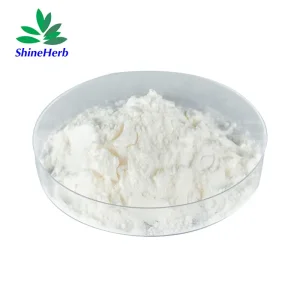
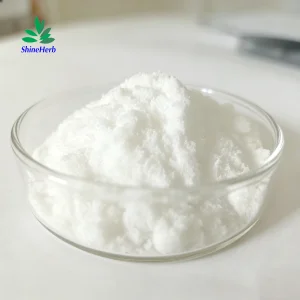
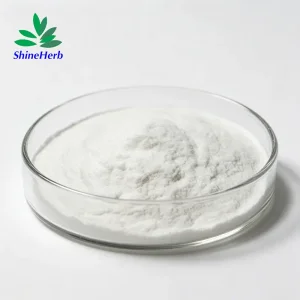
The Evolution of Food Grade Lactobacillus salivarius
How contemporary scientific advancements have repositioned L. salivarius from a standard commensal lactic acid bacterium into a high-value bio-therapeutic ingredient across multinational formulations.
Bacteriocin Production & Pathogen Exclusion
Food Grade Lactobacillus salivarius is renowned for synthesizing Salivaricin (specifically Salivaricin B, CRL1328, and Abp118), powerful class II antimicrobial peptides. These bacteriocins exhibit targeted bactericidal efficacy against foodborne pathobionts including Listeria monocytogenes, Helicobacter pylori, Salmonella enterica, and Streptococcus mutans, supporting antibiotic-free microbial balance.
High-Viability Microencapsulation
A primary operational hurdle for industrial buyers is cell wall shear degradation during spray drying and gastric acid breakdown. Premier factories employ microfluidic double-emulsion and fluidized-bed lipid coating technologies, providing protective polymer shells that preserve >85% live cell count survival through pH 2.0 stomach fluid to ensure targeted ileal and colonic delivery.
Evolving Multi-Omics Strain Verification
Procurement requirements have shifted from generic taxonomic classification to whole-genome sequenced (WGS) and phenotypically fingerprinted strains. Global pharmaceutical and nutraceutical brands require definitive proof that bulk strain lots are devoid of transmissible plasmid-mediated antimicrobial resistance (AMR) genes in full alignment with EFSA QPS regulations.
China Factory 4.0: Resilient Fermentation Infrastructure
How Shaanxi ShineHerb Biotech leverages computerized bioreactors, deep automation, and vertical integration to eliminate batch-to-batch variability and deliver verified bacterial stability.
Submerged Fed-Batch Bioreactors
Our 50-ton stainless steel multi-stage bio-fermentation trains are managed via SCADA and PLC process architecture. Real-time mass spectrometry gas analyzers and closed-loop feedback monitor dissolved oxygen (DO), oxidation-reduction potential (ORP), carbohydrate replenishment, and pH neutralization, ensuring exponential growth phase termination with optimal cell envelope integrity.
Cryoprotection & Dual-Zone Freeze Drying
To safeguard live cell membrane integrity during dehydration, custom polysaccharide-trehalose cryoprotectant matrices are integrated prior to deep freezing (-45°C). Vacuum sublimation operates within Class 100,000 cleanrooms under automated sublimation curves, avoiding thermal denaturation and maintaining a cell membrane survival rate over 94%.
Supply Chain Resilience & Cost Parity
Headquartered in the Xi'an High-Tech Zone, ShineHerb integrates localized access to high-purity agricultural fermentation substrates, green energy grids, and rail/air logistics hubs. This engineering integration protects international clients from sudden tariff variations, raw ingredient shortages, and erratic shipping timetables.
Industrial Specifications: Technical Evaluation Matrix
Analytical chemistry parameters and biological thresholds for procurement compliance managers evaluating bulk Lactobacillus salivarius lots.
| Evaluation Parameter | Food Grade Pure Powder | Direct Compressible Granules | Testing Protocol |
|---|---|---|---|
| Viable Cell Count (CFU/g) | ≥ 1.0 × 10¹¹ (100B) up to 5.0 × 10¹¹ | ≥ 5.0 × 10¹⁰ (50B) CFU/g | ISO 7889 / IDF 117 Enumeration |
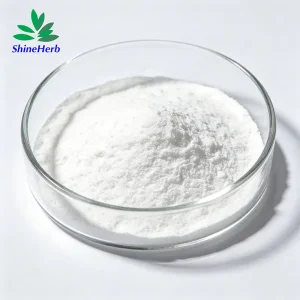
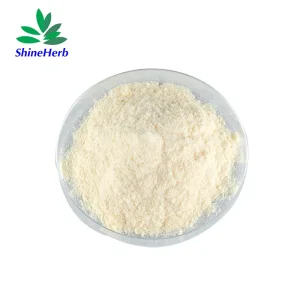
| Physical Morphology | Off-white to light yellow powder | Free-flowing spherical micro-pellets | Visual / Automated Particle Sizing |
| Moisture Content / Aw | Moisture ≤ 5.0%, Aw ≤ 0.15 | Moisture ≤ 4.5%, Aw ≤ 0.12 | USP <921> Karl Fischer / Chilled Mirror |
| Heavy Metals (Pb, As, Cd, Hg) | Total < 5.0 ppm, Pb < 0.5 ppm | Total < 5.0 ppm, Pb < 0.5 ppm | ICP-MS (USP <233>) |
| Pathogen Surveillance | Negative in 25g (Salmonella, E. coli) | Negative in 25g (Salmonella, E. coli) | FDA BAM Chapter 4/5 / qPCR |
| Targeted Activity Marker | Salivaricin B bacteriocin expression | Extended release enteric capability | Agar Well Diffusion / In Vitro GI Model |
| Regulatory Compliance | GRAS / EFSA QPS Compliant | FCC / USP Monographs | Batch Release COA + Full Dossier |
Localized Application Scenarios in Modern Consumer Goods
Expanding beyond basic dietary capsules, industrial buyers formulate food grade L. salivarius into diverse clinical and retail categories.
Oral Health Microbiome Delivery
Due to its native colonization capacity within human mucosal epithelium, food-grade L. salivarius actively downregulates Streptococcus mutans and volatile sulfur compound (VSC) producing strains. Ideal for chewable breath tablets, dental lozenges, fast-dissolving oral strips, and probiotic tooth powders.
Nutraceutical Premixes & Stick Packs
Engineered with tight particle size distributions (80–120 mesh) and ultra-low water activity, our stabilized powder blends cleanly with botanical extracts (like Green Tea or Quercetin), amino acids, and prebiotic fructooligosaccharides (FOS) without cross-hygroscopic clumping during high-speed blister filling.
Functional Dairy & Non-Dairy Fermentation
Incorporated directly into functional yogurts, fermented plant beverages, and functional oat drinks. Lactobacillus salivarius produces substantial D-lactic and L-lactic acid, imparting subtle organoleptic acidity while acting as an antagonistic bio-preservative against mold and spoilage microbes.
Frequently Asked Technical & Sourcing Questions
Clear answers regarding cold-chain logistics, phenotypic certifications, and custom contract manufacturing services.
How do you safeguard live CFU potency during intercontinental sea or air freight?
We pack food-grade probiotics in multi-barrier aluminum foil pouches containing medical-grade food desiccant, flushed with dry nitrogen gas to achieve residual oxygen <1%. Packaging is placed inside insulated VIP containers with dry ice or phase-change materials for air freight, or in reefer containers (-18°C) for ocean shipments, accompanied by validated electronic temperature loggers.
What documentation accompanies bulk food-grade strains for customs clearance and FDA/EFSA audits?
Each batch ships with a detailed Certificate of Analysis (COA) specifying CFU assay, moisture, Aw, heavy metals, and zero pathogen status. On request, we provide our comprehensive Dossier: Whole Genome Sequencing (WGS) report, PCR identification certificates, Non-GMO verification, TSE/BSE free statements, Allergen declarations, and ISO 9001/HACCP/GMP audit credentials.
Can you provide strain customization, custom excipient carriers, or lower concentration blends?
Yes. While pure concentrated cultures range from 100B to 500B CFU/g, our factory routinely custom-blends lower concentration products (e.g., 10B, 20B, or 50B CFU/g) using certified functional carriers like maltodextrin, resistant starch, inulin, or corn starch to meet your target capsule fill or sachet dose weight.
How does Shaanxi ShineHerb Biotech verify batch-to-batch genetic purity?
We employ dual internal and external testing protocols. Strain identity is verified via 16S rRNA gene sequencing and pulsed-field gel electrophoresis (PFGE). High-performance liquid chromatography (HPLC) evaluates metabolomic stability, and independent accredited laboratories (such as SGS or Eurofins) run cross-check verifications on viable cell enumeration and pesticide residues.
Complementary Bio-Active Ingredients & Excipients
Streamline your global supplier audits by sourcing high-purity vitamins, botanical extracts, sweeteners, and amino acids under one unified ISO quality system.