
Liposomal & Active Ingredients Engineered for the Philippines
Verified pharmaceutical-grade raw materials optimized for high kinetic stability, tropical ambient storage conditions, and accelerated systemic absorption profiles.
Liposomal Polydeoxyribonucleotide PDRN 99% Cosmetics Grade - Philippines Formulation Ready
View Specification & COA
High-Bioavailability D-Biotin Vitamin B7 Powder (Philippines Supplement CMO Supply)
View Specification & COA
Nervonic Acid 90% Acer truncatum Extract for Liposomal Neuroprotective Delivery
View Specification & COA
Natural Water-Soluble Chitosan for Mucoadhesive Liposomal Nanocarrier Systems
View Specification & COAThe Philippines Liposomal Landscape: Market Paradigm, Challenges, and Industrial Realities
The nutraceutical and pharmaceutical landscape across the Republic of the Philippines has experienced a fundamental shift from generic powder blending toward advanced colloidal delivery systems. Historically reliant on conventional oral solid dosages—such as hard gelatin capsules, standard tablets, and effervescent drinks—the Philippine health-conscious demographic is increasingly demanding premium, clinically validated nutraceuticals that guarantee superior bioavailability.
In Metro Manila (NCR), Region IV-A (CALABARZON), and dynamic commercial centers such as Cebu City and Davao, dietary supplement brand owners face unprecedented consumer scrutiny. Modern consumers understand that active molecules such as Reduced L-Glutathione, Ascorbic Acid (Vitamin C), Coenzyme Q10, Curcuminoids, and Resveratrol suffer catastrophic enzymatic and acid degradation in the human gastrointestinal tract when ingested in traditional unencapsulated forms. This bio-absorption deficit is especially pronounced with oral glutathione—a staple in the massive Philippine skin-lightening and hepatoprotective market—where unshielded tripeptides are cleaved by intestinal gamma-glutamyl transferase into constituent amino acids before reaching systemic circulation.
Philippine Climate Challenge: Operating in ASEAN Climatic Zone IVb (30°C / 75% Relative Humidity) necessitates stringent physical and chemical stabilization of lipid membranes. Standard aqueous liposomal formulations frequently undergo lipid hydrolysis, vesicle fusion, and payload leakage if not engineered with hydrogenated phosphatidylcholine, cholesterol stabilization, or transformed into dry liposomal powders through specialized freeze-drying (lyophilization) protocols.
While domestic demand for liposomal products continues to surge at a Compound Annual Growth Rate (CAGR) exceeding 11.4% across the ASEAN bloc, local Philippine manufacturing infrastructure remains heavily skewed toward primary packaging, secondary encapsulation, and liquid blending. Dedicated microfluidic and high-pressure homogenization factories require extreme capital expenditures, cleanroom infrastructure complying with PIC/S GMP standards, and high-purity phospholipid supply chains that are not natively manufactured in the Philippines. Consequently, Philippine pharmaceutical companies, tier-1 distributor networks, and prominent Direct-to-Consumer (D2C) brands rely on strategic contract manufacturing partnerships (OEM/ODM) with certified global liposomal factories capable of supplying standardized liposomal active raw materials, dry liposomal powders, and turn-key formulations certified by the Philippine Food and Drug Administration (FDA Philippines).
Global Liposomal Engineering: Advanced Phospholipid Nanocarrier Technology
Liposomal encapsulation is not a simple mixing process; it is a precision biophysical engineering discipline. At its molecular core, an authentic liposome is a self-assembled spherical vesicle composed of one or more concentric lipid bilayers enclosing an internal aqueous compartment. The amphiphilic nature of phospholipids (primarily Phosphatidylcholine (PC), Phosphatidylethanolamine (PE), and Phosphatidylserine (PS) derived from non-GMO soy or sunflower lecithin) enables the simultaneous encapsulation of hydrophilic nutrients within the aqueous core and lipophilic compounds within the hydrophobic hydrocarbon interior.
Microfluidic Hydrodynamic Focusing
Utilizing precision-machined microchannels to introduce controlled laminar flow streams of ethanolic lipid solution and aqueous actives. This achieves ultra-monodisperse particle sizing (PDI < 0.15) with exceptional batch-to-batch reproducibility, eliminating the broad vesicle size distributions typical of legacy rotor-stator shear mills.
- Precise vesicle diameter tuning (80nm to 150nm)
- Minimal active degradation from thermal stress
- Ideal for heat-sensitive peptides and proteins
High-Pressure Homogenization (HPH)
Processing coarse multivesicular liposomes under pressures ranging from 800 to 1,500 bar. The combined action of intense cavitation, extreme shear stress, and rapid pressure drop breaks large multilamellar vesicles (MLVs) down to stable Small Unilamellar Vesicles (SUVs).
- Scalable continuous throughput exceeding 2,000 L/h
- Validated entrapment efficiency exceeding 90%
- Industrial-grade heat exchangers maintain jacket temp < 25°C
Supercritical Fluid (SCF) & Drying
Supercritical Carbon Dioxide (scCO2) technologies eliminate toxic organic solvent residues while producing exceptionally clean lipid vesicular matrixes. Downstream spray-drying or lyophilization yields water-dispersible free-flowing liposomal powders.
- Zero residual solvent (USP <467> compliant)
- Extended shelf life up to 36 months in tropical climates
- Directly compressible into tablets or hard-capsule filling
| Analytical Parameter | Pharmacopoeial Testing Standard | Target Specification Window | Clinical & Industrial Relevance |
|---|---|---|---|
| Mean Particle Diameter (Z-Average) | Dynamic Light Scattering (ISO 22412 / USP <429>) | 80 nm – 150 nm | Bypasses reticuloendothelial clearance; maximizes lymphatic transcellular transport across M-cells. |
| Polydispersity Index (PDI) | Cumulants Analysis (DLS) | ≤ 0.200 (Monodisperse) | Guarantees uniform suspension stability; prevents Ostwald ripening and vesicle aggregation. |
| Zeta Potential (ζ) | Laser Doppler Electrophoresis | -25 mV to -45 mV (or > +30 mV) | Electrostatic repulsion prevents lipid coalescence during storage in humid environments. |
| Encapsulation Efficiency (EE%) | Centrifugal Ultrafiltration followed by HPLC-UV | ≥ 88.0% – 96.5% | Ensures active ingredient is entrapped within bilayer/core rather than existing in unshielded free solution. |
| Bilayer Morphology | Cryogenic Transmission Electron Microscopy (Cryo-TEM) | Spherical Unilamellar Vesicles (SUV) | Direct physical visualization confirming double-membrane integrity and absence of amorphous precipitates. |
High-Growth Liposomal Application Scenarios Across the Philippine Archipelago
Formulating for the Philippine archipelago requires understanding domestic lifestyle habits, demographic spending priorities, and climate-induced physiological stressors. Liposomal delivery directly solves clinical bioavailability barriers across four pillar commercial sectors:
1. Dermocosmetics & Aesthetic Medicine (Whitening & Barrier Defense)
The Philippines aesthetic market is internationally renowned for its intense demand for skin-brightening, melasma correction, and anti-photoaging treatments. Solar radiation indices in Luzon, Visayas, and Mindanao accelerate pigmentation disorders.
- Liposomal Glutathione + Vitamin C: Nanovesicles shield reduced L-glutathione from hepatic first-pass metabolism, elevating systemic erythrocyte glutathione levels by up to 300% over oral crystalline powders.
- PDRN (Polydeoxyribonucleotide) Nanocarriers: Topical and mesotherapy-grade liposomes penetrate the stratum corneum to deliver marine salmon-derived DNA fragments directly to dermal fibroblasts, spurring tissue regeneration.
- Liposomal Niacinamide & Tranexamic Acid: Targeted epidermal penetration without surfactant-induced erythema.
2. Daily Preventive Immunity & Metabolic Wellness
Post-pandemic health consciousness in the Philippines has made immune-modulating nutrients indispensable across urban households. However, mega-dosing standard ascorbic acid triggers severe gastric hyperacidity and diarrhea.
- Liposomal Pure Vitamin C: Phospholipid encapsulation eliminates osmotic diarrhea, enabling safe single doses of 1,000 mg to 3,000 mg with sustained blood plasma curves over 24 hours.
- Liposomal Vitamin D3 + K2 (MK-7): Substantially enhances absorption in populations with low lipid intake or localized metabolic syndromes.
- Liposomal Zinc & Quercetin: Delivers bioflavonoid-ionophore complexes into cellular cytosols to inhibit viral replication pathways.
3. Cognitive Function, Focus & BPO Workforce Nutrition
The Philippines Business Process Outsourcing (BPO) sector employs over 1.5 million professionals, predominantly working rotating night shifts. Chronic circadian rhythm disruption, oxidative cognitive fatigue, and elevated cortisol are widespread.
- Liposomal Phosphatidylserine & Melatonin: Sublingual liposomal sprays cross mucosal membranes instantly, ensuring rapid sleep onset without next-day grogginess.
- Liposomal Nervonic Acid: Restores myelin sheath integrity and boosts cerebral neurotransmission during sustained nocturnal tasks.
- Liposomal CoQ10 (Ubiquinol): Overcomes the extreme hydrophobicity of native CoQ10, boosting mitochondrial ATP production in myocardial and neural tissues.
4. Pediatric, Geriatric & Clinical Enteral Formulations
Geriatric malnutrition and pediatric micronutrient malabsorption present persistent clinical burdens across Philippine provincial healthcare facilities. Swallowing large hard tablets is a primary compliance barrier.
- Liposomal Iron (Ferric Pyrophosphate): Completely eliminates the gastrointestinal irritation, metallic taste, nausea, and teeth-staining characteristic of conventional ferrous sulfate drops.
- Liposomal Magnesium Glycinate: Offers high intracellular elemental magnesium delivery for cardiovascular and muscular relaxation without inducing osmotic bowel urgency.
- Liquid Liposomal Drops: Readily mixed into tropical juices or pure water without oil-slick separation.
Macro Industrial Solutions: FDA Philippines Compliance & OEM/ODM Roadmap
Procuring raw ingredients or finished contract-manufactured batches for importation into the Philippines requires flawless regulatory dossier alignment. The Food and Drug Administration of the Philippines enforces rigid surveillance protocols under Republic Act No. 9711 (The Food and Drug Administration Act of 2009) and the ASEAN Cosmetic Directive (ACD).
Full Dossier Support for LTO & CPR
Every industrial shipment is backed by documented verification for Philippine brand owners seeking their License to Operate (LTO) and Certificate of Product Registration (CPR) under the Center for Food Regulation and Research (CFRR):
- Validated Certificate of Analysis (COA) per batch
- Zone IVb Accelerated & Real-Time Stability Studies
- Free-Sale Certificates (FSC) & Manufacturer's GMP
- BSE/TSE-Free, Non-GMO, and Halal Certification
Custom Delivery Matrix Engineering
We tailor our manufacturing lines to match the specific marketing channels and formulation formats of our Philippine clientele:
- Bulk Free-Flowing Powders: High-load liposomal powders for capsule machines in local CMO plants.
- Concentrated Liquid Emulsions: Ready for dilution into functional RTD beverages or oral liquid sachets.
- Sublingual Micro-Sprays: High-potency dosing with enhanced mucosal absorption.
- Dermocosmetic Serums & Gels: Compatible with tropical non-greasy cosmetic sensory requirements.
Cold-Chain & Desiccated Sea-Air Logistics
Navigating maritime logistics to Manila South Harbor, Subic Bay, or Batangas Port requires rigorous environmental controls:
- Aluminum moisture-barrier bags with high nitrogen flush
- Desiccant integration preventing localized cake compaction
- Temperature-monitored refrigerated sea containers (Reefer 15–20°C)
- Direct air-freight door-to-door clearance for emergency batches
Future Horizons: Advanced Delivery Architectures for Southeast Asia
The nanotechnology industry is evolving rapidly beyond traditional single-bilayer liposomes. The next decade of nutraceutical and therapeutic delivery in Southeast Asia will be shaped by four revolutionary structural platforms:
Exosome-Liposome Chimeras
By hybridizing plant-derived exosome vesicles with synthetic phospholipid bilayers, scientists are creating chimeric nanocarriers that exhibit enhanced biocompatibility, organotropism, and low immunogenicity. These chimeras demonstrate phenomenal cellular uptake kinetics for peptide therapies and aesthetic dermatology rejuvenation.
Mucoadhesive Chitosan-Coated Liposomes
Secondary surface functionalization of liposomes with natural cationic polymers like water-soluble chitosan creates a protective mucoadhesive shell. In the acidic environment of the stomach, the chitosan shield prevents lipolytic degradation and clings to the intestinal mucosal lining, tripling the residence absorption window.
Solid Lipid Nanoparticles (SLN) & NLC Systems
For highly hydrophobic molecules prone to precipitation in liquid liposomes, Nanostructured Lipid Carriers (NLCs) blending solid and liquid lipids provide a disordered lipid crystal lattice. This guarantees exceptional drug payload loading and prevents active expulsion during tropical shelf storage.
AI-Assisted Lipid-Payload Matching Algorithms
Machine learning modeling evaluates molecular electrostatic potential surfaces, logP partition coefficients, and lipid headgroup interaction energies to predict optimal phospholipid-cholesterol-surfactant ternary blends, minimizing trial-and-error R&D lead times.
Industrial Grade Active Ingredients for Philippine Formulation
High-purity raw materials, biochemical intermediates, and bioactive extracts ready for custom encapsulation, cosmetic manufacture, and pharmaceutical synthesis.
Natural Blue Phycocyanin Spirulina Extract for Liposomal Antioxidant Formulas
View Specification & COA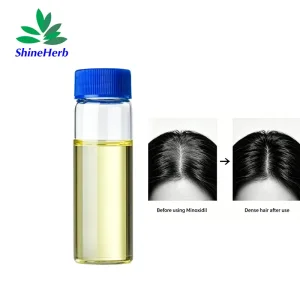
High-Purity Minoxidil Active Powder & Solutions for Scalp Follicle Delivery
View Specification & COA
Cosmetic Grade 5-ALA HCl (5-Aminolevulinic Acid) for Advanced Photodynamic Skin Rejuvenation
View Specification & COA
5-ALA Phosphate Powder for Bio-Cellular Energy & Anti-Aging Skin Formulations
View Specification & COATechnical & Procurement FAQ for Philippine Importers
Clear, authoritative guidance covering regulatory clearances, stability specifications, minimum order quantities, and custom delivery development.
How do you verify genuine liposomal encapsulation versus standard lipid emulsions?
We provide definitive analytical proof rather than marketing claims. Every batch is validated using Dynamic Light Scattering (DLS) to confirm particle size distribution (80–150 nm) and polydispersity index (PDI < 0.2). Crucially, we quantify Entrapment Efficiency (EE%) through centrifugal filtration followed by HPLC-UV assay of both free and entrapped fractions. Morphological double-membrane integrity is physically documented via Cryogenic Transmission Electron Microscopy (Cryo-TEM) photographs.
How do your formulations survive the tropical heat and humidity of the Philippines?
We design products specifically for ASEAN Climatic Zone IVb (30°C / 75% RH). For liquid formulations, we incorporate high-purity hydrogenated phosphatidylcholine, cholesterol membrane stabilizers, and pharmaceutical buffers to maintain a zeta potential between -30 mV and -45 mV, preventing vesicle collapse. Furthermore, we offer lyophilized or spray-dried liposomal powders packaged in tri-laminated nitrogen-flushed foil pouches that remain completely shelf-stable for up to 36 months under ambient storage.
What documentation do you provide for Philippine FDA CPR/LTO applications?
We supply a comprehensive regulatory dossier tailored to FDA Philippines requirements, including: GMP Certificate of the manufacturing facility, ISO 9001/22000, Certificate of Free Sale (CFS), batch Certificate of Analysis (COA) with active HPLC assay, heavy metals (Pb, As, Cd, Hg), microbial limits (USP <2021/2022>), residual solvents (USP <467>), Non-GMO, BSE/TSE-Free declarations, and Halal certification.
Can you provide custom white-label (OEM/ODM) liposomal finished products?
Yes. Beyond supplying raw active powders and liquid concentrates, we engineer full turn-key private label products for Philippine brands. Formats include: single-serve liquid sachets (10ml–30ml), oral dropper bottles, dry liposomal hard capsules, chewable liposomal gummies, and topical airless pump cosmetic serums. Flavor profiles are fully customized for Southeast Asian palates (calamansi, mango, lychee, vanilla, and citrus blends).
What is the typical Minimum Order Quantity (MOQ) and production lead time?
For standardized bulk liposomal powders and liquid concentrates, our commercial MOQ starts at 25 kg, with sample trial batches of 1 kg to 5 kg available for client R&D and pilot formulation. Custom turn-key OEM projects generally require an MOQ of 5,000 to 10,000 units depending on packaging format. Bulk raw materials ship within 5–7 business days; custom contract manufacturing requires 3–5 weeks following formula sign-off.
What are your shipping routes and clearance assistance for Manila and Cebu?
We regularly ship CIF/DAP to Port of Manila (South/North Harbor), Batangas, and Cebu International Port. For urgent clinical or cosmetic production runs, we coordinate air cargo to Ninoy Aquino International Airport (MNL) or Mactan-Cebu International Airport (CEB) with DHL, FedEx, or dedicated freight forwarders. Our export department handles all consular legalization, packing declarations, and HS code classifications to guarantee frictionless clearance through the Bureau of Customs (BOC).
Partner with a Premier Liposomal Nanotechnology Factory
Request comprehensive technical specifications, batch Certificates of Analysis, or order pilot-scale samples for your Philippine brand's next breakthrough formulation.