High-Purity Active Ingredients & Nutritional Intermediates
Direct sourcing portfolio engineered under strict ISO, GMP, and FCC standards, verified via batch-specific HPLC/UV testing and full traceability dossiers.
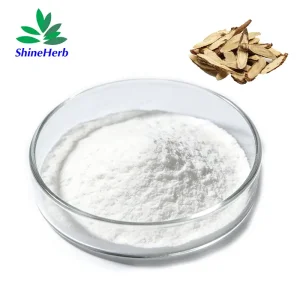
The Global Yucca Extract Revolution: Mechanistic Insights & Market Trajectory
An exhaustive technical briefing on Yucca schidigera bio-actives, steroidal saponin kinetics, ammonia volatilization abatement, and shifting paradigm in sustainable animal rearing.
Steroidal Saponin Complex
Yucca extract derives its primary efficacy from steroidal saponins, dominated by sarsasapogenin, smilagenin, and markogenin aglycones bound to branched glycosidic chains. These amphiphilic structures bind irreversibly to cholesterol domains in protozoal membranes, reducing bacterial degradation of essential proteins in digestive systems while modulating gut microbiome homeostasis.
Polyphenolic Resveratrol & Yuccaols
Beyond saponins, authentic Yucca schidigera extract contains significant concentrations of stilbenoid polyphenols, designated as Yuccaol A, B, C, D, and E, alongside trans-resveratrol. These phenolic constituents act as powerful electron-donating antioxidants, downregulating NF-κB pathways, neutralizing reactive oxygen species (ROS), and reducing gut epithelial inflammation in intensive livestock production.
Urease Inhibition & Deodorization
Volatile ammonia ($NH_3$) generated from microbial urea hydrolysis is an environmental hazard in poultry houses, swine operations, and companion animal litter boxes. Yucca steroidal fractions directly downregulate bacterial urease activity while simultaneously adsorbing gaseous ammonia via macromolecular hydrogen bonding, transforming ambient livestock housing into healthier biological ecosystems.
Enterprise Procurement Criteria: Strategic Sourcing Across Global Verticals
B2B formulators, commercial premix blenders, and multinational feed integrators demand rigorous standardization beyond generic botanical names. Here is how modern QA divisions classify their exact purchasing criteria.
Tier 1: Commercial Feed Integrators
Feed millers operating at metric-ton scale focus on cost-in-use, bulk density homogeneity (0.45–0.65 g/mL), and thermal stability during high-temperature conditioning and pelleting (up to 95°C). Product must prevent segregating in dry premixes and demonstrate flowability without caking.
- Mesh granularity: 80 to 120 mesh dry sieving pass
- Consistent saponin assays (30% or 40% UV standard)
- Carrier options: Natural Yucca fiber, silica, or maltodextrin
Tier 2: Super-Premium Pet Food Brands
Extrusion stability and clean-label integrity rule the companion animal sector. Dog and cat kibble manufacturers require certified pure Yucca schidigera extract powders to substantiate fecal odor reduction claims, insisting on strict zero-adulteration guarantees.
- Zero synthetic surfactant additives (Quillaja / SDS free)
- Palatability index safety for feline & canine diets
- Extrusion survival across 120°C–140°C thermal profiles
Tier 3: Agrochemical & Organic Soil Conditioners
In modern horticulture, Yucca extract serves as a 100% natural, non-ionic wetting agent and soil penetrant. Hydrophobic soils benefit from reduced water surface tension, facilitating uniform moisture retention, root zone aeration, and enhanced mycorrhizal colonization.
- High Brix liquid derivatives (50° Brix) & 100% water-soluble powders
- OMRI compliance for certified organic crop production
- Compatibility with drip fertigation and foliar bio-stimulants
Industrial Processing Engineering & Release Specifications
From sustainable wildcrafted bark harvest to low-temperature multi-stage counter-current aqueous-ethanolic percolation and aseptic spray-drying, each batch is released against rigorous pharmacopeial and feed monograph limits.
| Analytical Parameter | High-Purity 60% Powder | Standard 30% Feed Grade | 50° Brix Concentrate Liquid | Testing Monograph |
|---|---|---|---|---|
| Botanical Origin | Yucca schidigera Roezl | Yucca schidigera Roezl | Yucca schidigera Roezl | TLC / Botanical Identity |
| Total Steroidal Saponins | ≥ 60.0% | ≥ 30.0% | ≥ 8.0% - 12.0% | UV-Vis / Colorimetric (B-D) |
| Resveratrol / Polyphenols | ≥ 3.5% | ≥ 1.0% | ≥ 0.8% | HPLC-DAD (Reverse Phase) |
| Moisture (Loss on Drying) | ≤ 5.0% | ≤ 6.0% | Balance Water (~50%) | USP <731> (105°C, 3 hrs) |
| Total Ash Content | ≤ 8.0% | ≤ 10.0% | ≤ 4.5% | USP <561> Incineration |
| Heavy Metals (as Pb, As, Cd, Hg) | Pb < 2ppm, As < 1ppm, Cd < 0.5ppm | Total < 10ppm | Total < 5ppm | ICP-MS (EPA Method 6020B) |
| Total Aerobic Microbial Count | < 1,000 CFU/g | < 5,000 CFU/g | < 500 CFU/mL | USP <61> Microbial Limits |
| Mycotoxins (Aflatoxin B1+B2+G1+G2) | < 4.0 ppb | < 10.0 ppb | < 4.0 ppb | LC-MS/MS Trace Monograph |
Engineered Nutritional & Agrochemical Solutions Across Multi-Species Sectors
Comprehensive performance gains driven by bio-active saponin surfactant mechanics, enhanced nutrient transport, and digestive surface tension modulation.
Intensive Poultry Broiler Production
Sub-therapeutic inclusion of Yucca extract (60–120 ppm) in broiler rations delivers measurable Feed Conversion Ratio (FCR) improvements of 2.8% to 4.5%. By curbing atmospheric ammonia levels inside closed-confinement broiler sheds, respiratory distress (ascites syndrome, airsacculitis) and footpad dermatitis lesions are radically minimized.
Swine Weanling & Finishing Operations
Nursery pigs transitioning from liquid milk diets to cereal-based feeds experience villus atrophy and inflammatory gut stress. Yucca steroid saponins increase microvilli membrane permeability without inducing cellular lysis, accelerating nitrogen absorption, mitigating diarrhea incidence, and diminishing noxious barn odors by up to 55%.
High-Density Aquaculture Rearing
Ammonia-nitrogen ($NH_3\text{-}N$) toxicity presents one of the highest mortality hazards in intensive recirculating shrimp (Litopenaeus vannamei) and tilapia aquaculture. Yucca extract dosing directly into pond water or via coated feed pellets neutralizes metabolic nitrogen wastes, stabilizes dissolved oxygen levels, and inhibits pathogenic Vibrio propagation.
Precision Agriculture & Turf Care
In low-water precision irrigation and golf course greens maintenance, synthetic surfactants increasingly face environmental restrictions. Natural Yucca sap provides an eco-friendly surfactant alternative that breaks soil surface crusting, drives localized water distribution downward into root fibers, and boosts the uptake kinetics of humic and fulvic biostimulants.
Localization Governance, Audit Readiness & Supply Chain Provenance
Ensuring compliance with stringent international frameworks: EU Feed Additive Register, US FDA FSMA, Halal, Kosher, and zero-adulteration botanical authentication.
EU & North American Registrations
Our bulk manufacturing streams adhere strictly to European Regulation (EC) No 1831/2003 for animal nutrition additives and FDA Generally Recognized As Safe (GRAS) status under 21 CFR §172.510 for natural flavoring and feed additives. Every consignment includes full MSDS, TSE/BSE-free declaration, allergen statements, and non-GMO affidavits.
Wildcrafted Sustainable Harvesting
We source raw desert logs from legally concessioned, responsibly managed desert plantations. Regenerative cutting practices ensure the root crown remains intact in the soil, allowing native arid yucca plants to resprout naturally without eroding fragile desert ecology.
Full Lot Traceability & Safety Dossiers
Every industrial container is assigned a unique batch lot number tying back to original raw harvest lot records, solvent purification profiles, oven-drying temperatures, and finished microbiology plate readings. Third-party independent testing (e.g., SGS, Eurofins) is seamlessly accommodated per customer qualification SOPs.
Technical Roadmap: Next-Generation Phyto-Chemical Processing
Continuous investment into green bio-refinery engineering and standardized saponin fractionation technologies to push product purity, functional solubility, and environmental sustainability.
Enzymatic De-Bittering & Aglycone Cleavage
Formulating companion animal treats requires eliminating residual botanical bitterness without compromising the active steroid core. Our pipeline utilizes targeted β-glucosidase enzymatic cleavage to modify peripheral sugar chains, enhancing feline palatability while increasing bio-availability in the distal intestine.
Supercritical Fluid & Membrane Concentration
Transitioning toward low-carbon footprint separation, our engineering division is validating subcritical aqueous extraction and ceramic nanofiltration membranes to concentrate high-purity saponins (>65% HPLC) without excessive thermal degradation of volatile polyphenols.
Micro-Encapsulated Slow-Release Formats
For high-moisture silage and ruminant applications, unprotected saponins can undergo rapid microbial degradation within the rumen. Our micro-encapsulated lipid-matrix formats bypass the rumen intact, delivering active saponins directly into the abomasum and lower digestive tract for maximized systemic efficiency.
Frequently Answered Questions: Wholesale Yucca Extract Sourcing
Authoritative technical answers to common queries raised by procurement managers, formulations chemists, and regulatory officers.
High-Purity Bio-Chemicals, Enzymes & Functional Minerals
Formulation synergy: Pair Yucca Extract solutions with pharmaceutical-grade amino acids, active flavonoids, and organic mineral chelates for high-performance end products.