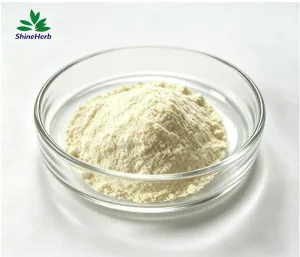
Best Bulk Vitamin A Palmitate Powder Manufacturer for Supplement Manufacturer, Company
Inquire Specification
Engineered for high bioavailability, verified chemical assay, and pharmaceutical-grade purity across global supply lines.
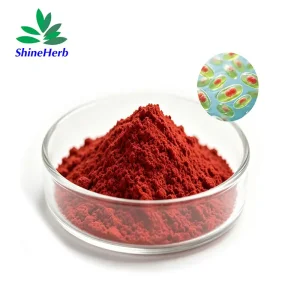
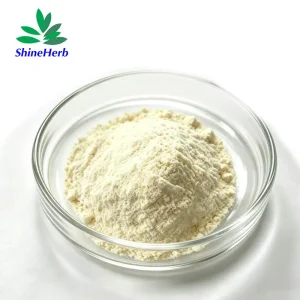
A rigorous examination of primary yeast autolysis, umami peptide engineering, enzymatic hydrolysis, and supply-chain risk mitigation for global food processors.
As modern consumers demand transparent ingredient lists and stringent clean-label integrity, yeast extract food additives have transitioned from standard flavor complements to core building blocks in food science. Derived through controlled bio-fermentation and advanced enzymatic cleavage of food-grade Saccharomyces cerevisiae, yeast extract provides naturally occurring free amino acids (such as glutamic acid), essential ribonucleotides (GMP and IMP), and bio-functional short-chain peptides. Today's commercial challenges—namely dietary sodium reduction mandates by global health organizations, the rapid development of authentic plant-based proteins requiring metallic off-note masking, and the replacement of monosodium glutamate (MSG) and hydrolyzed vegetable protein (HVP)—rely entirely on precise yeast extract matrices.
Enterprise procurement professionals balance sensory performance, regulatory clearance, and batch-to-batch chemical predictability across diverse categories.
Global food brands demand natural flavor alternatives that do not trigger consumer resistance. Yeast extracts deliver rich umami notes without requiring E-numbers, enabling transparent label declarations like "Natural Yeast Extract" or "Natural Flavoring."
With stringent sodium ceilings enforced in the EU and North America, manufacturers replace sodium chloride with nucleotide-rich yeast extracts (I+G types) to stimulate tongue taste receptors and maintain perceived salinity with 30% to 40% less salt.
In plant-based meat and alternative dairy formulations, yeast extracts suppress bitter, beany, and astringent notes from pea and soy isolates while imparting authentic Kokumi (roundness, richness, and mouthfulness) and lingering savory depth.
Comprehensive application blueprints engineered to streamline industrial food manufacturing workflows.
Imparts lingering meat-broth flavor profiles and full-bodied thermal stability during retort cooking and extended shelf preservation.
Ensures ultra-fine particle adhesion on extruded snacks, chips, and spice rubs, yielding rapid dissolution and instantaneous palate impact.
Serves as a nitrogen, vitamin, and trace mineral substrate for high-density microbial cultivation, starter cultures, and probiotic APIs.
Enhances moisture retention, binding properties, and authentic roasty aroma notes in emulsions, sausages, cured meats, and vacuum marinades.
Continuous investment in biocatalytic control, advanced drying dynamics, and targeted peptide separation.
Strain optimization of S. cerevisiae with nutrient feed algorithms to maximize intracellular ribonucleic acid and branched-chain amino acids.
Integration of targeted endo- and exo-peptidases alongside 5'-phosphodiesterases to convert native cellular proteins into high-Kokumi dipeptides.
Ultra-filtration and nano-filtration separation stages to isolate specific molecular weight profiles (<1,000 Da) for bitterness-free flavor enhancers.
Micro-encapsulated drying environments yielding non-caking, free-flowing granular powders with instantaneous solubility in cold liquids.
Unmatched regulatory documentation, multi-standard laboratory verifications, and seamless global logistics.
Every shipment is accompanied by lot-specific Certificates of Analysis (COA), Technical Specification Sheets (TDS), Safety Data Sheets (SDS), Allergen Declarations, Non-GMO Statements, and TSE/BSE Clearances.
Our manufacturing and processing partners maintain active certifications including ISO 9001, ISO 22000, FSSC 22000, HACCP, alongside full HALAL (MUI/JAKIM compliant) and KOSHER Parve registrations.
Our cross-border logistics team leverages deep expertise in tariff classification (HS Code 2106.90 / 3504.00), sea container freight optimization, and DDP/FOB/CIF fulfillment into Europe, the Americas, and APAC.
Direct answers for formulation scientists, quality control managers, and sourcing directors.
Primary grown yeast extract is cultivated using specially controlled sugar substrates (such as molasses or dextrose) exclusively for flavor production. It features a cleaner, lighter sensory profile, minimal hop bitterness, and higher natural ribonucleotide concentrations compared to by-product spent brewer's yeast, ensuring superior consistency in food flavoring formulations.
Yeast extracts naturally contain peptides, glutamates, and purine nucleotides (5'-GMP and 5'-IMP). These components work synergistically with human taste buds to activate lingual calcium-sensing receptors (CaSR) and metabotropic glutamate receptors (mGluR4). This sensory synergy prolongs salt taste perception, allowing food processors to decrease table salt (NaCl) usage by up to 35% without making the food taste bland or flat.
Yes. Yeast extract is categorized as a natural food ingredient rather than a synthetic additive in the EU (under Regulation EC 1334/2008), the United States (FDA 21 CFR 184.1983 - GRAS), and across Asian regulatory frameworks. It does not carry chemical E-numbers (such as E621 for MSG), fitting clean-label branding goals.
Standard export packaging consists of 20 kg or 25 kg multi-wall craft paper bags with an inner heat-sealed food-grade polyethylene moisture-barrier liner. Drums (fiber drums with polyethylene liners) and 500 kg super-sacks are also available. Stored in cool, dry conditions with intact packaging, our yeast extracts maintain a shelf life of 24 to 36 months.
We provide 100g to 500g trial samples along with complete batch Certificates of Analysis, allergen checklists, and nutritional profile matrices. Samples allow food scientists to conduct bench-scale organoleptic testing, solubility checks, and pilot batch trials prior to volume purchase confirmation.
Explore our certified catalog of functional ingredients, advanced cosmetic peptides, and food-grade mineral complexes.