Verified Functional Actives & Advanced Bio-Intermediates
Direct supply from Xi'an Hi-Tech Zone manufacturing hub. Rigorously verified via HPLC, UV, and GC chromatography against USP, EP, CP, and FCC pharmacopeial compendia with batch-traceable release documentation.
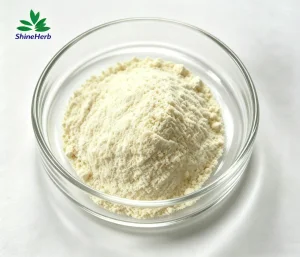
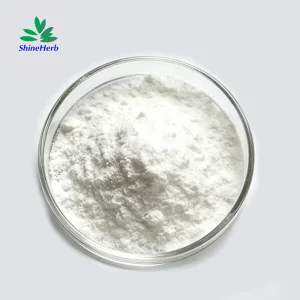
Catalytic Kinetics & Specificity of Neutral β-Galactosidase
Understanding the fundamental distinction between fungal acidic lactase and yeast-derived neutral lactase is essential for high-throughput dairy processing and continuous processing operations.
Optimal pH Operability (6.5 – 7.2)
Unlike acidic lactase derived from Aspergillus niger or Aspergillus oryzae (which functions at pH 3.5–5.5 for digestive supplements), our Neutral Lactase is isolated from Kluyveromyces lactis. It displays peak enzymatic activity at pH 6.6–6.9, perfectly aligning with native cow's, sheep's, and plant-based milks without necessitating prior acidification or corrective post-treatment de-acidification.
Dual Thermal Kinetic Profile
Engineered for dynamic dairy plant protocols. Neutral lactase catalyzes high-speed lactose hydrolysis under batch vat processing (35°C–40°C, 3–4 hours cycle) and demonstrates superior activity retention in refrigerated, cold-vessel storage tanks (4°C–8°C, 24–48 hours). This prevents off-flavor production, Maillard browning reactions, and thermal protein denaturation.
Absence of Side Proteolytic Activity
Secondary proteolysis during lactose cleavage is the primary culprit behind bitter peptide formation and physical destabilization in long-shelf-life UHT dairy. Our multi-stage ultrafiltration and continuous chromatographic downstream purification ensure zero secondary protease, arylsulfatase, or lipase impurities, guaranteeing shelf-stable sensory profiles up to 12 months.
| Analytical Parameter | ShineHerb Neutral Lactase (K. lactis) | Standard Acidic Lactase (A. oryzae) | Bacterial Lactase (B. licheniformis) |
|---|---|---|---|
| Operating pH Range | pH 6.2 – 7.4 (Optimum 6.7) | pH 3.5 – 5.5 (Optimum 4.5) | pH 6.0 – 8.0 (Optimum 6.5) |
| Temperature Window | 4°C – 42°C (Thermal inactivation >50°C) | 35°C – 60°C (Inactivated at >65°C) | 45°C – 65°C (Thermostable variant) |
| Enzyme Activity Standard | 50,000 NLU/g – 100,000 NLU/g (FCC/USP) | 10,000 ALU/g – 100,000 ALU/g | 10,000 – 50,000 NLU/g |
| Side Activities (Protease/Lipase) | Non-detectable (<0.01 U/g) | Variable / Moderate risk of proteolysis | Traces detected without resin polishing |
| Primary Application Fit | Fresh milk, UHT milk, Whey, Ice Cream | Digestive tablets, capsules, chewables | Continuous thermal packed bed reactors |
Technical Roadmap: Next-Gen Biocatalysis & Molecular Evolution
As the international lactose-free category accelerates toward zero-sugar, functional prebiotic enhancement, and ultra-cold processing, ShineHerb's scientific laboratory is developing next-generation enzyme engineering pipelines.
Directed Evolution for 4°C Catalysis
Utilizing computer-guided protein modeling and high-throughput mutagenesis to reconfigure catalytic loop regions. Goal: increase cold-temperature turnover velocity ($k_{cat}$) by 35% in silo environments without requiring elevated holding times, dramatically lowering cooling energy costs in massive industrial dairies.
Prebiotic GOS Bioconversion
Leveraging dual-function neutral lactase enzymes displaying heightened transgalactosylation activity. Concurrently hydro-cleaving lactose into glucose and galactose while polymerizing released galactosyl residues into beneficial short-chain Galacto-Oligosaccharides (GOS) in-situ inside high-solids dairy matrices.
Continuous Immobilized Bioreactors
Covalent immobilizing of neutral lactase onto macroporous silica and food-grade chitosan matrices. Allows repeated biocatalytic recycling over 60+ continuous production cycles, eliminating residual enzyme presence in the downstream stream and reducing catalytic operational expenditures by 45%.
Clean-Label Inactivation Optimization
Engineering specific point-mutations that destabilize the quaternary tertiary fold precisely at standard pasteurization temperatures (72°C–75°C for 15 seconds). Ensures 100% enzyme denaturation without thermal caramelization or chemical stabilization residues in infant nutritional powder manufacturing.
End-to-End Processing Solutions Across Macro Dairy Verticals
Our application specialist team delivers customized dosing schedules, process integration designs, and compliance protocols across critical industrial applications.
Aseptic In-Line UHT Injection
Sterile filtration liquid formulation (0.22 µm PES certified) formulated specifically for micro-dosing systems (such as Tetra Pak Aldose) downstream of heat processing. Prevents fouling inside heating exchangers, eliminates heat-induced proteolysis, and achieves complete residual lactose elimination (<0.01%) directly within the final consumer package during transit.
Batch Silo Hydrolysis (Cold Process)
Standard raw milk tank agitation at 4°C–6°C. Dosed at 1,000–2,000 NLU/L, our cold-active neutral lactase achieves >99.9% hydrolysis inside 24 hours. Because the enzyme operates during scheduled raw material storage windows, dairies eliminate specialized heating holding cycles, retaining natural fresh-milk organoleptic balance.
Ice Cream, Condensed & Fermented Products
Lactose crystallization ("sandiness") causes severe texture defects in frozen desserts and evaporated dairy. Pre-hydrolyzing dairy bases with ShineHerb Neutral Lactase splits lactose into glucose and galactose—which increases perceived natural sweetness by 1.6x, lowers sucrose addition requirements by up to 20%, and prevents crystal seeding.
China Factory 4.0: Supply Chain Resilience & Bioprocess Scale
Operating from Xi'an Hi-Tech Zone, Shaanxi ShineHerb Biotech operates an 8,600 m² state-of-the-art facility featuring closed-loop biomanufacturing that guarantees batch-to-batch repeatability and volume security for Fortune 500 purchasers.
Automated Aerobic Bioreactor Cluster
Equipped with multi-stage 30,000-liter continuous bio-fermenters monitored by real-time SCADA automated feedback loops. Digital monitoring of dissolved oxygen (DO), exhaust gas ($CO_2/O_2$ ratio), micro-nutrient replenishment, and temperature holds fermentation variables to narrow deviations of <1.2%, ensuring high specific enzyme output per cubic meter.
Multi-Stage Downstream Separation
Following microfiltration cell separation, the enzyme broth undergoes hollow-fiber ceramic ultrafiltration followed by ion-exchange chromatography. This rigorous purification removes residual host-cell proteins (HCP), endo-toxins, and secondary yeast metabolites, yielding clean, crystal-clear liquid lactase and light, ultra-soluble vacuum freeze-dried powders.
Supply Chain Redundancy & Reserves
Mitigating global raw-material fluctuations through multi-point domestic carbon-nitrogen substrate sourcing and maintaining permanent physical buffer stocks (over 20 metric tons of standard enzyme activity equivalents). Dual supply routes via rail-sea intermodal logistics ensure shipment lead times of 10–14 days to major global hubs.
Regulatory Compliance & Multi-Jurisdictional Certification
Commercializing food enzymes globally necessitates full documentary transparency. ShineHerb backs every single batch with an ironclad, audit-ready regulatory file.
FDA GRAS & EFSA Conformance
Sourced exclusively from non-pathogenic, non-toxigenic Kluyveromyces lactis lineages widely evaluated by the FDA and the European Food Safety Authority (EFSA), fully cleared for infant nutrition and general food preparation applications.
FCC & Pharmacopeia Monographed
Assayed strictly according to the Food Chemicals Codex (FCC) Neutral Lactase Activity unit monograph, USP requirements, and European Pharmacopoeia (Ph. Eur.) criteria using standardized ortho-nitrophenyl-β-D-galactopyranoside (ONPG) substrates.
Halal, Kosher & Non-GMO
Certified 100% Non-GMO Project Verified feedstocks. Manufactured under strict Kosher (Chabad / OU compliant) and Halal supervision, ensuring global access to Muslim, Jewish, and allergen-sensitive consumer demographics.
Full Lot Dossier & Traceability
Every dispatch is accompanied by an authenticated Certificate of Analysis (COA) containing ICP-MS heavy metal screen (Pb <0.5 ppm, As <0.1 ppm, Cd <0.05 ppm, Hg <0.01 ppm), Total Plate Count (<500 CFU/g), and absence of Salmonella/E. coli.
Neutral Lactase Enzyme RFP Evaluation & Procurement Checklist
A structured technical guideline for corporate QA managers, dairy operations directors, and raw material procurement heads assessing biocatalytic enzyme sources.
| Evaluation Factor | Critical Benchmark Requirement | ShineHerb Guaranteed Quality Standard | Risk Assessment If Unmet |
|---|---|---|---|
| Activity Unit Definition | Explicit declaration in NLU/g or NLU/mL under defined FCC conditions. | Standardized 50,000 NLU/g or 5,000 NLU/mL (FCC IV ONPG Method). | Mismatched dosing, incomplete lactose breakdown, regulatory recalls. |
| Protease Contamination | Azocasein or hemoglobin protease test negative at standard limits. | Zero detectable protease; certified below 0.005 U/g spectrophotometric. | Bitterness, casein curdling, and physical destabilization in UHT milk. |
| Carrier Composition | Non-allergenic, clean-label carrier matrix (Maltodextrin / Glycerol). | Pharma-grade glycerol or non-GMO maltodextrin (customizable). | Unintended allergen labeling burdens, viscosity and solubility problems. |
| Aseptic Stability Profile | <100 CFU/mL bioburden; absence of thermophilic spore formers. | Gamma-irradiated or 0.22 µm sterile-filtered packaging; zero spores. | Premature batch spoiling, carton blowing in ambient distribution. |
| Cost-In-Use Economics | Optimized activity per metric ton of milk processed ($/MT finished milk). | Lowest catalytic unit cost through direct-from-source synthesis. | Excessive OPEX, compressed processor margins on competitive dairy shelves. |
Frequently Asked Inquiries from Dairy Processors & Importers
Transparent scientific answers addressing kinetics, storage, integration, and supply agreements.
What is the exact correlation between NLU, ALU, and FCC activity units?
Neutral Lactase Unit (NLU) is calibrated specifically for neutral β-galactosidase derived from yeasts such as Kluyveromyces lactis. One NLU represents the enzyme quantity liberating 1.0 µmol of o-nitrophenol per minute from o-nitrophenyl-β-D-galactopyranoside (ONPG) substrate at pH 7.0 and 30°C. In contrast, Acid Lactase Units (ALU) are measured at pH 4.5 and 37°C for fungal enzymes (Aspergillus oryzae). They cannot be translated through a flat multiplier; processing teams must rely on empirical ONPG assay conditions matching real dairy milk pH (6.6–6.8) to establish actual hydrolytic capability.
How does ShineHerb prevent off-flavor formation in Extended Shelf Life (ESL) and UHT milk?
Off-flavor generation (specifically cardboard, stale, or bitter taste) in shelf-stable milk stems from trace microbial proteases and side-arylsulfatase enzymes hydrolyzing milk caseins and sulfated dairy lipids. ShineHerb uses multi-stage anion/cation exchange chromatographic separation columns to isolate the β-galactosidase protein fraction (MW ~118 kDa) from low-molecular-weight proteases. Our enzyme tests negative for proteolytic impurities, guaranteeing clean, sweet, and authentic dairy flavor over 12 months at ambient temperatures.
What is the recommended dosing protocol for batch milk processing at 4°C to 8°C?
For silo hydrolyzing over a standard 24-hour holding cycle at 4°C–8°C, our recommended dosage is 1,200 to 1,800 NLU per liter of fluid milk (approx. 24–36 g of our 50,000 NLU/g formulation per metric ton of milk). For accelerated processing within 4 hours at 38°C, dosing 2,500 to 3,500 NLU/L achieves >99.9% lactose cleavage (residual lactose <0.01% w/w), satisfying global legal requirements for "Lactose-Free" nutritional labeling.
What packaging and shelf-life assurances are provided for international maritime freight?
Powder formulations are vacuum-packed in multi-layer aluminum-barrier pharmaceutical bags lined with pharmaceutical LDPE (1 kg, 5 kg, and 25 kg fiber drums) with food-grade desiccant packets, showing <3% activity reduction over 24 months stored below 20°C (recommended 4°C for long term). Liquid neutral lactase is packed in 25 kg aseptic HDPE jerrycans or 1,000 kg IBC totes, stabilized in glycerol/water matrices with verified sterility, transported via cold-chain reefers (2°C–8°C) to prevent thermal degradation.
Can ShineHerb provide custom enzyme activity formulations or customized carriers?
Yes. In addition to our standardized 50,000 NLU/g and 100,000 NLU/g powders, we formulate customized active concentrations (e.g., 10,000 NLU/g to 80,000 NLU/g) utilizing tailored food-grade diluents such as organic maltodextrin, dextrose, tapioca starch, or pharma-grade glycerol. Custom mesh-size tailoring (from 80 mesh to ultra-fine 200 mesh) is available to facilitate instant dissolution in dry dairy powder blending.
Comprehensive Raw Materials & Fine Chemical Intermediates
Broadening the procurement horizon with verified actives manufactured to strict international export standards.