Commercial Ingredient Inventory: Primary Supply Lines
Explore our immediate-dispatch botanical, bioactive, and synthesized functional ingredients formulated to meet rigorous ISO, GMP, and USP/FCC monographs for international processing factories.
The Clean-Label Paradigm Shift: Red 40 & Carmine Transitions
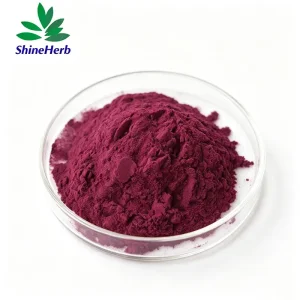
Global food systems and consumer-packaged-goods (CPG) conglomerates are aggressively phasing out synthetic azo dyes (Allura Red AC / FD&C Red No. 40) and insect-derived colorants (Carmine / Cochineal Extract E120). Driven by regulatory scrutiny in the European Union, the California Food Safety Act (AB 418), and escalating demand for plant-based, Kosher, and Halal-compliant formulations, Monascus Red Pigment has emerged as the premier bio-fermented alternative.
Regulatory Pressures on Synthetic Dyes
Tightening EFSA restrictions and US state-level bans targeting petrochemically derived azo dyes have forced major R&D divisions to reformulate. Monascus Red delivers the exact deep crimson hue required for meat, surimi, and confections without synthetic toxicity risks.
The Carmine (E120) Replacement Drive
While carmine provides stable red hues, its cochineal insect origin prevents vegetarian, vegan, Halal, and Kosher certification, while presenting severe anaphylactic allergen profiles. Bio-fermented Monascus Red offers an allergen-free, purely microbial drop-in alternative.
Thermal Superiority over Beetroot Red
Betanin (beetroot extract) degrades rapidly above 60°C, precipitating brown discoloration in pasteurized sauces and extruded meats. High-purity Monascus red pigments maintain chromatic intensity up to 121°C, ensuring batch-to-batch shelf visual stability.
Chromophore Architecture & Enterprise Quality Monographs
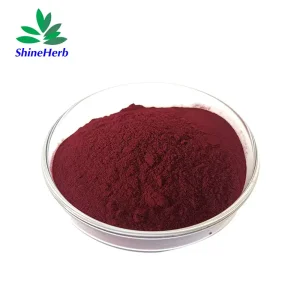
Monascus Red pigment comprises azaphilone pigments biosynthesized by non-pathogenic strains of Monascus purpureus, Monascus ruber, or Monascus pilosus through solid-state or submerged state aerobic fermentation. The deep red shade results primarily from the amine-derivatized condensation products Rubropunctatin and Monascorubrin reacting with cell wall proteins or free amino acids.
| Analytical Parameter | USP / FCC Reference Benchmark | Commercial Commodity Grade | ShineHerb Biotech Industry 4.0 Standard | Testing Methodology |
|---|---|---|---|---|
| Color Value (E1% 1cm 500nm) | ≥ 1,000 U/g | 1,000 – 1,500 U/g | 1,500 – 4,000+ U/g (Customizable) | UV-Vis Spectrophotometry |
| Citrinin Mycotoxin Residue | < 50 ppb | < 20 ppb – 50 ppb | ND / Non-Detectable (< 5 ppb) | LC-MS/MS Triple Quadrupole |
| Water Solubility @ 25°C | Completely Soluble | Forms fine colloidal haze | Instant Micro-Dispersion (Clear) | Turbidity Sensor / Filtration (0.45µm) |
| Arsenic (As) & Lead (Pb) | As ≤ 2 ppm, Pb ≤ 2 ppm | As ≤ 3 ppm, Pb ≤ 3 ppm | As ≤ 0.5 ppm, Pb ≤ 0.5 ppm | ICP-MS Heavy Metal Analysis |
| Ethanol Residuals | ≤ 0.5% | ≤ 1.0% | < 0.1% (Supercritical Desolventized) | Headspace Gas Chromatography (GC-FID) |
| Total Plate Count (CFU/g) | ≤ 1,000 CFU/g | ≤ 5,000 CFU/g | ≤ 100 CFU/g (Irradiation-Free Sterile) | USP <61> Microbial Enumeration |
Citrinin Mitigation
Citrinin, a nephrotoxic mycotoxin historically co-produced during Monascus fermentation, is engineered out of our expression strains via targeted pksCT metabolic pathway suppression combined with multi-stage membrane purification.
Batch Monograph Traceability
Every shipment arrives with comprehensive HPLC chromatograms, Certificate of Analysis (COA), safety data sheets (MSDS), non-GMO verification, and Halal/Kosher certificates logged within an ERP-linked QR monograph.
Mesh Size & Dissolution
Engineered across 80-mesh, 120-mesh, and ultra-fine micronized 200-mesh formats to allow instantaneous dispersion without agglomeration in cold-fill dry seasoning blends or liquid syrup bottling lines.
Photolytic Stability
Natural encapsulation with maltodextrin and modified food starches protects the unstable chromophore from UV degradation, increasing open-shelf color retention by up to 34% compared to raw red yeast rice powder.
China Factory 4.0: Bioreactor Precision & Logistics Resilience
China produces more than 85% of the world's fermented Monascus derivatives. ShineHerb Biotech leverages Xi'an's high-tech biotechnology corridor, combining automated sterile fermentation complexes, digitalized process parameter control, and deep access to Shaanxi's agricultural substrates to guarantee uninterrupted volume deliveries to Fortune 500 procurement teams.
Continuous Automated Bioreactors
Our facilities utilize 100,000-liter closed, automated solid-state and liquid fermentation bioreactors equipped with real-time SCADA telemetry monitoring dissolved oxygen, pH, substrate density, and metabolic heat to eliminate human-induced batch variation.
Vertical Substrate Integration
By sourcing certified non-GMO polished rice directly through contract farming clusters under stringent aflatoxin pre-screening protocols, our direct cost baseline remains insulated from commodity market price spikes, ensuring long-term locked-in pricing for wholesale contracts.
Rapid Multimodal Export Dispatch
Xi'an's international intermodal dry port and dedicated air-freight routes enable fast dispatch. Standard catalog items ship within 48 to 72 hours, backed by pre-cleared customs paperwork, vacuum-sealed nitrogen barrier liners, and cold-chain data loggers for temperature-sensitive destinations.
Precision Sector Applications: Food Science to Cosmeceuticals
Monascus Red pigment exhibits exceptional affinity for proteins, muscle fibers, and long-chain fats, delivering stable red-to-pink coloration without off-flavors, synthetic odor, or bitter botanical aftertastes.
Charcuterie & Nitrite-Reduced Meats
In cured sausages, frankfurters, bacon, and ham production, Monascus Red irreversibly binds with muscle myoglobin and myofibrillar proteins. This enables meat processors to drastically reduce sodium nitrite addition by 40% to 60% while maintaining consumers' expected fresh pink-red cured cured color throughout refrigerated display life.
Next-Gen Plant-Based Meat Analogues
Formulating vegan burgers and plant-based minced meat with soy, pea, or mycoprotein matrices requires thermal color-shifting behavior. Blended with low-concentration heat-labile polyphenols, Monascus Red mimics the transition from raw bloody pink to succulent cooked brown during consumer frying or grilling.
Fermented Condiments & Sauces
Unlike anthocyanins that turn dull blue or violet at higher pH levels, Monascus Red demonstrates robust chromatic stability in high-salinity and moderate-acid mediums (pH 3.5–6.8), making it the gold standard natural coloring agent for fermented red bean curd, barbecue marinades, sweet chili dips, and culinary glazes.
Confectionery, Candies & Gummies
Gelatin and pectin gummy matrixes colored with Monascus Red display high brilliance and optical clarity without turbidity. Its molecular stability withstands high-temperature candy boiling stages (140°C brief residence times) without browning or generating scorched flavor defects.
Flavored Spirits & Functional Beverages
Excellent ethanol solubility allows Monascus Red to integrate into liqueurs, fruit wines, and pre-mixed ready-to-drink (RTD) alcoholic beverages up to 45% ABV without precipitation, clouding, or protein-tannin sedimentation over long warehouse cycles.
Cosmetic & Personal Care Formulations
As clean beauty standards ban synthetic lake dyes, cosmetic chemists utilize ultra-pure, citrinin-free Monascus Red in lip tints, tinted moisturizers, blushers, and soap bases, providing rich crimson payoff with zero skin irritation and clean biological origin.
Vendor Due Diligence: Qualifying Monascus Suppliers
Procuring fermented colorants requires stringent vendor qualification to prevent cross-contamination, regulatory seizures, and consumer recalls. Global procurement teams should benchmark prospective wholesale suppliers against the following four-stage validation matrix:
1. Strain Integrity & Lineage
Demand documentation verifying the fungal strain origin. Reputable manufacturers register proprietary non-toxigenic strains deposited in recognized culture collections (e.g., ATCC, CGMCC) accompanied by whole-genome sequencing ensuring the absence of functional citrinin synthetase gene clusters.
2. In-Line LC-MS/MS Validation
Ensure batch testing utilizes ultra-sensitive Liquid Chromatography-Tandem Mass Spectrometry (LC-MS/MS) rather than rudimentary TLC or non-specific UV methods. A true supplier provides batch-specific chromatograms demonstrating non-detectable citrinin at limits of quantification (LOQ) ≤ 5 ppb.
3. Multi-Certification Baseline
Confirm supplier facilities maintain active GFSI-recognized certifications (FSSC 22000, BRCGS Grade A), ISO 9001:2015, ISO 22000, alongside recognized Halal (MUI/JAKIM compliant) and Kosher Pareve accreditations to guarantee unhindered multi-regional retail access.
4. Supply Redundancy & Buffers
Verify minimum warehouse buffer reserves (at least 60-day safety stock), dual-site bioreactor capacity, and established logistics partnerships with primary maritime and air carriers to safeguard against geopolitical, meteorological, or seasonal port bottlenecks.
Frequently Asked Questions: Industrial Procurement & Formulations
Detailed technical responses compiled by our chief bioprocess engineers and regulatory compliance team to assist R&D directors, plant QA managers, and chemical purchasing specialists.
What exactly is the difference between Red Yeast Rice Powder and Pure Monascus Red Pigment?
How does ShineHerb Biotech guarantee that Monascus Red is 100% Citrinin-Free?
What Color Values (E1% 1cm 500nm) are available for commercial wholesale?
How does Monascus Red perform under thermal processing, UV exposure, and pH shifts?
What are the typical packaging, storage conditions, and shelf-life metrics?
What is the minimum order quantity (MOQ) and lead time for international delivery?
Complementary Bioactive & Nutritional Raw Materials
Optimize freight logistics by consolidating your containerized procurement orders with our globally certified bulk functional nutrients, amino acid derivatives, and high-purity specialty vitamins.