Primary Catalog Selection
Standardized Dietary Actives & Functional Additives
Verified HPLC/USP monographs, lot-traceable raw botanical derivatives, and industrial bulk bio-ingredients exported worldwide.
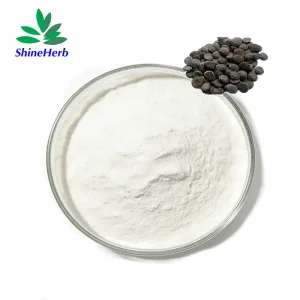
Best Wholesale High Purity 5-HTP Powder 98% Griffonia Extract Sleep Mood Support Supplement Raw Material Manufacturer, Factory
View Specification
Buy Melatonin Powder 99% CAS 73-31-4 Sleep Improvement Dietary Supplement Suppliers, Companies
View Specification
China Natural Plant Extract Berberine HCl 97% Berberine Sulfate 98% Supplier, Companies
View Specification
China Wholesale Chromium picolinate Nutritional Supplements Suppliers, Supplier
View Specification
Wholesale Bird's Nest Peptide High Absorption Supplement ingredients Exporter, Factory
View Specification
High-Quality Ascorbyl Glucoside Cosmetic Grade CAS 129499-78-1 for Uvioresistant Skin Whitening Manufacturers, Manufacturer
View Specification
China Niacinamide Vitamin B3 Powder 99% for Skin Care & Supplements Manufacturers, Factory
View Specification
Technical Whitepaper & Industrial Overview
High-Purity Food Additive Guarana (*Paullinia cupana*): Technical Standardization & Global Supply Chain Dynamics
Evaluating chemical composition, pharmacological kinetics, clean-label reformulations, and the competitive procurement advantages of Chinese advanced extraction facilities.
20+
Years Industry Experience
8,600m²
cGMP Extraction Facility
10% - 22%
Standardized Natural Guaranine (HPLC)
100%
Batch-Specific COA Traceability
1. Botanical Context & The Bio-Chemical Architecture of Food-Grade Guarana
Guarana (Paullinia cupana Kunth), a climbing shrub native to the Amazon basin, has emerged as one of the most critical functional food additives and nutraceutical ingredients within global energy beverages, sports nutrition formulas, and metabolic wellness products. While raw seeds historically served indigenous dietary protocols, contemporary food-grade guarana extract operates under strictly standardized industrial thresholds regulated by the Food Chemicals Codex (FCC), United States Pharmacopeia (USP), and European Pharmacopoeia (EP).
Unlike synthetic anhydrous caffeine synthesized via the chemical methylation of urea, naturally derived guarana extract features a complex phytochemically bound purine alkaloid matrix. Often designated historically as "guaranine," the primary active compound is chemically identical to caffeine (1,3,7-trimethylxanthine, C8H10N4O2, CAS: 58-08-2). However, in guarana seeds, this alkaloid naturally binds to a dense scaffold of condensed tannins (catechins, epicatechins, and proanthocyanidins), saponins, and polysaccharides.
Key Pharmacokinetic Insight: The tannin-xanthine complex formation in high-purity guarana significantly modulates digestive dissolution kinetics. While synthetic caffeine induces rapid peak blood-plasma concentrations within 30 to 45 minutes—frequently precipitating acute heart rate spikes, anxiety, and post-peak physiological fatigue—natural guarana provides an extended, linear alkaloid release profile across 4 to 6 hours, establishing stable adenosine receptor blockade without neurotransmitter depletion.
Furthermore, natural guarana contains trace levels of secondary methylxanthines including theobromine (3,7-dimethylxanthine) and theophylline (1,3-dimethylxanthine), which synergistically contribute mild bronchodilation, coronary vasodilation, and central nervous system stimulation with significantly diminished cardiovascular strain.
2. Chinese Industrial Factory Capabilities: Technological Sovereignty in Botanical Extraction
As global procurement directives demand ever-stringent quality standards, cost-to-potency ratios, and ESG-compliant traceability, Chinese botanical extract manufacturers—anchored strategically in biomedical hubs like the Xi'an Hi-Tech Industrial Zone—have revolutionized food additive guarana processing. Shaanxi ShineHerb Biotech Co., Ltd. demonstrates how world-class extraction engineering bridges Amazonian agrarian inputs with pharmaceutical-grade industrial output.
While raw guarana seeds originate in South America, international supply chain vulnerabilities (unstable local extraction infrastructures, fluctuating microbial burdens, inconsistent mesh size, and volatile standardization levels) have historically hindered enterprise procurement. Chinese continuous manufacturing infrastructure provides decisive solutions:
| Engineering Benchmark | Standard Origin Artisanal Processing | Chinese Advanced cGMP Facility (ShineHerb Biotech) |
|---|---|---|
| Extraction Technology | Atmospheric open-vat batch boiling, uneven thermal degradation | Multi-stage countercurrent dynamic extraction & vacuum concentration below 45°C |
| Assay Precision | Wide variance (8% to 15% indeterminate UV assay) | Exact standardization (10.0%, 20.0%, 22.0%) validated via validated HPLC |
| Solubility Profile | Residual lipid precipitates, cloudy in beverage solutions | 100% cold-water instant clear dispersion; sub-micron membrane filtration |
| Pesticide & Ethylene Oxide | High risk of cross-contamination; non-compliant with EU EC 396/2005 | Complete absence of EtO sterilization; multi-residue GC-MS/MS testing (<0.01 mg/kg) |
| Carrier & Clean-Label | Often requires 30–50% Maltodextrin to spray-dry safely | Available in 100% pure native spray-dried powder without added excipients |
| Heavy Metal Limits | Lead < 3.0 ppm, Arsenic < 2.0 ppm | Pb < 1.0 ppm, As < 0.5 ppm, Cd < 0.1 ppm, Hg < 0.05 ppm (ICP-MS tested) |
Chinese facilities leverage immense chemical separation columns, resin adsorption refinement, and dual-stage supercritical carbon dioxide (SC-CO2) technologies. This allows ShineHerb to selectively isolate or standardize natural caffeine ratios, eliminate undesired bitter pitch waxes, and yield crystalline-fine, free-flowing, non-hygroscopic powders calibrated specifically for automated high-speed canning lines, tablet presses, and stick-pack dosing machines.
Global B2B Market Alignment
Macro-Industry Dynamics, Enterprise Procurement Needs & Application Vectors
Translating market intelligence into robust formulation pipelines across beverage, pharmaceutical, and sports nutrition ecosystems.
The Global Clean-Label Shift: Synthetic vs. Botanical
Regulatory scrutinies in Europe (EFSA) and North America (FDA) paired with surging consumer aversion to petroleum-derived synthetic caffeine have catalyzed an urgent formulation overhaul. Leading beverage multinationals require guarana extract that offers clean flavor profiles, minimal astringency, and unambiguous documentation to declare "Natural Caffeine (from Guarana Seed Extract)" on transparent product labeling.
Nootropics & Cognitive Bio-hacking Integration
In modern nootropic formulations, guarana is frequently paired with amino acids such as L-Theanine, Alpha-GPC, and adaptogenic extracts. The intrinsic polyphenol-methylxanthine synergy provides heightened mental focus, memory retention, and vigilance without inducing psychomotor agitation or the vasospasms associated with rapid-release synthetic stimulants.
Thermal & Acid Stability in Ready-to-Drink (RTD) Beverages
Beverage chemists face persistent challenges: sedimentation, turbidity, and thermal degradation during ultra-high temperature (UHT) pasteurization or hot-fill packaging (pH 2.8 - 3.8). ShineHerb's specialized de-tannified and micro-filtered guarana variants prevent polyphenol-protein cross-linking, securing crystalline liquid clarity over 24-month shelf life windows.
Performance Nutrition & Thermogenic Metabolic Support
Sports dieticians utilize guarana's ability to augment lipid beta-oxidation and spare glycogen reservoirs during high-intensity endurance workouts. Clinical parameters validate that guarana-induced thermogenesis elevates resting energy expenditure while lowering the perceived exertion index (RPE) in competitive athletes.
Strict Regulatory Compliance & Contaminant Verification
Enterprise buyers require strict compliance dossiers verifying absence of pyrrolizidine alkaloids (PAs), polycyclic aromatic hydrocarbons (PAH4 < 10 ppb, Benzo(a)pyrene < 2 ppb), aflatoxins (B1, B2, G1, G2 < 4 ppb), and synthetic stimulant adulteration (such as spiked DMAA, DMBA, or synthetic caffeine spikes detectable by Carbon-14 isotope testing).
Localized Application Engineering
Macro-Industrial Solutions Across Diverse Food & Beverage Matrixes
Tailored physical granulometry, mesh density, and encapsulation profiles developed for global formulation success.
Formulation Matrix Strategies: Solving Technical Bottlenecks
Deploying food additive guarana across commercial product pipelines requires sophisticated food chemistry solutions. ShineHerb Biotech supplies application-engineered grades addressing specific matrix requirements:
Ready-To-Drink (RTD) Beverages
Technical Grade: Water-Soluble 10%–20% Caffeine Powder (De-tannified).
Challenge: Bitterness, cloudiness, precipitation at low pH.
Solution: Specialized microfiltration separates insoluble plant waxes and bitter resins, resulting in light golden clarity with zero precipitation under pasteurization and standard shelf storage.
Functional Gummies & Confectionery
Technical Grade: Micro-Encapsulated 20% Guarana Granules.
Challenge: Thermal degradation during pectin/gelatin boiling (105°C) and bitter aftertaste.
Solution: Lipid/cellulose micro-encapsulation masks intense alkaloid bitterness and shields actives through cooking phases, ensuring precise dosing without off-flavors.
Dry-Blend Drink Mixes & Stick Packs
Technical Grade: Agglomerated Instant Dispersion 22% Powder.
Challenge: Static dust generation, clumping, poor wettability in cold water.
Solution: Fluidized-bed agglomeration elevates bulk density (0.45 - 0.55 g/mL) and optimizes particle size (60–80 mesh), delivering instant dissolution in cold water without stirring artifacts.
Hard-Shell Capsules & Tablets
Technical Grade: High-Density Direct-Compression 20% Extract.
Challenge: Poor flowability (Carr's Index > 25), capping, low tablet hardness.
Solution: Proprietary vacuum drying and crystalline granulation yield superb flowability (Hausner Ratio < 1.15), optimizing high-speed rotary tablet press execution.
Enterprise Procurement Framework: Total Quality Assurance & Vendor Auditing
For international procurement directors, qualifying a botanical extract manufacturer in China involves rigorous multi-step audits. Shaanxi ShineHerb Biotech Co., Ltd. streamlines vendor onboarding through a comprehensive compliance pack delivered with every catalog shipment:
- Documented Lot Traceability: Every batch is identified with internal serialization linking raw seed origin, extraction reactor parameters, drying cycles, and final packaging.
- Pharmacopeia Monograph Release: Testing against USP, EP, CP, or FCC standards with dual HPLC/UV chromatograms and spectroscopic fingerprints.
- Third-Party Validation (SGS / Eurofins): Optional dual-testing for pesticide residue screens (EU 396/2005 compliant), heavy metal ICP-MS quantification, and radiation clearance.
- International Certification Dossier: ISO 9001:2015, ISO 22000:2018 (HACCP), cGMP, HALAL (MUI/JAKIM compliant), and KOSHER Star-K certified documentation available on demand.
- Supply Resilience & Buffering: Guaranteed long-term contract pricing backed by expansive warehouse stocks in Xi'an and transit logistics across major Chinese coastal ports (Shanghai, Qingdao, Shenzhen).
Procurement Intelligence
Frequently Asked Questions: Technical Sourcing & Compliance
Straightforward answers addressing common specifications, analytical testing, minimum order volumes, and regulatory concerns.
What exact analytical methodology does ShineHerb utilize to confirm natural caffeine potency?
We rely predominantly on High-Performance Liquid Chromatography (HPLC) coupled with a photodiode array detector (HPLC-DAD), calibrated against USP Reference Standards for Caffeine. While less rigorous suppliers may employ UV-Vis spectrophotometry—which frequently overestimates alkaloid concentration by registering non-specific polyphenol absorbance—our HPLC protocol ensures selective, repeatable quantification of caffeine, theobromine, and theophylline down to 0.05% resolution.
How does ShineHerb verify that natural guarana is not adulterated with cheap synthetic caffeine?
Adulteration of natural guarana with synthetic caffeine (derived from petroleum petrochemical precursors) is a known challenge in low-tier supply chains. We perform dual-spectrum chromatography tracking intrinsic botanical co-markers (such as fixed natural ratios of catechin, epicatechin, and trace methylxanthines). On customer request or enterprise contract qualification, we submit samples for Carbon-14 (14C) Radiocarbon Isotope Analysis (ASTM D6866), confirming 100% bio-based botanical carbon content.
Can ShineHerb manufacture 100% carrier-free guarana extract powder?
Yes. While conventional drying techniques rely on 20% to 50% maltodextrin as an anti-caking carrier due to the hygroscopic nature of natural seed sugars, our advanced low-temperature vacuum crystallization and high-efficiency spray tower controls allow us to offer pure, carrier-free 100% *Paullinia cupana* extract powders standardized at 20% and 22% natural caffeine.
What are the minimum order quantities (MOQ) and standard lead times?
Standard inventory catalog items possess an MOQ of 1 kg to 25 kg (one standard fiber drum with food-grade double polyethylene inner liner). Standard commercial orders (100 kg to 5 metric tons) are typically fulfilled from our Xi'an central warehouse within 5 to 7 business days, followed by air freight dispatch or sea shipment consolidation via Shanghai or Qingdao ports.
How does your factory ensure compliance with European Union pesticide regulations?
All raw material batches undergo screening for over 500 pesticide compounds under EU Regulation (EC) No 396/2005 via GC-MS/MS and LC-MS/MS. Additionally, we enforce strict controls preventing any use of Ethylene Oxide (EtO) sterilization, guaranteeing full compliance for European organic and clean-label dietary markets.
Specialized Bio-Active & Functional Catalog
High-Purity Bio-Actives, Peptides & Specialty Nutrients
Comprehensive bulk supply portfolio spanning peptides, fine minerals, amino acid complexes, and specialized botanical colorants.
Buy Bulk Boron Glycinate 3.5% 5% For Health Supplement Suppliers, Company
View Specification
China Factory Supply Ambroxide CAS 4733-39-5 Synthetic Ambergris Fragrance for Cosmetic Suppliers, Company
View Specification
China Argireline Peptide Anti-Wrinkle Ingredient for Cosmetic Ingredient Manufacturer, Exporter
View Specification
China Bulk Butterfly Pea Flower Powder Natural Color Shifting Pigment For Drinks & Baking Suppliers, Exporter
View Specification
Buy Vitamin B7 high purity biotin Bulk supply Exporters, Factories
View Specification
High-Quality Copper Tripeptide-1 Ghk-Cu Copper Peptide For Anti-Wrinkle Manufacturers, Factories
View Specification
Wholesale Dl-Methionine Bulk Supply Amino Acid Feed Additive Exporters, Factories
View Specification