
Featured Functional & Bio-Fermented Actives
Alongside our primary Latilactobacillus sakei production streams, Shaanxi ShineHerb Biotech Co., Ltd. produces standardized botanical extracts, cellular coenzymes, and biochemical intermediates backed by ISO/GMP/FDA quality assurance.
The Rise of Latilactobacillus Sakei in High-Precision Industrial Fermentation
Following the reclassification of the genus Lactobacillus into 25 phylogenetic genera in 2020, Latilactobacillus sakei (formerly Lactobacillus sakei) has emerged as one of the most commercially versatile psychrotrophic, salt-tolerant lactic acid bacteria (LAB). From its historical roots in traditional rice wine (sake) fermentations and cold-cured meat curing to its modern status as a potent bacteriocin-secreting postbiotic and dermo-cosmetic probiotic, industrial procurement requires uncompromised cellular integrity, genetically validated strain identification, and viable CFU count assurance.
Genomic Purity & Identity
Every commercial batch produced by our Xi'an facilities undergoes 16S rRNA gene sequencing and Whole Genome Sequencing (WGS). This ensures absolute strain specificity, verification of bacteriocin (Sakacin A, P, and 674) synthesis operons, and confirmed absence of mobile antibiotic resistance genes in compliance with European Food Safety Authority (EFSA) Qualified Presumption of Safety (QPS) mandates.
Psychrotrophic Resilience
Unlike mesophilic probiotics such as Lacticaseibacillus rhamnosus or Lactobacillus acidophilus, Latilactobacillus sakei displays physiological adaptation to chilling temperatures (2°C–12°C) and moderate osmolarity (up to 8% NaCl). This makes our dry powder ideally suited for meat biopreservation, refrigerated emulsion stability, and unheated topicals.
Broad Anti-Pathogenic Lysis
Through robust production of antilisterial bacteriocins, organic acids, and hydrogen peroxide, *L. sakei* selectively competitively excludes foodborne and dermatological pathogens, notably Listeria monocytogenes, Staphylococcus aureus, and Cutibacterium acnes, creating opportunities for clean-label formulation without synthetic biocides.
Global B2B Sourcing Requirements: De-risking the Live Bacteria Chain
International formulation chemists, regulatory heads, and contract manufacturers in North America, Europe, and Asia-Pacific face substantial barriers when procuring lyophilized probiotic powders. Live strains are sensitive biological actives requiring precise stabilization to prevent batch mortality.
Thermal & Osmotic Decay in Transit
Traditional spray-dried lactic cultures suffer from cell wall rupture and low survival rates during ambient intercontinental container transit. Enterprise buyers now mandate vacuum lyophilization under multi-stage cryoprotective matrices (e.g., trehalose, maltodextrin, skim milk solids, or plant-based vegan peptides) ensuring zero unrecorded CFU loss across oceanic shipping routes.
Cross-Border Regulatory Dossiers
Navigating varying regional compliance—such as FDA NDI (New Dietary Ingredient), US GRAS notification, EU Novel Food status, EFSA Qualified Presumption of Safety (QPS) verification, and China NMPA cosmetics raw material listing (IECIC 2021)—demands ready access to batch-specific certificates of analysis (COA), safety dossiers, and absence of pathogenic enterotoxins.
Custom Carrier & Allergen Neutrality
While standard meat fermentation starter cultures allow dairy-derived maltodextrin/skim milk bases, functional cosmetic and dietary supplement developers strictly demand allergen-free, non-GMO, vegan, Halal, and Kosher certified excipients. China's top bio-factories provide tailored fermentation substrates tailored to specific market constraints.
China Factory 4.0: High-Density Fermentation & Deep-Cryogenic Freeze-Drying
Operating from our 8,600 m² high-tech facility in Xi'an, Shaanxi Province, ShineHerb Biotech integrates German-engineered automated bioreactors with deep-cryogenic freeze-drying and cleanroom micronization systems, giving overseas partners a dependable supply bridge.
Automated Bioreactor Arrays
Closed-loop, automated fermentation vessels with real-time PLC monitoring of dissolved oxygen (DO), oxidation-reduction potential (ORP), pH, and continuous optical cell density (OD600) maximize biomass generation while preserving protective bacterial cell-wall envelopes.
Microencapsulation Technology
Patented multi-layer microencapsulation combines food-grade lipid shells with protective polysaccharides, safeguarding live *L. sakei* bacilli from gastric acid degradation (pH 1.5–2.5) and digestive bile salts to ensure intact ileal and colonic delivery.
Deep-Freeze Lyophilization
Sublimation under ultra-low vacuum conditions (-50°C to -60°C) prevents heat denaturation of endogenous bacteriocin complexes, producing free-flowing, low-hygroscopic powders with residual moisture consistently below 3.0%.
Flow Cytometry & Release QC
Beyond standard plate counts, our internal quality testing incorporates ISO-accredited fluorescent flow cytometry (FCM) via carboxyfluorescein diacetate (cFDA) staining to quantify active, dormant, and damaged cells prior to lot authorization.
Standard Factory Technical Release Monograph
| Analytical Parameter | Standard Grade Specification | Ultra-High Potency / Cosmetic Grade | Test Methodology |
|---|---|---|---|
| Biological Identity | Latilactobacillus sakei (Single Strain) | L. sakei Strain Profile (WGS Validated) | 16S rRNA / MALDI-TOF Mass Spectrometry |
| Viable Cell Density | ≥ 1.0 × 10¹¹ CFU/g (100 Billion) | ≥ 2.0 × 10¹¹ to 5.0 × 10¹¹ CFU/g | ISO 7889 / IDF Standard Plate Count |
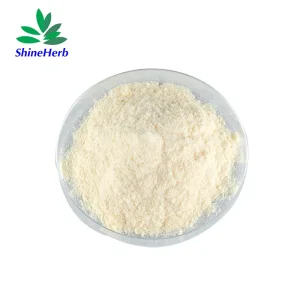
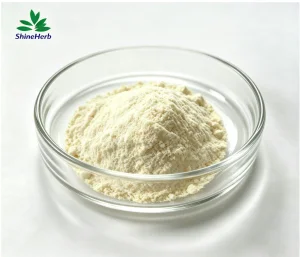
| Physical Appearance | Off-white to light cream fine powder | Ultra-fine homogeneous white/cream powder | Visual / Organoleptic Inspection |
| Particle Size (Mesh) | 80–100 Mesh (≥ 95% pass) | 100–200 Mesh (Cosmetic emulsion grade) | Analytical Sieve Sizing USP <786> |
| Moisture Content | ≤ 5.0% | ≤ 3.0% (Enhanced Lyophilized) | Loss on Drying (Karl Fischer Titration) |
| Heavy Metal Residues | Pb < 1.0 ppm, As < 0.5 ppm, Cd < 0.2 ppm | Pb < 0.5 ppm, As < 0.2 ppm, Cd < 0.1 ppm | ICP-MS (Ph. Eur. 2.4.27 / USP <233>) |
| Pathogenic Contaminants | Salmonella: Neg/25g; E. coli: <10 CFU/g | Absent in 25g; S. aureus: Neg/10g | BAM / USP <2021> & <2022> |
| Carrier Options | Maltodextrin, Microcrystalline Cellulose | Non-GMO Inulin, Trehalose, Vegan Carriers | Customer Specification Agreement |
Diversified Industrial Application Scenarios
As clinical research uncovers the targeted cellular interactions of *Latilactobacillus sakei*, formulation opportunities extend well beyond basic fermented goods. We supply customized raw-material grades specifically engineered for three major manufacturing sectors.
1. Meat Curing & Bio-Preservation Starters
In dry-cured sausages (salami, chorizo), fermented poultry, and ready-to-eat seafood, our starter culture grade acts as an active bioprotective barrier. It quickly lowers pH via homofermentative lactic acid generation, synthesizes Sakacin bacteriocins to stop Listeria monocytogenes growth, degrades toxic biogenic amines (histamine, putrescine), and aids clean-label conversion by decreasing required curing nitrites.
2. Skin Microbiome & Cosmeceuticals
Cosmetic R&D groups utilize our topical and lysate forms in creams, balancing face mists, and scalp treatments. *L. sakei* ferment lysates support skin barrier ceramides, suppress biofilm creation by opportunistic Staphylococcus aureus, ease redness from rosacea, and balance inflammatory pathways without irritating sensitive dermal layers.
3. Gut Immune & Synbiotic Formulations
Supplied in enteric-coated capsules, multi-strain sachets, and functional suspensions, microencapsulated *L. sakei* powder supports mucosal gut immunity by stimulating Secretory IgA (sIgA), encouraging balanced gut diversity, and assisting tight-junction repair against dietary metabolic stressors.
Essential Compounded & Nutra Ingredients
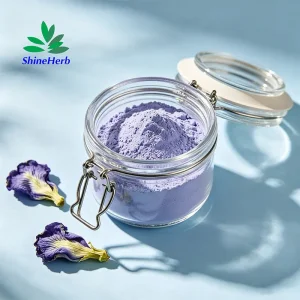
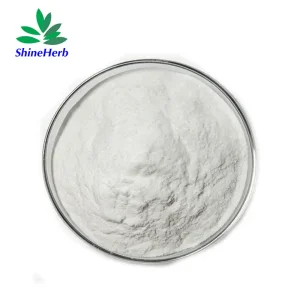
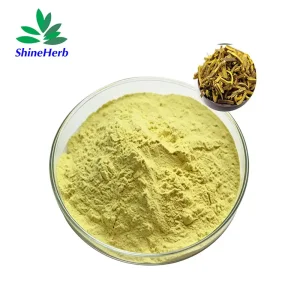
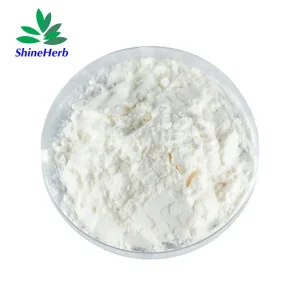
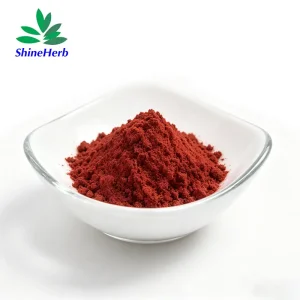
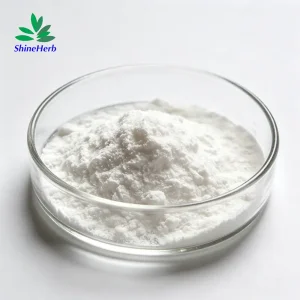
Combining probiotic cultures with synergistic botanical complexes, amino acid derivatives, and high-potency vitamins supports stable product formulations. Examine these verified catalog products directly manufactured for industrial buyers.
Comprehensive Quality Governance: Xi'an Quality Control Lab
At Shaanxi ShineHerb Biotech Co., Ltd., our 20+ years of export experience underpins a strict testing system. We support overseas audits by providing complete documentation packages, third-party assays, and clear compliance tracking.
Pharmacopoeia & FCC Conformance
All finished goods are released against written, lot-specific specifications referencing USP, EP, CP, or FCC monographs. Our analytic instruments include high-performance liquid chromatography (HPLC), gas chromatography (GC), UV-Vis spectrophotometers, and atomic absorption spectrometers (AAS) for trace heavy metal limits.
Accredited Global Certifications
Our operations follow ISO 9001 and ISO 22000 quality systems, FDA facility registration, HACCP preventive food safety protocols, cGMP manufacturing disciplines, and official HALAL and KOSHER certifications, smoothing clearance across European, North American, and Middle Eastern jurisdictions.
Validated Cold-Chain Logistics
Because viable probiotic powders are sensitive to elevated heat and relative humidity, shipments are packed in multi-layered, vacuum-sealed, nitrogen-flushed aluminum foil pouches inside fiber drums. For high-potency consignments, temperature-monitored refrigerated air freight or refrigerated marine containers (reefers) are utilized.
Frequently Answered Queries for Importers & Formulators
Practical technical data to resolve common regulatory, quality, and processing inquiries prior to purchase orders.
How does ShineHerb verify the identity and purity of Latilactobacillus sakei?
We employ 16S rRNA gene amplification and Whole Genome Sequencing (WGS) to confirm that our production master culture aligns with registered Latilactobacillus sakei taxonomy. Each industrial batch is screened via MALDI-TOF mass spectrometry and PCR to ensure total absence of cross-contaminating environmental lactobacilli or potential pathogens.
What CFU/g concentrations are available for bulk commercial purchase?
We offer standardized concentrations ranging from 1.0 × 10¹⁰ CFU/g (10 Billion) and 1.0 × 10¹¹ CFU/g (100 Billion), up to ultra-concentrated unstandardized powders exceeding 5.0 × 10¹¹ CFU/g (500 Billion). Custom cell densities and standardized dilution blends can be prepared with maltodextrin, trehalose, or inulin carriers upon request.
What protective measures ensure cell survival over long-distance transit?
Our powders feature multi-stage cryoprotectants and vacuum freeze-drying to protect bacterial cell walls. Finished products are packaged under dry nitrogen in multi-layer foil pouches with moisture-barrier properties. Shipments utilize temperature-controlled packaging, with temperature data loggers included to track transit conditions.
Can your factory produce non-dairy, vegan-compliant batches?
Yes. Although conventional lactic fermentation often relies on dairy whey or peptone broths, our clean bio-fermentation lines can use animal-free, non-GMO vegetal peptones (such as pea or soy) paired with plant-derived prebiotics (like chicory inulin or cassava maltodextrin). These options come with allergen-free guarantees.
What documentation accompanies an export order for customs and audit clearance?
Every delivery includes an authentic batch-numbered Certificate of Analysis (COA) specifying viable CFU density, moisture, heavy metals, and microbiological screens. We also provide Technical Data Sheets (TDS), Safety Data Sheets (MSDS), processing flow charts, BSE/TSE statements, Non-GMO declarations, and copies of ISO, GMP, Kosher, and Halal credentials.
What is the typical shelf life and recommended storage protocol?
When stored in original unopened, hermetically sealed aluminum pouches at -18°C to -20°C, the product maintains full viability for 24 months. At refrigerated conditions (4°C), stability is supported up to 12 months with minimal CFU degradation, provided exposure to relative humidity is avoided.