High-Purity Bio-Functional Ingredients & Food Additives
Direct supply from Shaanxi ShineHerb Biotech Co., Ltd. Fully standardized against USP, EP, CP, and FCC compendial monographs with third-party COA validation.
Wholesale ShineHerb High Purity 99% Calcium L-Threonate Powder CAS 70753-61-6
Source Material
Best Food Grade Corn Protein Peptide Natural Corn Extract 80% Protein Supplier
Source Material
Wholesale Cosmetic Grade Syn-Ake for Wrinkle Reduction Exporter, Factory
Source Material
Best High Purity Linolenic Acid ALA Raw Material Cosmetic, Food & Supplement
Source Material
China Bulk Astragalus Extract 98% Cycloastragenol for Anti-Aging Manufacturers
Source Material
Best Factory Supply Oyster Peptide Food Grade Bulk Wholesale Exporter
Source Material
High-Quality L-Valine Powder Amino Acid CAS 72-18-4 for Food Additives
Source Material
Wholesale Ceramide Complex Cosmetic Grade Ceramide NP For Skincare Exporters
Source MaterialShikimic Acid Molecular Blueprint & Metabolic Taxonomy
Understanding the chiral cyclohexanecarboxylic acid core, enzymatic cascades in the common aromatic pathway, and its functional significance in advanced food additives.
Stereochemical Rigidity
Shikimic acid ((3R,4S,5R)-3,4,5-trihydroxycyclohex-1-ene-1-carboxylic acid, C7H10O5, MW: 174.15 g/mol) possesses three contiguous chiral stereocenters. Its absolute configuration dictates its biological affinity, antioxidant mechanism, and crystalline solubility behavior in aqueous matrix formulations.
Enzymatic Flux in Biosynthesis
In autotrophic plants and microorganisms, shikimate acts as the central hub of the Shikimate Pathway. The conversion of phosphoenolpyruvate (PEP) and D-erythrose 4-phosphate via DAHP synthase and shikimate dehydrogenase controls the metabolic upstream flux toward essential aromatic nutrients.
Multi-Target Radical Scavenging
Unlike simple aliphatic organic acids, the conjugated double bond adjacent to the carboxyl group and the spatial arrangement of the secondary hydroxyl groups give shikimic acid unique electron-donating properties, preventing lipid auto-oxidation in food emulsions without generating discoloration.
Global Commercial Dynamics: From Forestry Harvest to Precision Fermentation
How Chinese industrial manufacturers successfully overcame the classic "Tamiflu Dilemma", stabilizing the global shikimic acid market from wild price fluctuations to predictable high-volume food-grade distribution.
The Historical Supply Vulnerability
Historically, over 85% of the world’s shikimic acid supply was harvested from Chinese star anise (Illicium verum Hook. f.) grown in Guangxi, Yunnan, and Fujian provinces. Star anise crops take 6 to 10 years to reach mature bearing age and are acutely susceptible to erratic frost conditions, alternating bearing years, and labor-intensive manual harvesting. During global influenza outbreaks (e.g., H5N1 and H1N1), pharmaceutical surges for Oseltamivir phosphate production drove spot market prices from $40/kg to well over $1,000/kg, entirely pricing food, supplement, and cosmetic formulators out of the market.
The Modern Synthetic Biology Industrial Revolution
China’s leading manufacturers, led by forward-thinking bio-manufacturers including Shaanxi ShineHerb Biotech Co., Ltd., spearheaded a dual-track strategy. By engineering metabolically modified strains of Escherichia coli and Corynebacterium glutamicum that overexpress aroG and transketolase genes while knocking out shikimate kinase 1 and 2 (aroK/aroL), industrial fermentation yields surpassed 80 g/L with glucose conversion efficiencies higher than 30%. This decoupling from seasonal forestry crops created a resilient, perpetual manufacturing infrastructure that guarantees price predictability and stable volumes for global food and beverage innovators.
Procurement Matrix: Dual Sourcing Realities
- ✔ Botanical Illicium verum Route: Preferred for "Natural Plant Extract" clean-label claims in premium nutraceuticals; solvent-extracted via food-grade hydroethanolic solvents.
- ✔ Synthetic Biology Fermentation Route: Preferred for mega-scale industrial food antioxidant blends, synthetic intermediation, and stringent carbon-footprint reduction initiatives.
- ✔ Supply Stability: Constant year-round availability independent of southwest China seasonal monsoons and harvest fluctuations.
- ✔ Cost Index: Reduced historical standard deviation in pricing from 240% variance to below 12% across 36-month rolling supply agreements.
Food Additive Shikimic Acid: Multifunctional Performance in Modern Food Systems
Beyond its traditional role as a synthesis precursor, high-purity food-grade shikimic acid serves critical functional preservation, flavor enhancement, and cellular protective roles.
1. Clean-Label Antioxidant & Lipid Stabilizer
Lipid peroxidation causes rancidity in high-fat foods. Shikimic acid acts as an effective primary antioxidant by terminating peroxyl radicals (ROO•) and chelating transitional metal ions (Fe2+, Cu2+). When formulated into omega-rich edible oils and plant-based spreads, 0.05%-0.15% shikimic acid significantly delays malondialdehyde (MDA) accumulation without imparting bitterness.
2. Synergistic Antimicrobial Preservation
Shikimic acid disrupts cell membrane integrity in foodborne pathogens, including Staphylococcus aureus, Listeria monocytogenes, and Escherichia coli. It causes intracellular electrolyte leakage, collapse of trans-membrane proton gradients, and cellular enzyme inhibition, providing clean-label bacteriostatic safety for cured meats, fresh juices, and chilled prepared foods.
3. Enzymatic Anti-Browning Agent
Polyphenol oxidase (PPO) catalyzes undesirable browning in sliced fruits, tubers, and freshly pressed vegetable extracts. Shikimic acid competitively binds to the active binuclear copper site within PPO enzymes, offering non-sulfite browning prevention that matches or exceeds ascorbic acid longevity without accelerating sour taste profiles.
4. Acidulant & Flavor Modulation
Unlike citric or malic acid, which introduce sharp, aggressive sour notes, shikimic acid offers a mellow, lingering organic acid curve with a slight sweet aftertaste. It acts as an umami-enhancer and astringency-modulator in functional ready-to-drink (RTD) teas, recovery beverages, and high-protein nutrition bars.
5. Anti-Glycation in Sports Nutrition
Advanced Glycation End-products (AGEs) accelerate physical fatigue and systemic inflammation. Formulating dietary-grade shikimic acid in sports recovery powders inhibits dicarbonyl-mediated protein crosslinking, protecting collagen and muscular protein complexes under high-temperature food processing and rigorous metabolic exertion.
6. Bio-Functional Active Packaging
Modern biodegradable packaging incorporating shikimic acid into pullulan, chitosan, or polylactic acid (PLA) films delivers active slow-release antioxidant matrices. This prevents lipid rancidity in chilled vacuum-sealed marine proteins and extends fresh meat shelf life by 40% under ambient or refrigerated distribution.
Monograph Specifications: Botanical Extraction vs. Precision Fermentation
A granular analytical comparison designed for quality directors, procurement teams, and regulatory compliance auditors.
| Analytical Parameter | Botanical Extraction (Illicium verum) | Precision Bio-Fermentation (E. coli / C. glutamicum) | Compendial Standard Reference |
|---|---|---|---|
| Assay Purity (HPLC-UV @ 215 nm) | 98.0% – 99.2% (Dry basis) | ≥99.5% (High consistency) | USP / FCC Monograph Method |
| Appearance & Physical Form | Fine crystalline powder, off-white to white | Fine needle-like crystalline powder, brilliant white | Visual / Microscopic Inspection |
| Specific Optical Rotation [α]D²⁰ | -175.0° to -183.0° (c=1 in H₂O) | -178.0° to -182.0° (c=1 in H₂O) | Polarimetry (EP 2.2.7 / USP <781S>) |
| Melting Point Range | 184.0°C – 187.0°C | 185.0°C – 188.0°C | Capillary Melting Method (USP <741>) |
| Related Impurities (Quinic / Dehydroshikimic) | Quinic Acid ≤0.5%, Unknowns ≤0.2% | Dehydroshikimic Acid ≤0.2%, Unknowns ≤0.1% | High Performance Liquid Chromatography |
| Heavy Metals (as Pb) | ≤10 ppm (Pb ≤2 ppm, As ≤1 ppm, Cd ≤0.5 ppm) | ≤5 ppm (Pb ≤1 ppm, As ≤0.5 ppm, Cd ≤0.1 ppm) | ICP-MS (USP <232>/<233>, EP 2.4.20) |
| Residual Solvents | Ethanol ≤3,000 ppm, Methanol ≤50 ppm | Ethanol ≤500 ppm, No class 1 or 2 solvents | Headspace GC-FID (USP <467>) |
| Loss on Drying (LOD) | ≤1.0% (105°C, 2 Hours) | ≤0.5% (105°C, 2 Hours) | Gravimetric (USP <731>) |
| Total Aerobic Microbial Count (TAMC) | <1,000 CFU/g | <100 CFU/g | Ph. Eur. 2.6.12 / USP <61> |
| Total Yeasts and Molds (TYMC) | <100 CFU/g | <10 CFU/g | Ph. Eur. 2.6.12 / USP <61> |
Technical Generation Roadmap (Generation 1.0 to 4.0)
Soxhlet Solvent Extraction
Maceration of star anise fruit with petroleum ether and methanol. Characterized by low yield (<3.5%), elevated solvent traces, and high seasonal vulnerability.
Supercritical CO₂ & Ion Exchange
Hydroethanolic extraction paired with macroporous resin chromatographic separation. Yields climbed to 6.5% with reduced solvent impact and cleaner crystals.
Recombinant Microbial Cultivation
Continuous bioprocess feeding glucose into mutant E. coli fermentation vats. Decoupled extraction from seasonal crops with purity reaching 99.0%.
AI-Designed Strains & Zero Carbon
CRISPR-optimized multi-enzyme channeling in food-grade yeasts, closed-loop water recovery, solar-powered distillation, and net-zero footprint certification.
Engineering Implementation: Localized Formulation Blueprints
Direct technical guidance for formulation scientists integrating food-additive grade shikimic acid into diverse manufacturing environments.
Functional Acidic Beverages
Dosing Matrix: 0.08% to 0.25% w/v.
Processing Protocol: Dissolves cleanly at ambient temperature (18°C-25°C). Compatible with hot-fill (85°C for 30s) and UHT aseptic processing. Blends with citric acid at a 1:3 ratio to smooth harsh tongue-bite in sports drinks and high-caffeine energy formulations without clouding.
Clean-Label Meat Preservation
Dosing Matrix: 0.15% to 0.40% by weight.
Processing Protocol: Added during brine injection or vacuum tumbling in poultry and pork small-goods. Synergizes with rosemary extract to prevent rancid warming flavor (WOF) while inhibiting Clostridium perfringens outgrowth during vacuum storage.
Premium Confectionery & Gummies
Dosing Matrix: 0.20% to 0.50% dry weight.
Processing Protocol: In pectin, gelatin, or agar systems, add post-cooking at 75°C-80°C before depositing. Shikimic acid maintains gelling strength and eliminates pectin pre-gelation issues often caused by high initial citric acid charges.
Shaanxi ShineHerb Biotech: Manufacturing Infrastructure & QA Pillars
Located in the Hi-Tech Development Zone of Xi'an, our manufacturing framework bridges central Shaanxi's advanced scientific hubs with international regulatory benchmarks.
Pillar 1: Multi-Tier Analytical QC
Every commercial batch is tested under validated compendial methods. Our in-house testing uses Agilent 1260 HPLC systems with UV/DAD detectors, Shimadzu GC-2010 gas chromatographs, and PerkinElmer NexION ICP-MS spectrometers to quantify every impurity, solvent trace, and heavy metal element.
Pillar 2: Global Certification System
Our production facilities maintain full compliance with ISO 9001:2015, ISO 22000, cGMP, HACCP, HALAL (MUI & JAKIM recognized), and KOSHER certifications. Auditing dossiers, flowcharts, allergen matrices, non-GMO statements, and BSE/TSE-free declarations are prepared for immediate onboarding review.
Pillar 3: Supply Assurance & Custom Sizing
We supply in multi-ply food-grade fiber drums (25 kg net) with double polyethylene interior vacuum liners. Custom particle sizing—from standard 80-mesh powder to fine micronized 200-mesh suspensions or dense free-flowing direct-compression granules—is calibrated to match your filling and mixing lines.
Frequently Asked Questions by Industrial Formulators & Importers
Objective, science-backed answers regarding regulatory approvals, thermal stability, solubility profiles, and bulk commercial order terms.
What is the exact water solubility and thermal degradation threshold of Shikimic Acid?
Shikimic acid displays high water solubility: approximately 180 g/L in pure water at 20°C, increasing rapidly to over 400 g/L at 60°C. It is sparingly soluble in absolute ethanol (approx. 2.5 g/100 mL at 25°C) and practically insoluble in non-polar organic solvents like chloroform, benzene, and hexane. Thermogravimetric analysis (TGA) confirms thermal stability up to 185°C. Measurable decarboxylation and ring-opening reactions initiate above 205°C, making it stable under standard food pasteurization, spray drying, and baking processes.
How does Shikimic Acid differ analytically from Quinic Acid in QC testing?
Quinic acid (1,3,4,5-tetrahydroxycyclohexanecarboxylic acid, CAS 77-95-2) lacks the C1=C2 conjugated double bond present in shikimic acid. Analytically, shikimic acid shows a strong ultraviolet chromophore with maximum absorbance (λmax) between 213 nm and 215 nm under acidic HPLC mobile phases (e.g., 0.1% phosphoric acid in water). In contrast, quinic acid displays minimal UV absorbance above 210 nm and typically requires refractive index (RI) detection or low-wavelength UV monitoring (195-200 nm). Our reverse-phase C18 HPLC method provides a clean baseline resolution (>3.0 resolution factor) between both compounds.
What regulatory frameworks govern the use of Shikimic Acid in food products globally?
In China, high-purity shikimic acid derived from authorized food botanicals or approved fermentation strains is governed under food flavoring and additive safety assessments under GB 2760 and related natural extract standards. In the United States, botanical extracts containing shikimic acid maintain self-affirmed GRAS status for functional beverage and nutritional supplement applications, while the FCC (Food Chemicals Codex) monograph serves as the baseline chemical purity monograph. In the European Union, formulators position pure synthesized or fermented shikimic acid under EU Novel Food regulations (Regulation (EU) 2015/2283), supported by comprehensive toxicological dossiers proving lack of genotoxicity and sub-chronic safety.
Can ShineHerb provide identity verification documentation to support custom brand claims?
Yes. Depending on whether your brand targets "100% Plant-Derived / Wild Star Anise" claims or "Precision Bio-Fermentation / Sustainable Low Carbon" positioning, ShineHerb provides complete validation packages. This includes 14C carbon-dating testing (ASTM D6866) to prove bio-based renewable carbon content, batch-specific HPLC and GC-MS fingerprints, residual solvent profiles matching USP <467>, and heavy metal analysis via ICP-MS.
What lead times and logistics routes apply to international shipments?
Standard catalog batch sizes (25 kg to 500 kg) are maintained in climate-controlled storage in Xi'an and Shanghai bonded warehouses for dispatch within 48 to 72 hours via air courier (DHL, FedEx) or temperature-controlled air freight. Containerized ocean freight (FCL and LCL) ships out of Qingdao, Tianjin, or Shanghai ports with typical transit times of 14-22 days to Western European ports and 18-28 days to North American gateways. Every shipment includes a signed COA, packing list, commercial invoice, and detailed MSDS.
High-Purity Bio-Functional Ingredients & Food Additives
Complete your supply chain integration with ShineHerb Biotech's portfolio of nutraceutical actives, vitamins, mineral chelates, and premium intermediates.
Buy Beta-Sitosterol 98% Powder Supplier Plant Sterol Ingredient Manufacturer
Source Material
Buy Wholesale Pharmaceutical Grade Ursodeoxycholic Acid High Purity 99% UDCA
Source Material
High-Quality Ascorbyl Glucoside Cosmetic Grade CAS 129499-78-1 for Whitening
Source Material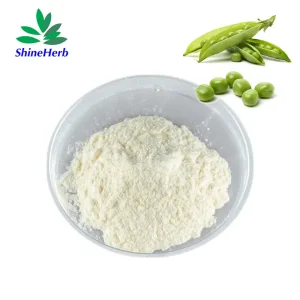
High-Quality Natural Pea Protein Peptide Powder Hydrolyzed Bulk Supplier
Source Material
Wholesale Liposomal Vitamin C for Immune Health Manufacturers, Supplier
Source Material
Buy Hot Selling NMN Powder Nicotinamide Mononucleotide Supplement
Source Material
Buy Wholesale Magnesium Citrate Powder for Dietary Supplement Exporters
Source Material