
Featured High-Bioactivity Nutritional Raw Materials
Discover our primary catalog of benchmark active ingredients, standardized botanical concentrates, and bio-fermented compounds engineered to USP, EP, and FCC monograph benchmarks.
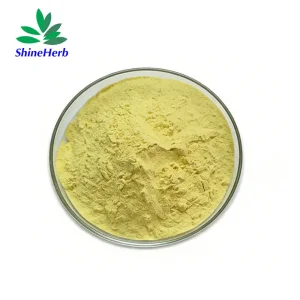
Liposomal Quercetin Matrix
High bioavailability lipid-carrier system for advanced immune and cellular stabilization formulations.
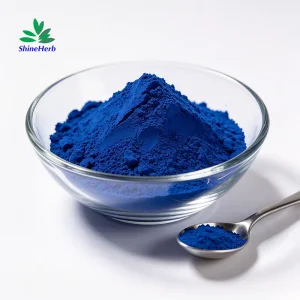
Natural Phycocyanin Extract
Ultra-pure spirulina-derived pigment protein with verified light absorbance and free-radical scavenging capacity.
Ursodeoxycholic Acid CAS 128-13-2
Pharmaceutical and dietary grade bile acid intermediate with comprehensive HPLC assay verification.
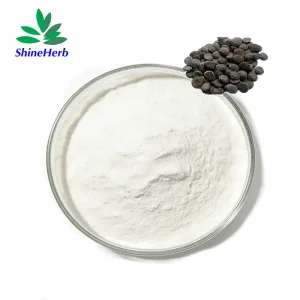
Natural 5-HTP Powder 98%
Standardized Griffonia simplicifolia seed extract supporting clean neuro-modulatory and sleep matrices.
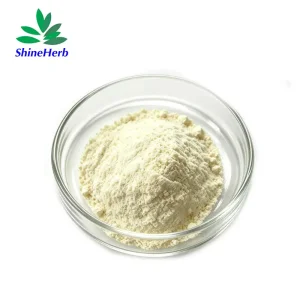
Pure Urolithin B Compound
Cutting-edge ellagitannin metabolite isolated for next-generation muscle proteostasis and longevity blends.
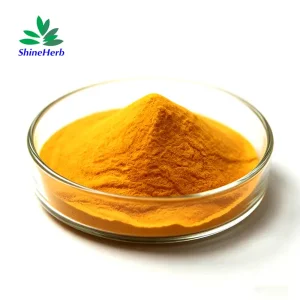
Liposomal Coenzyme Q10
Sub-micronized phospholipid encapsulation yielding superior cellular absorption over standard ubiquinone.
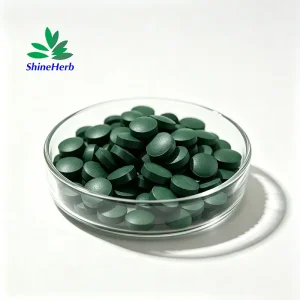
Cultivated Spirulina Biomass
Premium closed-raceway cultivated microalgae available as bulk fine powder and direct-compression tablets.
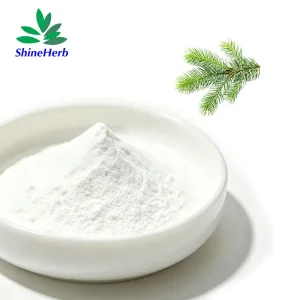
Cephalotaxine 98% CAS 24316-19-6
High-purity botanical alkaloid precursor produced under rigorous analytical batch release criteria.
Global Commercial Landscape: Capsaicin Food Grade
Analyzing the shift from crude oleoresin extracts to standardized synthetic-free capsaicinoid crystals across food, functional nutrition, and dietary beverage architectures.
Evolution of Food-Grade Pungency
For decades, commercial food processing relied upon crude red pepper oleoresins (ranging between 500,000 to 1,000,000 SHU). However, crude concentrates carry uncontrolled pigment artifacts, strong solvent residues, and erratic flavor compounds. Modern industrial food formulation demands Natural Pure Capsaicin (CAS 404-86-4) and standardized Dihydrocapsaicin (CAS 19408-84-5) fractions that provide precise, measurable thermogenic potency without chromatic interference.
China's Supply Chain Hegemony
China has emerged as the premier manufacturing origin for high-grade botanical capsaicinoids. Leveraging high-capsaicinoid pepper cultivars grown extensively in Yunnan, Guizhou, Shaanxi, and Xinjiang, Chinese production clusters employ commercial-scale Supercritical Fluid CO₂ Extraction (SFE-CO₂) paired with simulated moving bed (SMB) chromatography. This vertical integration protects against crop volatility while enforcing rigorous impurity profiling.
Clean Label & Natural vs. Synthetic
Global regulatory bodies (FDA, EFSA, CFIA) have heightened scrutiny regarding synthetic Nonivamide (pelargonic acid vanillylamide, PAVA, CAS 2444-46-4) masquerading as natural chili extracts. China's audited manufacturers supply genuine botanical capsaicin backed by Carbon-14 isotopic analysis and complete chromatographic fingerprints, assuring brands of total compliance with clean-label and natural food ingredient directives.
Technical Monograph: Food-Grade Capsaicinoid Standards
Direct batch-release parameters matching the Food Chemicals Codex (FCC), United States Pharmacopeia (USP), and European Pharmacopoeia (Ph. Eur.) monographs.
| Analytical Parameter | Natural Food-Grade Specification | USP / FCC Monograph Limit | Methodology / Instrumentation |
|---|---|---|---|
| Chemical Identification | Positive for Natural Capsaicin | Conforms to Reference Standard | HPLC-DAD / FTIR Spectroscopy |
| Total Capsaicinoids Assay | ≥ 95.0% - 98.0% (w/w) | 90.0% – 110.0% Labeled Amount | HPLC (Reversed-Phase C18, UV 280nm) |
| Natural Capsaicin (CAS 404-86-4) | ≥ 55.0% - 70.0% | Defined relative ratio | HPLC Isocratic Peak Area Normalization |
| Dihydrocapsaicin (CAS 19408-84-5) | ≥ 20.0% - 35.0% | Defined relative ratio | HPLC Peak Resolution > 2.0 |
| Nordihydrocapsaicin | ≤ 5.0% | Trace secondary alkaloid | HPLC Relative Retention Time (RRT) |
| Calculated Heat Units | 15,000,000 - 16,000,000 SHU | Direct correlation to HPLC assay | ASTA Method 21.3 / E-O-001 |
| Melting Point Range | 62.0°C – 65.5°C | 62.0°C – 65.0°C | Capillary Melting Method (USP <741>) |
| Loss on Drying | ≤ 1.0% | ≤ 1.0% | Vacuum Desiccation at 40°C |
| Residue on Ignition | ≤ 0.1% | ≤ 0.1% | Sulfated Ash at 600°C (USP <281>) |
| Heavy Metals (Pb, As, Cd, Hg) | Total < 10 ppm (Individual < 0.5 ppm) | Strict Compliance | ICP-MS (Inductively Coupled Plasma) |
| Residual Solvents (Ethanol, Hexane) | Ethanol < 500 ppm, Hexane < 5 ppm | USP <467> Class 2 & 3 Directives | Headspace GC-MS (Gas Chromatography) |
Macro Industry Solutions & Application Matrices
How global food engineers, industrial processors, and dietary supplement formulators leverage pure capsaicin crystals to address structural performance hurdles.
Precision Condiment Formulation
In high-volume savory production (hot sauces, dry seasoning rubs, instant ramen flavoring sachets), raw chili powder introduces microbiological burdens and variable heat. Using standardized food-grade capsaicin enables exact Scoville heat calibration without altering the sensory color profile, pH, or salt balance of proprietary condiment matrices.
Functional Beverages & Energy Elixirs
Modern functional drinks rely on capsaicinoid TRPV1 receptor stimulation to provoke metabolic thermogenesis, enhance caffeine synergy, and ignite invigorating sensory feedback. Micro-encapsulated capsaicin prevents throat burning while retaining sustained gastric energy release in RTD pre-workout beverages.
Clean-Label Natural Antimicrobial Systems
Beyond taste, capsaicin displays documented bactericidal and bacteriostatic activity against gram-positive and gram-negative foodborne pathogens (including Listeria monocytogenes and Bacillus cereus). Meat processors utilize nano-emulsified capsaicin as an organic bio-preservative to extend shelf life in processed protein formulations.
Regulatory Compliance, Safety Handling & Verification
Navigating global food import certifications, worker safety engineering, and specialized export documentation across Western and Asian distribution hubs.
Global Food Safety Compliance Protocols
Food-grade capsaicin is strictly controlled under global food additive framework systems:
- United States: 21 CFR § 182.20 GRAS (Generally Recognized as Safe) listed as natural flavoring extractives; compliance with FSMA foreign supplier verification programs (FSVP).
- European Union: Compliant with Regulation (EC) No 1334/2008 on flavorings; maximum permissible residue limits strictly observed in designated consumer food brackets.
- Halal & Kosher Assurance: Guaranteed zero contamination with non-compliant processing aids; dedicated production pipelines verified annually by global certification agencies.
Industrial Handling & Worker Safety Engineering
Due to raw capsaicin's extreme potency (16 Million SHU), handling unformulated pure crystals presents acute occupational exposure risks:
- Engineering Controls: Must be handled under negative pressure HEPA-filtered laminar flow hoods with dedicated exhaust air scrubber units.
- Personal Protective Equipment (PPE): Level B / C PPE required: full-face powered air-purifying respirators (PAPR with organic vapor/P100 cartridges), dual-layer nitrile gloves, and impervious chemical suits.
- First-Aid Neutralization: In case of skin exposure, flush with warm polyethylene glycol (PEG) solutions or high-fat vegetable oils rather than pure water, which intensifies dispersal.
Technology Roadmap: Next-Gen Capsaicinoid Formats
From taste-masked beadlets to precision bio-fermentation, explore how chemical engineering is transforming capsaicin's commercial applicability.
Taste-Masked Enteric Microencapsulation
Novel lipid-core spray-chilling techniques encapsulate pure capsaicin crystals within natural waxes and ethylcellulose matrices. This enables zero oral pungency and zero gastric distress, selectively delivering active capsaicinoids into the small intestine for metabolic stimulation and obesity therapeutic research.
Self-Emulsifying Nano-Deliveries (SEDDS)
By engineering self-emulsifying isotropic blends of food-grade surfactants and medium-chain triglycerides (MCT), capsaicin disperses instantly in cold aqueous media without turbidity. This breakthrough facilitates transparent, shelf-stable spicy functional waters and modern isotonic sports elixirs.
Enzymatic Biosynthesis & Non-Burning Capsinoids
Forward-thinking Chinese labs are pioneering biotransformation of natural vanillylamine with enzymatic lipase catalysts to yield Capsiate and Dihydrocapsiate. These structural analogs activate energy expenditure pathways without triggering the burning sensation mediated by oral TRPV1 pain nociceptors.
Professional Procurement & Technical FAQ
Essential technical queries addressed for industrial buyers, quality assurance directors, and import brokers.
How do Chinese manufacturers guarantee natural origin versus synthetic Nonivamide (PAVA)?
Every industrial production batch undergoes high-resolution Reversed-Phase HPLC testing to quantify the natural capsaicinoid cluster ratio (Capsaicin, Dihydrocapsaicin, and Nordihydrocapsaicin). Synthetic capsaicin (Nonivamide/PAVA) displays a distinct retention peak absent in natural botanical profiles. Furthermore, we support third-party Carbon-14 (¹⁴C) radiocarbon dating tests (such as Beta Analytic) which authenticate zero fossil-fuel derived carbon atoms.
What is the difference between Capsaicin 95%, 98%, and Standard Chili Oleoresin?
Standard chili oleoresin is a viscous, dark-red liquid containing between 1% to 10% capsaicinoids along with plant fats, waxes, and intense red carotenoid pigments (capsanthin). In contrast, Capsaicin Food Grade 95% and 98% are white crystalline powders with heat intensities of ~15,000,000 to 16,000,000 SHU. These crystals have zero color, zero aroma, and zero botanical debris, enabling micro-dosing in pristine formulas without affecting target color or texture.
What packaging materials and hazardous transport classifications apply?
Pure capsaicin is classified under international shipping codes as UN 3462 (Toxins, extracted from living sources, solid, n.o.s., Class 6.1, Packing Group II). It requires certified UN-approved fiber drums with dual anti-static food-grade polyethylene inner liners, hermetically heat-sealed with tamper-evident security closures. Proper Dangerous Goods (DG) declarations and specialized air/sea multimodal transport protocols are executed for all export orders.
Can food-grade capsaicin be customized for water-soluble applications?
Yes. While natural crystalline capsaicin is hydrophobic and practically insoluble in pure water, we supply custom micro-encapsulated water-dispersible powders (1% to 10% active content) using maltodextrin, gum acacia, or beta-cyclodextrin carriers. We also formulate liquid self-nanoemulsifying concentrates designed for crystal-clear functional beverages.
What are the primary storage conditions to prevent active degradation?
Capsaicin crystals are susceptible to photo-oxidation and thermal agglomeration over time. Finished goods must be preserved in tightly sealed, light-resistant containers away from direct heat and moisture, preferably at controlled ambient temperatures between 2°C and 8°C. Under proper warehouse parameters, our material demonstrates a confirmed shelf life of 24 to 36 months.
Complementary Botanical Extracts & Specialty Active Compounds
Expand your formulation matrix with verified raw materials manufactured under certified Good Manufacturing Practices (GMP) and ISO-accredited quality assurance.
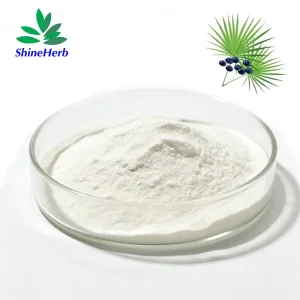
Saw Palmetto Extract 25%-45%
Standardized total fatty acids extracted via supercritical CO₂ for men's prostate and endocrine formulas.
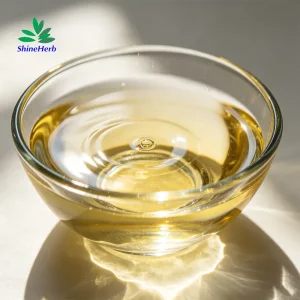
High Purity Linolenic Acid (ALA)
Plant-based essential Omega-3 fatty acid raw material for cosmetic lipids and functional health products.
Anti-Wrinkle Tripeptide-29
Bio-fermented Gly-Pro-Hyp collagen fragment stimulating epidermal extracellular matrix restoration.
Cosmetic Grade Syn-Ake
Synthetic snake venom-mimicking peptide designed to target muscular micro-contractions and facial lines.
USP Potassium Iodide
Pharma and food-grade bioavailable iodine mineral compound certified for nutrition fortification.
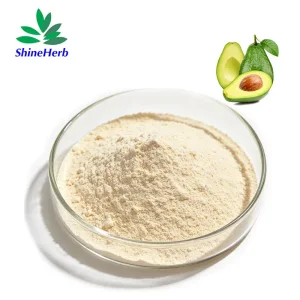
Natural ASU Extract Powder
Standardized avocado-soybean unsaponifiable matrix clinically referenced for cartilage and joint mobility.
Pure Melatonin Powder 99%
CAS 73-31-4 certified high-purity circadian regulator for sleep formulation matrices and gummies.
Nicotinamide Riboside Chloride
CAS 23111-00-4 premium NAD+ biosynthetic cellular precursor supporting healthy human longevity.