
High-Purity Botanical Extracts & Functional Actives
Stringently validated via HPLC, UV, and Titration testing regimes to fulfill strict USP, EP, and FCC compliance demands.
Global Beet Red Landscape: The Shift Toward E162 Natural Colorants
From synthetic Red 40 phasing-out to strict FDA and EFSA regulations: How high-purity beetroot extract (Betanin) is dominating international supply chains.
Clean-Label Reformulation
Global regulatory bodies including the European Food Safety Authority (EFSA) and the US FDA continue to tighten restrictions on petroleum-derived synthetic colorants like Allura Red AC (FD&C Red 40). Tier-1 CPG brands are shifting wholesale to high-stability Beet Red (E162) to satisfy discerning consumer demands for natural origins, transparent traceability, and allergen-free profiles.
Betalain Molecular Stability
Beet Red pigment is predominantly comprised of betalains—specifically betanin and isobetanin. Historically vulnerable to high temperatures, oxidation, and pH deviations, modern vacuum-concentration and low-temperature spray-drying microencapsulation technologies now lock in color fidelity at pH ranges between 3.5 and 7.0, preventing discoloration in complex food matrices.
Nutraceutical Functionality
Unlike artificial dyes that offer zero biological value, commercial Beet Red serves dual functions. Rich in bioactive nitrates, polyphenols, and cellular antioxidants, it improves nitric oxide bioavailability in sports nutrition formulations while imparting a natural ruby-magenta aesthetic across functional beverages, vegan proteins, and pre-workout formulas.
Chinese Manufacturing Ecosystem: Scale, Cost, & Continuous Extraction
Combining abundant agronomic clusters with AI-monitored extraction vessels to guarantee batch-to-batch color value repeatability.
Agronomic Integration
Our extraction facilities collaborate directly with GAP-certified (Good Agricultural Practices) non-GMO red beetroot farming bases. Continuous vertical supply integration provides immediate raw root sorting, cold-crush liquefaction, and solid-liquid extraction within hours of harvesting, preventing betalain enzymatic degradation.
Continuous Ultra-Filtration
Modernized multi-stage membrane separation separates betanin molecules from intrinsic free sugars, vegetable starches, and earthy-smelling geosmin compounds. This yield engineering suppresses moisture retention in end powders and eliminates undesirable beet flavors without requiring petrochemical washing solvents.
Color Value Standardization
Employing spectrophotometric analysis (E1% 1cm at 535 nm), Chinese industrial processors calibrate Color Value (CV) metrics systematically from CV 3.0 up to concentrated CV 10.0+ options. Formulators receive absolute consistency across bulk orders, preventing color variance during large-scale manufacturing runs.
Technical Specification & Quality Monograph Reference
Comprehensive analytical criteria conforming to FCC (Food Chemicals Codex) and EU Regulation (EU) No 231/2012.
| Analytical Parameter | Commercial Grade Specification | Pharma / High-Concentration Grade | Methodology / Standard |
|---|---|---|---|
| Active Betanin Content | 0.40% – 1.50% | ≥ 2.0% – 5.0% HPLC Standardized | UV-Vis Spectrophotometry (535 nm) / HPLC |
| Color Value (E 1%, 1cm, pH 5.0) | E = 3.0 – 5.0 | E = 8.0 – 15.0+ | FCC Monograph / Spectrophotometric |
| Solubility in Aqueous Media | 100% Water-Soluble (Instantaneous) | Ultra-Rapid Dispersion (No Sedimentation) | Gravimetric Visual Clarity Test |
| Loss on Drying (Moisture) | ≤ 6.0% | ≤ 4.5% | Vacuum Oven (105°C, 4 Hours) |
| Heavy Metals (Pb, As, Cd, Hg) | Pb ≤ 2ppm, As ≤ 1ppm, Cd ≤ 1ppm | Total Heavy Metals < 5ppm | ICP-MS Standard Release |
| Microbiological Bioburden | Total Plate Count < 1,000 cfu/g | Total Plate Count < 100 cfu/g, Yeast/Mold < 10 | USP <61> / <62> Microbial Enumeration |
Localized Applications & Targeted Technical Scenarios
Overcoming pigment stability challenges across complex, real-world processing matrices worldwide.
Fermented Dairy & Desserts
Yogurt, Greek curd, and ice cream matrices operate at acidities (pH 4.0–4.8) where Betanin reaches peak thermodynamic stability. It replaces Carmine (cochineal-derived) to provide a rich strawberry-pink hue, catering to vegetarian, Kosher, and Halal consumers.
Plant-Based Meat Analogues
Alternative protein extruded products utilize specialized Beet Red blends. Betanin remains brilliant red during raw refrigerated storage, simulating fresh myoglobin, and gracefully shifts to brown tones upon reaching internal pan temperatures of ~75°C, mimicking cooked beef behavior.
Confectionery & Gummies
Pectin and gelatin starch gummies benefit from stabilized beet red powder blended with organic acids (such as citric or ascorbic acid), protecting against oxidation and photo-bleaching on transparent retail shelves under intense LED lighting.
Clean-Label Cosmetics
Clean beauty demands eliminate coal-tar synthetic lakes. Micro-milled Beet Red serves as a skin-safe, non-irritating natural red pigment in powder blushes, mineral eye shadows, organic lip balms, and natural bath bombs.
What Global Procurement Teams Require in Exporter Audits
B2B buyer expectations have shifted beyond price. Our quality systems address modern vendor qualification checkpoints directly.
Every production batch links directly to localized raw beet farm harvesting blocks, complete with fertilizer, pesticide, and solvent-free records.
Immediate provisioning of comprehensive documentation including COA, Non-GMO declarations, Allergen sheets, SDS, and country-specific regulatory statements.
Isotope Ratio Mass Spectrometry (IRMS) and rigorous chromatographic validation verify zero cross-contamination with Amaranth, Carmine, or Allura Red.
Comprehensive Raw Material Inventory for Global Export
Direct supply from Xi'an manufacturing centers to formulation hubs across Europe, the Americas, and APAC.
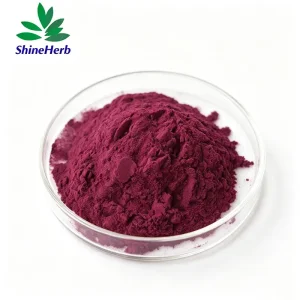
High Quality Beet Red: Frequently Asked Technical & Sourcing Questions
Authoritative guidance addressing extraction chemistry, stability protocols, regulatory limits, and contract logistics.