High-Purity Active Ingredients & Factory Stock
Complementary functional actives, dietary intermediates, and high-purity ingredients shipped directly from our Xi'an manufacturing plant under full pharmacopoeial controls.
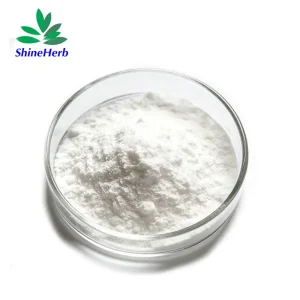
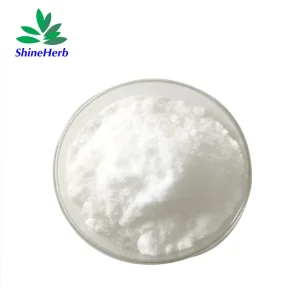

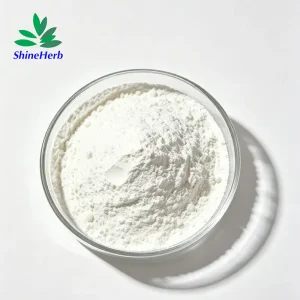
Macro-Industry Solutions & Commercial Landscape for Arecoline Hydrobromide
A rigorous industrial perspective on the global procurement, chemical stability, and regulatory infrastructure supporting CAS 300-08-3 across international veterinary medicine and neuroscience frameworks.
Global Market Architecture & Demand Dynamics
Arecoline Hydrobromide (methyl 1-methyl-1,2,5,6-tetrahydropyridine-3-carboxylate hydrobromide, CAS 300-08-3) is a vital quaternary-like hydrobromide salt of a natural alkaloid found in Areca catechu. In modern pharmaceutical synthesis and industrial biotechnology, sourcing this active ingredient demands unprecedented traceability and strict control over toxicological profiles. As global regulatory bodies tighten thresholds for secondary alkaloids, nitrosamines, and residual halogenated solvents, procurement officers in veterinary therapeutics and CNS research face a volatile supply environment.
Historically, traditional extraction routes from areca seeds suffered from geographic constraints, severe batch-to-batch botanical variance, and seasonal harvest disruptions. Shaanxi ShineHerb Biotech addresses this systemic vulnerability through integrated industrial synthesis platforms. By establishing state-of-the-art cGMP manufacturing lines in Xi'an's Hi-Tech Zone, ShineHerb couples scalable total synthesis with standardized supercritical CO2 extraction pipelines. This dual-track strategy ensures multi-ton bulk production, dampens raw material pricing spikes, and guarantees delivery purity exceeding 99.0% by HPLC.
Across North America, the European Union, Latin America, and the Asia-Pacific region, veterinary pharmaceutical developers rely on bulk Arecoline Hydrobromide as a potent anthelmintic agent. Specifically, in hydatid disease (echinococcosis) control campaigns directed by global health bodies, the alkaloid's targeted paralyzing action on canine tapeworms (such as Echinococcus granulosus and Taenia multiceps) remains irreplaceable. High-capacity chemical stability under extreme environmental shipping is essential for international disease prevention consortia and state-level animal health agencies.
Veterinary Parasitology Solutions
Industrial supply contracts engineered for veterinary tablet, paste, and drench formulations. Formulated to trigger rapid neuromuscular detachment of cestodes in companion animals and livestock herds, supporting national agricultural disease mitigation programs worldwide.
Neuroscience & Receptor Research
Preclinical pharmaceutical-grade raw materials serving academic institutions and drug discovery laboratories investigating central muscarinic acetylcholine receptor (mAChR M1, M2, M3) agonism and cholinergic deficit syndromes such as Alzheimer's pathology.
Custom Chemical Intermediates
Scalable precursor delivery for pharmaceutical chemical synthesis. High chemical uniformity ensures dependable reaction kinetics when functionalizing tetrahydropyridine scaffolds into next-generation chiral therapeutic candidates.
Analytical Chemistry Specifications & Quality Architecture
Every commercial lot of Arecoline Hydrobromide from ShineHerb undergoes stringent multi-stage testing against USP, EP, and CP monographs, backed by validated HPLC-DAD and GC-MS analytical methodologies.
| Analytical Parameter | Monograph Specification Standard | Actual Typical Lot Result | Testing Methodology | Compliance Status |
|---|---|---|---|---|
| Chemical Name | Methyl 1-methyl-1,2,5,6-tetrahydropyridine-3-carboxylate HBr | Conforms to Structure | 1H-NMR / 13C-NMR / FT-IR | Certified |
| CAS Registry Number | 300-08-3 | 300-08-3 Verified | Chemical Identification | Compliant |
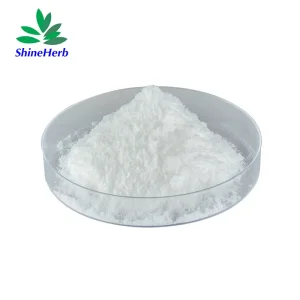
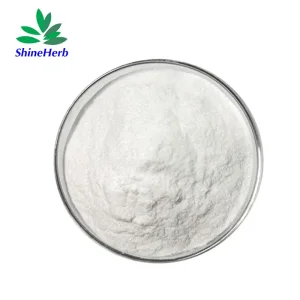
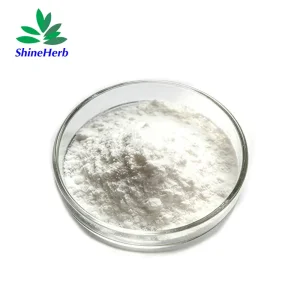
| Physical Appearance | White crystalline powder or granular crystals | White crystalline powder | Visual / Organoleptic Inspection | Pass |
| Assay Purity (Dry Basis) | ≥ 98.5% w/w | 99.42% w/w | HPLC-DAD (Reverse Phase) | Premium Grade |
| Melting Point Range | 169.0 °C – 173.0 °C | 170.5 °C – 171.8 °C | Capillary Melting Method (USP <741>) | Pass |
| Loss on Drying (LOD) | ≤ 0.50% | 0.18% | Thermogravimetric Gravimetry (105 °C) | Pass |
| Residue on Ignition (Ash) | ≤ 0.10% | 0.03% | Sulfated Ash (USP <281>) | Pass |
| Heavy Metals (as Pb) | ≤ 10.0 ppm | < 2.0 ppm | ICP-MS (USP <232> / <233>) | Pass |
| Residual Solvents | Meets ICH Q3C Guidelines (Methanol, EtOH < 500ppm) | Undetected / Within Limits | Headspace Gas Chromatography (GC-FID) | Pass |
| Total Microbial Count | ≤ 1,000 CFU/g (TAMC), ≤ 100 CFU/g (TYMC) | < 50 CFU/g (TAMC) | USP <61> / <62> Microbial Limits | Pharma Grade |
Localized Support & Cross-Border Regulatory Assurance
Procuring specialized alkaloids requires navigating complex pharmaceutical trade regulations, dual-use customs scrutiny, and demanding domestic compliance standards in each target territory.
United States (US FDA)
Full support for Drug Master File (DMF) open-part filings, FDA 21 CFR Part 211 cGMP validation packages, DEA non-controlled classification clearances, and expedited customs broker clearance through automated FDA ACE data integrations.
European Union (EMA)
EDQM compliance documentation, CEP dossier alignment, REACH compliance certifications, veterinary import permit handling across EU member states, and comprehensive ICH Q1A stability testing under Mediterranean and continental zones.
Asia-Pacific & ANZ
GACC export declarations, Australian APVMA veterinary authorization packages, New Zealand MPI import declarations, and certified cold-chain, light-protective packaging tailored to high-humidity tropical transit conditions.
Latin America & MENA
Consular legalizations, Certificates of Free Sale (CFS), Halal-compliant production guarantees, bilingual English/Spanish analytical dossiers, and localized customs clearance support for government-tendered veterinary campaigns.
Industrial Real-World Application Profiles
Scenario 1: High-Throughput Veterinary Antiparasitic Tablet Manufacturing. A Tier-1 animal health company required a consistent 200 kg monthly supply of Arecoline Hydrobromide with tightly regulated particle size distributions (D90 < 80 μm) for direct-compression cestocide chewable tablets. Standard market lots frequently agglomerated during dry blending, causing active ingredient segregation. ShineHerb engineered a custom vacuum fluid-bed micronization process under nitrogen blanket protection, generating microfine, non-caking crystals with uniform dissolution rates that improved tableting yield by 14.8%.
Scenario 2: Academic Neuropharmacological Drug Screening. University researchers screening secondary muscarinic receptor agonists needed ultra-pure Arecoline Hydrobromide devoid of trace arecaidine, guvacine, or methyl ester hydrolysis byproducts that skew ligand-binding assays. ShineHerb supplied research batches purified via preparative HPLC with purity confirmed at >99.6%, delivering high signal-to-noise reproducibility across cloned human muscarinic receptor subtypes.
Scenario 3: Controlled-Release Agricultural Parasiticide Formulations. Innovators developing organic-derived crop pest treatments utilized ShineHerb Arecoline Hydrobromide as a biological reference standard and active compound to disrupt parasitic nematode neuromuscular coordination in specialized greenhouse trials, demonstrating significant efficacy without chemical soil accumulation.
Technology Roadmap & Sustainable Alkaloid Engineering (2025–2030)
ShineHerb invests heavily in continuous flow synthesis, green chemistry biocatalysis, and real-time Process Analytical Technology (PAT) to set new global benchmarks for alkaloid production.
Continuous Flow Microreactors
Transitioning from traditional stirred batch tanks to modular continuous microchannel synthesis. This methodology eliminates hot spots during the exothermic hydrobromination reaction, dramatically suppressing degradation impurities and delivering virtually zero lot-to-lot assay variance.
Green Biocatalytic Esterification
Deploying immobilized esterases and engineered biocatalytic cascades to synthesize the tetrahydronicotinate core. This green pathway cuts hazardous organic solvent consumption by 65%, eliminates heavy metal catalysts, and aligns with corporate ESG benchmarks for global pharmaceutical clients.
AI-Driven PAT In-Line Monitoring
Integrating in-line NIR and Raman spectroscopy coupled with real-time neural network modeling. This continuous analytical framework monitors crystallization kinetics and solvent desolvation in real time, automatically correcting process drift before dry-product discharge.
Frequently Asked Questions (FAQ) for Procurement Teams
Expert answers addressing chemistry, purity verification, supply chain stability, international logistics, and documentation required for supplier qualification.
What is the definitive CAS number, molecular weight, and structural formula of Arecoline Hydrobromide?
Arecoline Hydrobromide is cataloged under CAS Number 300-08-3. Its empirical molecular formula is C8H13NO2·HBr, corresponding to a precise molecular weight of 236.11 g/mol. Chemically, it exists as methyl 1-methyl-1,2,5,6-tetrahydropyridine-3-carboxylate hydrobromide. ShineHerb guarantees structural identity on every shipment through 1H-NMR and FT-IR spectral matching against primary USP reference standards.
How does ShineHerb prevent hydrolytic degradation of Arecoline Hydrobromide during storage and transport?
The ester bond on the tetrahydropyridine core is inherently vulnerable to moisture-mediated hydrolysis, yielding arecaidine and hydrobromic acid. ShineHerb addresses this by incorporating a dual recrystallization sequence that achieves residual moisture levels below 0.2% (determined by Karl Fischer titration). Commercial goods are packed under dry argon or pharmaceutical-grade nitrogen in sealed multi-layer polyethylene foil pouches placed inside tamper-evident fiber drums containing pharmaceutical silica desiccants.
What documentation accompanies commercial and sample shipments for supplier audits?
Every commercial batch is accompanied by an authentic Certificate of Analysis (COA) specifying verified purity, melting range, loss on drying, sulfated ash, heavy metal content, and residual solvents. Upon initiation of formal vendor qualification or quality agreements, ShineHerb provides a comprehensive Technical Dossier including the Material Safety Data Sheet (MSDS/SDS), Route of Synthesis (ROS) flowcharts, TSE/BSE risk-free statements, Allergen declarations, and ISO 9001 / cGMP audit certificates.
What is the standard HS code for international customs clearance of this material?
Arecoline Hydrobromide is categorized under Harmonized System (HS) Code 2939.80 (Alkaloids, natural or reproduced by synthesis, and their salts, ethers, esters and other derivatives). Depending on destination country tariff schedules, 2939.79 or 2939.80.0000 may apply. ShineHerb provides complete commercial invoices, packing lists, and export declaration assistance to prevent customs transit delays.
Can ShineHerb fulfill custom particle size requests, such as micronized powder?
Yes. In addition to standard crystalline grades, ShineHerb operates air-jet micronization and mechanical pin-mill grinding under controlled cleanroom conditions. We routinely supply custom particle size distributions, including D50 < 20 μm and D90 < 50 μm, verified by in-house Malvern Mastersizer 3000 laser diffraction analysis to suit specialized veterinary formulations.
What are the minimum order quantities (MOQ) and production lead times?
For laboratory evaluation and method validation, pilot sample quantities (100g, 500g, 1kg) are available directly from stock for immediate dispatch via express courier (DHL/FedEx). For regular commercial wholesale production, our standard MOQ is 25 kg (one standard fiber drum). Production cycles for bulk orders of 100 kg to 1,000 kg typically require 2 to 3 weeks from order confirmation to release.
How does ShineHerb ensure secondary amine and nitrosamine controls?
Under EMA and US FDA nitrosamine risk assessment guidance, cyclic secondary amines such as tetrahydropyridine intermediates present potential nitrosation risks if exposed to nitrites during synthesis. ShineHerb enforces raw material nitrate/nitrite testing, uses verified synthetic routes that bypass vulnerable amine precursors, and performs routine LC-MS/MS trace analysis to certify absence of NDMA and related nitrosamine impurities below reporting thresholds.
What re-test intervals and storage recommendations apply to ShineHerb material?
When preserved in original, unopened airtight containers protected from direct light, moisture, and excess heat (≤ 25 °C), Arecoline Hydrobromide maintains verified analytical stability for 36 months from manufacture. Long-term real-time stability data generated according to ICH Q1A protocols supports this shelf-life across international climate zones I through IVb.
Additional Factory-Direct Actives & Pure Nutrients
Explore our certified plant extracts, cosmetic peptides, vitamins, and amino acids manufactured in Xi'an and distributed across worldwide pharmaceutical and nutraceutical markets.