
High-Purity Bioactive Ingredients & Intermediates
Explore standard-qualified pharmaceutical grades, functional bio-nutrients, and verified chemical building blocks sourced by global procurement officers.
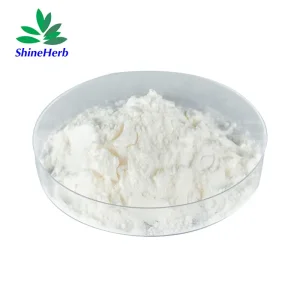
Best Magnesium Lactate Powder CAS 18917-93-6 Food Additives Exporters, Exporter
View Product Detail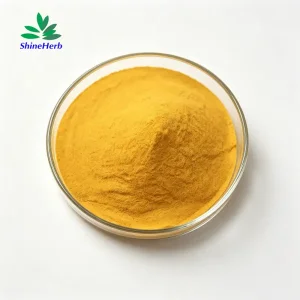
China Folic Acid Vitamin B9 Powder for Supplements Manufacturer, Companies
View Product Detail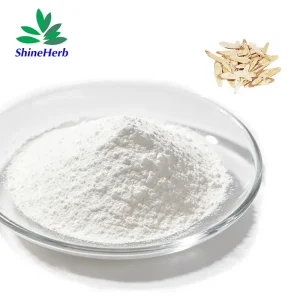
China Bulk Astragalus Extract 98% Cycloastragenol for Anti-Aging Manufacturers, Company
View Product Detail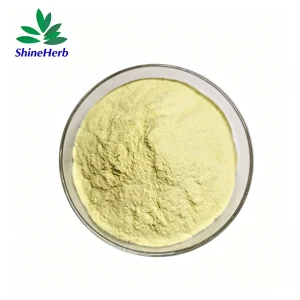
Wholesale Alpha Lipoic Acid ALA Dual Soluble Antioxidant ingredient for Supplements & Cosmetics
View Product Detail
Best Factory Supply Oyster Peptide Food Grade Bulk wholesale Manufacturers, Exporter
View Product Detail
Wholesale Food Grade Calcium Pantothenate Powder Vitamin B5 Nutritional Supplement
View Product Detail
Buy Food Grade Magnesium Aspartate Powder CAS 62-52-2 Factory Supply Suppliers, Exporter
View Product Detail
High-Quality High Purity Liposomal Glutathione for Skin Brightening Manufacturers, Exporter
View Product DetailArecoline Hydrobromide: Technical Identity & Analytical Framework
A rigorous review of molecular architecture, synthesis purity benchmarks, and analytical qualification parameters mandatory for cGMP active pharmaceutical intermediate procurement.
Molecular Profile & Structure Definition
Arecoline Hydrobromide (CAS No. 300-08-3, Molecular Formula: C8H13NO2·HBr, Molecular Weight: 236.11 g/mol) represents the refined hydrobromide salt of methyl 1-methyl-1,2,5,6-tetrahydropyridine-3-carboxylate. Naturally discovered as the chief muscarinic pyridine-type alkaloid in the seeds of Areca catechu L. (Arecaceae), contemporary commercial applications rely exclusively on synthetic or semi-synthetic pharmaceutical pathways to ensure the strict elimination of genotoxic byproducts and unwanted tandem polyphenols.
Physically, Arecoline HBr crystallizes as an odorless, white crystalline powder or colorless crystals featuring an intensely bitter taste profile. It exhibits exceptional solubility in aqueous solutions (readily soluble in water, 1 g dissolved in ~1 mL H2O at 25°C), high solubility in ethanol, and moderate dissolution in organic solvents like chloroform, making it chemically versatile across diverse solvent matrices used in precision formulation synthesis.
Pharmacological Agonism & Mode of Action
Within neurological, biological, and veterinary mechanisms, Arecoline operates as a selective, potent parasympathomimetic agent acting primarily via the stimulation of postganglionic muscarinic acetylcholine receptors (mAChRs—specifically M1, M2, and M3 subtypes). This structural binding induces broad physiological cholinergic reflexes, notably promoting smooth muscle contractility, enhancing peripheral exocrine gland secretagogue activities, and crossing the blood-brain barrier to trigger centralized cognitive and motor neuron pathways.
Historically relied upon as a veterinary veterinary anthelmintic for canine cestode expulsion (specifically against Echinococcus granulosus and Taenia tapeworms via neuro-muscular paralysis), modern biopharmaceutical research heavily centers on Arecoline Hydrobromide as an experimental probe for cholinergic hypofunction models, neuroplasticity, memory impairment modeling, and targeted receptor binding assays.
| Analytical Parameter | USP / BP Monograph Release Criteria | Typical Batch Release (HPLC/DCS) | Analytical Verification Method |
|---|---|---|---|
| Chemical Appearance | White crystalline powder or colorless crystals | Conforms (Pure white crystal) | Visual & Organoleptic Inspection |
| Assay Content (Dry Basis) | 98.0% – 101.5% | 99.45% – 99.82% | Potentiometric Titration / HPLC |
| Melting Range | 169°C – 173°C | 170.5°C – 172.0°C | Capillary Melting Apparatus (USP <741>) |
| pH (5% Aqueous Solution) | 3.5 – 5.0 at 25°C | 4.21 | Digital Potentiometric pH Meter |
| Individual Impurity | ≤ 0.5% | ≤ 0.12% | High Performance Liquid Chromatography (HPLC) |
| Total Related Substances | ≤ 1.0% | ≤ 0.35% | Gradient HPLC UV @ 215 nm |
| Loss on Drying | ≤ 1.0% (105°C, 3 hours) | 0.31% | Thermogravimetric Analysis / Oven Drying |
| Residue on Ignition | ≤ 0.1% | 0.04% | Muffle Furnace Ashing (USP <281>) |
| Heavy Metals (Pb, As, Cd, Hg) | ≤ 10 ppm total | < 2 ppm | Inductively Coupled Plasma Mass Spec (ICP-MS) |
| Residual Solvents | Meets USP <467> (Class 2/3 limits) | Conforms (Ethanol < 500ppm, Acetone ND) | Headspace Gas Chromatography (GC-HS) |
Global Industry Trends & Corporate Procurement Demands
Evaluating commercial sourcing behaviors across North America, Europe, the Asia-Pacific basin, and emerging pharmaceutical synthesis corridors.
1. Surging Central Nervous System (CNS) Screening
Biomedical institutions and contract research organizations (CROs) globally are scaling compound libraries to screen for next-generation nootropics, neurodegenerative markers, and acetylcholine esterase regulation mechanisms. Because Arecoline Hydrobromide rapidly penetrates physiological blood-brain barriers, bulk procurement for high-throughput in vitro binding assays and in vivo preclinical rodent models has seen an annual compound growth rate exceeding 7.2%.
Buyers prioritize crystalline integrity, exceptional chemical purity (≥99%), and complete absence of genotoxic nitrosamines or solvent residues that might compromise sensitive neural tissue cultures.
2. Veterinary Pharmacology & Parasitic Control
While Western companion animal practices utilize broad-spectrum synthesized benzimidazoles and macrocyclic lactones, specialized veterinary formulators in Latin America, Central Asia, and parts of Eastern Europe preserve targeted requirements for Arecoline HBr active pharmaceutical ingredients. Its distinctive rapid-acting tenifugal action prompts swift peristalsis and tapeworm detachment in canines and working livestock.
Procurement teams sourcing for veterinary formulations focus heavily on batch uniformity, granular flowability for tableting or oral drench reconstitutions, and stability data under rigorous Zone IVB climatic testing conditions.
3. Transition to Green Catalytic Synthesis
Global environmental mandates and European REACH regulations have rendered older, pollutant-heavy areca nut extraction unviable for enterprise-level buyers due to seasonal alkaloid variance, hazardous pesticide residues, and ecological degradation. Sourcing entities strictly audit companies providing closed-loop chemical total synthesis utilizing clean catalytic hydrogenations.
By moving to fully synthetic routes from nicotinic acid derivatives or glutarate precursors, modern tier-one manufacturers offer stable commercial volumes free from ecological extraction penalties.
China Industry 4.0: Engineering Precision, Scalability & E-E-A-T Excellence
How state-of-the-art intelligent infrastructure in Shaanxi and specialized high-tech chemical zones delivers unmatched cost efficiencies, batch consistency, and uninterrupted global deliveries.
DCS Distributed Automated Control
Fully automated DCS reactor loops govern reaction thermals, stoichiometric additions, and acid-base precipitation with millisecond accuracy, removing human operational variance.
Continuous Microchannel Synthesis
Advanced continuous flow micro-reactors enable instantaneous heat dissipation during critical alkylation and hydrobromination phases, suppressing side reactions to near zero.
Closed-Loop Solvent Recovery
Integrated fractional distillation systems reclaim up to 96% of organic processing reagents, meeting stringent ISO 14001 carbon emissions guidelines while insulating clients from input cost shocks.
SCADA & cGMP Lot Serialization
Real-time SCADA datalogging records electronic batch manufacturing records (eBMR), enabling direct audit trails and lot-specific verification from incoming precursors to final container seals.
The Shaanxi Hi-Tech Ecosystem: Unrivaled Supply Chain Fortress
Located in the heart of China's premier pharmaceutical and botanical science corridor, Shaanxi facilities benefit from direct integration with the Qinling Mountains' comprehensive raw-material research centers and Xi'an's extensive academic network (including Xi'an Jiaotong University and Northwest University). This cluster synergy allows rapid technical transfer of novel synthetic methodologies, immediate access to world-class spectroscopic validation equipment (600MHz NMR, LC-MS/MS, GC-MS), and an abundant pool of seasoned biochemical engineers.
Furthermore, robust direct rail connections to Europe via the Chang'an China-Europe Railway Express and expedited air logistics through Xi'an Xianyang International Airport guarantee compressed lead times. Where fragmented regional brokers suffer stock outages during supply volatility, unified Industry 4.0 Chinese manufacturing facilities maintain rolling safety reserves of critical intermediate 3-pyridinecarboxylic derivatives, assuring year-round price predictability and contract stability.
Commercial Application Scenarios & Formulation Paradigms
From neurochemical assay research to veterinary anti-parasitic preparations, understanding operational handling, compounding stability, and functional dosage parameters.
1. Veterinary Parasitology Formulations
Primary Matrix: Oral disintegrating tablets, chewable deworming morsels, and aqueous veterinary oral drenches.
Formulation Dynamics: Compounding technicians must account for Arecoline Hydrobromide's bitter taste profile by utilizing microencapsulation matrices (ethylcellulose or lipid-based lipid spherical coatings) or masking sweeteners. Formulators pairing Arecoline HBr with complementary cestocides or antinematodal actives like Praziquantel must monitor moisture uptake, as Arecoline HBr is slightly hygroscopic in environments above 65% relative humidity.
Packaging Standard: Double polyethylene pharmaceutical liners inside fiberboard drums containing desiccated silica packs to maintain moisture integrity.
2. Neurochemical Research & Bio-Assays
Primary Matrix: Analytical reference standards, receptor ligand buffer solutions, and sterile cell culture assays.
Formulation Dynamics: In pharmacology research exploring M1/M3 muscarinic agonists and cognitive retrieval pathways, Arecoline HBr is reconstituted directly into sterile isotonic saline or physiological buffer systems (PBS, pH 7.2–7.4). Because aqueous solutions undergo slow ester hydrolysis when subjected to repeated freeze-thaw cycles or excessive heat, analytical researchers require freshly prepared aliquots stored at -20°C shielded from light exposure.
Compliance Criterion: Certified HPLC purity exceeding 99.0% with zero detectable aromatic residues.
3. Custom Synthesis & Drug Discovery Precursors
Primary Matrix: Multi-step heterocyclic syntheses targeting cholinergic modulators, ophthalmological agents, and prokinetic compounds.
Formulation Dynamics: Process chemists utilize the functionalized tetrahydropyridine core of Arecoline HBr as an advanced building block. The reactive ester functionality enables rapid transesterification, amide coupling, or reduction to alcohol analogs. Suppliers must provide exact impurity fingerprints (especially relating to desmethyl-arecoline and arecaidine derivatives) to prevent side-product compounding down multi-stage synthetic pathways.
Documentation: Complete 1H-NMR, 13C-NMR, FT-IR, and MS spectra provided per production lot.
How Tier-1 Buyers Qualify an Arecoline Hydrobromide Bulk Manufacturer
Essential quality assurance milestones and audit checkpoints required before contracting high-volume shipments.
Phase 1: Regulatory & Dossier Verification
A legitimate bulk supplier must supply comprehensive regulatory binders before sample shipment. This includes a current Certificate of Analysis (COA) specifying exact analytical results rather than generic "conforms" statements, a 16-section GHS-compliant Safety Data Sheet (SDS/MSDS), Technical Data Sheet (TDS), and statements of Non-BSE/TSE, allergen absence, and residual solvent status under USP <467>.
Enterprise procurement teams should confirm whether the manufacturer can support full Drug Master File (DMF) technical packages or open-part dossiers for target regulatory filings with regional health ministries.
Phase 2: Analytical Validation & Split Sampling
Prior to signing annual volume off-take agreements, quality control managers execute split-testing protocols. The manufacturer ships 50g–100g pre-shipment evaluation samples directly from production retain batches.
Testing laboratories cross-verify melting points via differential scanning calorimetry (DSC), confirm structural fidelity via High-Resolution Mass Spectrometry (HRMS) and Nuclear Magnetic Resonance (NMR), and validate assay limits using reverse-phase HPLC paired with photo-diode array (PDA) detectors to detect any co-eluting degradants.
Advanced Nutrients, Cosmetic Peptides & Specialty Actives
Complementary active pharmaceutical ingredients, cosmetic peptides, and performance compounds from our accredited production lines.
China Food Grade L-Threonine Powder Amino Acid Raw Material for Dietary Supplement
View Product Detail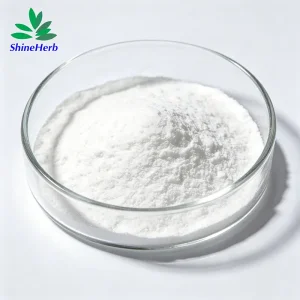
Buy Cosmetic Grade 5-ALA HCL CAS 5451-09-2 5-Aminolevulinic Acid HCl Powder
View Product Detail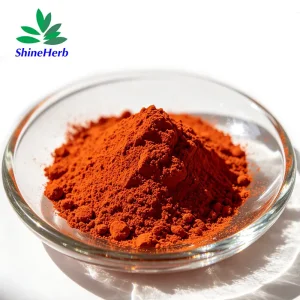
Best USP Fluorescein Sodium Salt CAS 518-47-8 for Ophthalmology Manufacturers, Companies
View Product Detail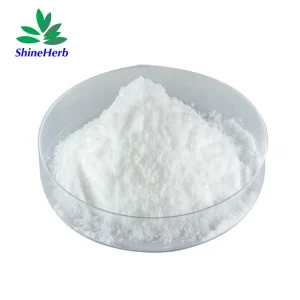
Buy Wholesale Bulk Creatine Monohydrate OEM/ODM Creatine Powder for Muscle Support
View Product Detail
China Argireline Peptide Anti-Wrinkle Ingredient for Cosmetic Ingredient Manufacturer
View Product Detail
Buy Diindolylmethane DIM High-Purity Supplement Ingredient Manufacturers, Manufacturer
View Product Detail
Best High-Quality Glucosamine Sulfate 2KCl-Joint Health Supplement Ingredient
View Product Detail
Wholesale Vitamin C Ethyl Ether 3-O-Ethyl Ascorbic Acid CAS 86404-04-8 Cosmetic Whitening
View Product DetailFrequently Asked Questions: Arecoline Hydrobromide Bulk Supply
Immediate, transparent answers addressing regulatory status, stability, shipping classifications, and technical documentation.