Q1: How does ShineHerb Biotech manage logistics and customs clearance into Baku, Azerbaijan?
We utilize the established Trans-Caspian International Transport Route (Middle Corridor). Cargo ships from our Xi'an manufacturing plant via multimodal container rail freight through Khorgos and Aktau/Kuryk, docking at the Port of Baku (Alat). Transit times typically span 14 to 18 business days. For rapid R&D or clinical batches, we coordinate air cargo express into Heydar Aliyev International Airport (GYD) within 3 to 5 business days, fully supported by commercial invoices, packing lists, COA, and export declarations.
Q2: Are your active ingredients compliant with the Food Safety Agency of Azerbaijan (AFSA)?
Yes. All food-grade, nutraceutical, and cosmetic ingredients are manufactured under ISO 22000, HACCP, and GMP parameters. We supply full documentation matching AFSA guidelines, including residual solvent reports (ICH Q3C), heavy metal limits tested via ICP-MS, radiation declarations, Non-GMO verification, and Halal certification issued by globally accredited certification bodies.
Q3: What is the differentiation between Hydrolyzed Sponge Spicules and microdermabrasion crystals?
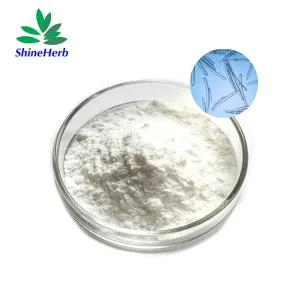
Traditional microdermabrasion utilizes aluminum oxide or diamond dust that merely shears the stratum corneum surface laterally, often provoking barrier damage. In contrast, our Hydrolyzed Sponge Spicules consist of 99% organic silica monaxons (microscopic needle-shaped spicules ~50-250 microns long). When massaged into the skin, they penetrate vertically into the epidermis, triggering natural collagen synthesis and functioning as invisible microscopic channels that draw active serums deep into the dermis before naturally shedding after 48-72 hours.
Q4: Can you supply Ursodeoxycholic Acid (UDCA) with full Drug Master File (DMF) technical support?
Yes. Our pharmaceutical grade Ursodeoxycholic Acid (CAS 128-13-2) complies fully with current European Pharmacopoeia (Ph. Eur.) and United States Pharmacopeia (USP) monographs. We provide open-part DMF documentation, stability studies (accelerated and long-term according to ICH guidelines), structural elucidation profiles, and detailed impurity profiles (verifying absence of cholic acid, lithocholic acid, and chenodeoxycholic acid impurities above monograph thresholds).
Q5: What are the Minimum Order Quantities (MOQ) and sample evaluation protocols?
We provide pre-shipment evaluation samples (typically 20g to 100g) alongside lot-specific COAs for laboratory testing, solubility checks, and pilot batch validation. For commercial shipments, standard MOQs start at 1kg to 25kg depending on the product grade (e.g., spicules and peptides have 1kg MOQs, while bulk food-grade amino acids and vitamins usually follow standard 25kg fiber drum packaging).
Q6: How is Astaxanthin stability guaranteed during international summer transit?
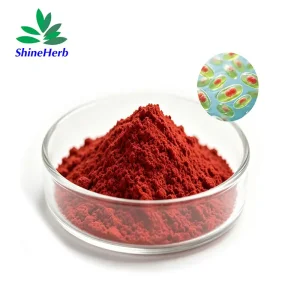
Astaxanthin is highly sensitive to light, oxygen, and excessive temperatures. For bulk powder, we utilize beadlet micro-encapsulation with natural antioxidants (mixed tocopherols / ascorbyl palmitate). For natural oleoresin, products are hermetically sealed inside double-layer nitrogen-flushed aluminum containers, packed with thermal insulating foil and desiccant packs, with temperature-controlled reefer options available for Caspian summer shipping routes.