
High-Assay Biochemicals & Industrial Excipients
Verified supply-chain catalog featuring our premier bulk ingredients, nutritional vitamins, amino acid intermediates, and functional enzyme matrices.
-
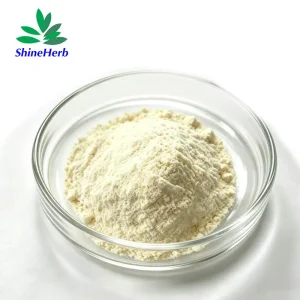
China Hot Sale Vitamin a Acetate CAS 127-47-9 Retinol Acetate Powder Supplier, Company
-
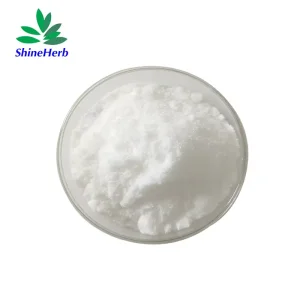
Best High-Quality Glucosamine Sulfate 2KCl-Joint Health Supplement Ingredient Companies, Exporter
-
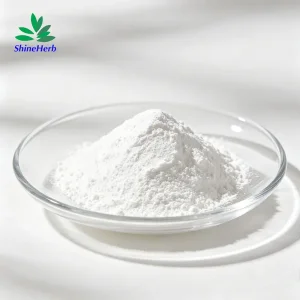
China Natural Beta Alanine Powder CAS 107-95-9 Manufacturer Exporters, Factories
-
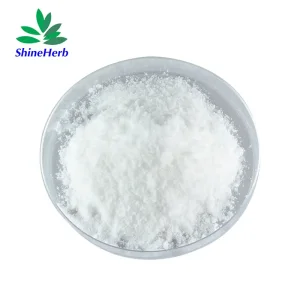
China High quality Sodium taurocholate CAS145-42-6 Shineherb Supply Companies, Company
-
Wholesale Food Grade 99% Alpha Cyclodextrin Wholesale Exporters, Factories
-
Buy Chondroitin Sulfate 99% Natural Bovine Source for Dietary Supplement Manufacturers, Companies
-
-
Buy Shineherb Supply Ethyl Vanillin Powder High Quality Food Flavoring Agent Manufacturer, Company
Global Commercial Status of Natural Shikimic Acid
Decoding international demand shifts, geopolitical supply corridors, and the structural economics bridging botanical extraction and synthetic biology.
Strategic Pharmaceutical Precursor
Natural Shikimic Acid (3,4,5-trihydroxy-1-cyclohexene-1-carboxylic acid) represents the decisive, non-substitutable chiral building block for the industrial synthesis of Oseltamivir Phosphate (Tamiflu). Global health security bodies, national strategic reserves, and multinational generic consortiums maintain baseline Shikimate stockpiles to buffer influenza pandemics (H1N1, H5N1, H7N9).
Clean Cosmetic Acid Transition
In personal care, Shikimic Acid has emerged as a premium "biomimetic exfoliant" outpacing Glycolic and Salicylic acids. Boasting significant antimutagenic, anti-acne (C. acnes inhibition), and tyrosinase-inhibiting properties without inducing transepidermal water loss (TEWL) or neurosensory irritation, global dermocosmetic houses drive double-digit CAGR consumption.
Botanical vs Synthetic Equilibrium
While metabolic engineering (e.g., genetically modified E. coli aromatic pathway redirection) exists, botanical isolation from Illicium verum Hook. f. remains the commercial standard. Industrial star anise extraction maintains an unchallenged carbon-origin premium, distinct enantiomeric stereospecificity, and lower downstream purification energy costs.
Chinese Factory Scale & Efficiency Advantages
Why leading global API manufacturers and multinational chemical brands route their multi-metric procurement through specialized Shaanxi and Guangxi facilities.
Guangxi Raw Material Cartel & Proximity Arbitrage
Over 80-90% of the world's commercial Illicium verum harvests originate within the specialized agro-climatic corridor of Guangxi and southwestern Yunnan. Chinese manufacturers operate directly at the source. This physical consolidation bypasses tertiary commodity middlemen, prevents degradation of the perishable pericarps during ocean transport, and dampens seasonality-induced price spikes.
Shaanxi ShineHerb Biotech leverages this integrated infrastructure by locking long-term upstream agricultural off-take agreements, securing uniform shikimate content (>6-8% in dried fruit biomass) prior to primary processing.
Continuous Countercurrent Extraction & Green Closed-Loop Tech
Traditional batch refluxing has been replaced across modern Chinese manufacturing plants by continuous dynamic countercurrent extraction and nanofiltration concentration loops. Solvent recovery efficiencies exceed 95%, dramatically compressing operational expenditures while preserving delicate thermodynamic ester bonds.
By avoiding harsh mineral acid catalysts and deploying food-grade ion exchange resins alongside automated multi-stage recrystallization, our chemical engineering lines produce pharmaceutical-grade Shikimic acid without persistent organic solvent residues (exceeding USP <467> and EP 5.4 requirements).
Raw Selection
Sourcing premium autumn star anise with >7% intrinsic shikimate yield; GC verification of essential oil volatile profiles.
Dynamic Leaching
Continuous countercurrent deionized water/ethanol extraction minimizing anethole thermal co-distillation.
Resin Chromatography
Macroporous adsorption chromatography stripping polyphenols, tannins, heavy metals, and residual pigments.
Chiral Recrystallization
Sub-zero selective crystallization ensuring strict (-)-stereoisomeric stability and eliminating quinic acid isomers.
GMP Micronization
Fluidized-bed vacuum drying, 80-100 mesh jet milling, clean-room drum packaging with hermetic foil barriers.
Technical Specifications & Quality Benchmarks
Transparent, batch-traceable monographs matching USP, EP, and Chinese Pharmacopoeia (ChP) analytical standards.
| Analytical Parameter | Pharma Intermediate Grade (API) | Cosmetic Active Grade | Testing Methodology |
|---|---|---|---|
| Chemical Name | (3R,4S,5R)-3,4,5-trihydroxycyclohex-1-enecarboxylic acid | IUPAC Nomenclature | |
| Assay (Purity) | ≥ 98.5% (Dry Basis) | ≥ 98.0% (Dry Basis) | HPLC-DAD / External Standard |
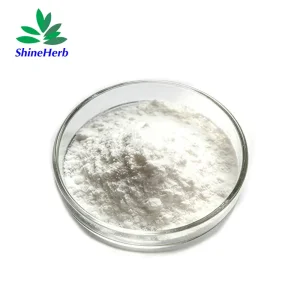
| Appearance | Fine White to Off-White Crystalline Powder | White Fine Crystalline Powder | Organoleptic / Visual Visual Inspection |
| Specific Optical Rotation [α]²⁰D | -175.0° to -185.0° | -170.0° to -185.0° | Polarimetry (c=1, H₂O) |
| Melting Point Range | 185.0°C – 188.0°C | 184.0°C – 188.0°C | Capillary Melting Apparatus |
| Loss on Drying | ≤ 0.50% | ≤ 1.00% | Gravimetric (105°C, 3 Hours) |
| Residue on Ignition | ≤ 0.10% | ≤ 0.20% | Sulfated Ash (600°C) |
| Heavy Metals (Pb, As, Cd, Hg) | Total ≤ 10 ppm (Pb ≤ 1ppm, As ≤ 1ppm) | Total ≤ 10 ppm (Compliant with EU Reg.) | ICP-MS / Atomic Absorption |
| Residual Solvents | Ethanol ≤ 500 ppm; Methanol Absent | Ethanol ≤ 1000 ppm | Headspace Gas Chromatography (GC-FID) |
| Microbiological Profile | Total Plate Count ≤ 1,000 cfu/g; Absence of E. coli, Salmonella | Total Plate Count ≤ 100 cfu/g; Yeast/Mold ≤ 10 cfu/g | USP <61> / <62> Microbiological Exam |
Industrial Application Scenarios Across Target Sectors
From multi-ton organic synthesis cascades to advanced dermatological delivery systems, Shikimic Acid delivers verified mechanistic efficacy.
Antiviral Neuraminidase Inhibition
Within pharmaceutical synthesis, Shikimic Acid provides the functionalized cyclohexene framework required to construct the neuraminidase inhibitor pharmacophore. The chemical conversion transforms shikimic acid through epoxide cleavage, azido functionalization (or modern azide-free catalytic pathways), and acetylation to construct Oseltamivir Phosphate, preventing influenza virion propagation along respiratory mucosal tracts.
Dermatology & Acne Pathogenesis
In topical formulations (serums, chemical toners, night emulsions), Shikimic acid exhibits a minimum inhibitory concentration (MIC) against Cutibacterium acnes comparable to high-strength salicylic acid, but at merely 1-2% active dosage. It simultaneously regulates excessive 5-alpha reductase-driven lipase activity, attenuates free fatty acid sebum fractions, and accelerates stratum corneum cell turnover without cutaneous erythema.
Agrochemical & Animal Health Additives
Beyond human therapeutics, shikimic acid acts as an ecological bio-fungicide synergist and antimicrobial feed additive for intensive swine and poultry aquaculture. By competitively disrupting microbial peripheral membrane integrity and exerting natural antithrombotic properties, shikimic complexes reduce subclinical livestock infections, eliminating dependence on preventive antibiotic cocktails.
Technological Innovations & Industry Horizon
Tracking the technological transition toward circular solvent systems, continuous crystal engineering, and sustainable bioprocess integration.
Subcritical Water & Microwave Integration
Pioneering facilities in Xi'an are operationalizing pilot-scale subcritical water extraction (SWE) under pressurized nitrogen at 120°C–140°C. This breakthrough eliminates volatile organic solvents entirely during initial maceration, yielding pure aqueous shikimic eluates in minutes while lowering cumulative industrial carbon footprints by 38%.
Continuous Flow Azide-Free Chemistry
Downstream pharmaceutical synthesis historically suffered severe process safety hazards due to explosive azide intermediates during the installation of Oseltamivir's amino groupings. Chinese CDMOs collaborating with raw material refiners are deploying microchannel continuous-flow reactors that implement safer, azide-free aziridine routes directly from pure shikimate crystals.
Bio-Fermentation vs Botanical Hybrid Models
Rather than displacing botanical extraction, synthetic biology is stabilizing it. Advanced industrial models employ genetically tuned yeast strains during periods of global anise crop failures to provide intermediate baseline feedstocks, while natural extraction remains the premium standard for international brands committed to clean-label, plant-derived regulatory frameworks.
Global Sourcing Matrix & Vendor Qualification
The professional criteria required by corporate procurement teams, QA directors, and chemical importation desks before releasing purchase orders.
1. Chiral HPLC Verification
Always mandate chiral phase chromatography. Non-stereospecific assays may erroneously lump unwanted stereoisomers or quinic acid impurities into a single chromatographic peak, skewing downstream reaction yields.
2. Residual Solvent Profiles
Ensure GC validation documents strict compliance with USP <467> Class 1, 2, and 3 solvents. Verify zero detectability of chloroform, benzene, or halogenated solvents used in low-grade purification.
3. Trace Elemental Assays
Star anise agricultural soils can absorb localized heavy metals. Require ICP-MS certification demonstrating Pb < 1.0 ppm, As < 1.0 ppm, Cd < 0.5 ppm, and Hg < 0.1 ppm to clear EU and FDA customs inspection limits.
4. Supply Chain Buffer Stock
Direct manufacturers must present physical evidence of warehouse reserves (at least 20-50 MT) in centralized free-trade zones (e.g., Xi'an, Qingdao, or Shanghai) to ensure lead times remain within 7-10 business days.
Frequently Asked Questions: B2B Procurement Desk
Authoritative, technically validated answers addressing analytical methods, shipping parameters, regulatory filings, and batch traceability.
What exact analytical methodology is employed to verify the ≥98% Shikimic Acid assay?
How does botanical Shikimic Acid differ structurally from synthetic or fermented variants?
What are the standard commercial packaging, moisture control, and shelf-life parameters?
Which international regulatory dossiers and certificates accompany bulk export consignments?
What is the water solubility profile and formulation stability in cosmetic emulsions?
What is the Harmonized System (HS) code for international customs clearance?
Standardized Botanical Extracts & Nutra Ingredients
Expand your sourcing catalog across synergistic botanical actives, bio-available minerals, cellular longevity compounds, and hair-growth vitamins.
-
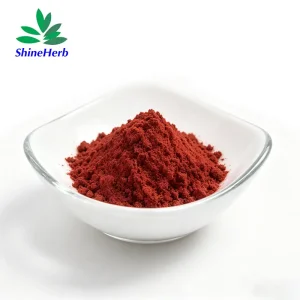
China Wholesale Chromium picolinate Nutritional Supplements Suppliers, Supplier
-
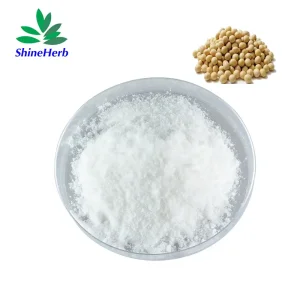
Buy Beta-Sitosterol 98% Powder Supplier Plant Sterol Ingredient Manufacturer, Factory
-
-
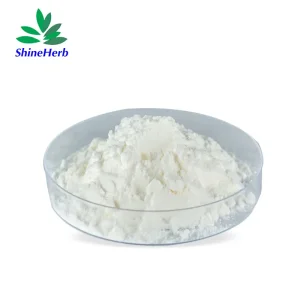
Buy Wholesale Sulbutiamine 99% Powder for Dietary Supplement Suppliers, Supplier
-
Wholesale Pure dimethyl sulfone 99% food grade MSM for dietary supplement Manufacturer, Exporter
-
-
-
Initiate Wholesale Shikimic Acid Procurement
Connect directly with ShineHerb Biotech's technical engineering department. Request a competitive volume-tiered commercial quote, batch-specific COA, analytical HPLC chromatograms, or 50g–100g pre-shipment qualification samples.