Featured Active Ingredients & Bio-Formulation Precursors
Alongside our primary production lines of natural and recombinant leech hirudin powder, Shaanxi ShineHerb Biotech Co., Ltd. provides contract manufacturing and bulk supply for the following high-purity active compounds:
Cosmetic Grade Syn-Ake for Wrinkle Reduction
View Product Dossier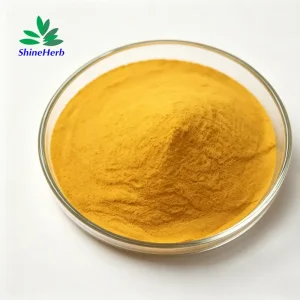
Riboflavin / Vitamin B2 Food Grade Powder
View Product Dossier
High Purity Linolenic Acid ALA Raw Material
View Product Dossier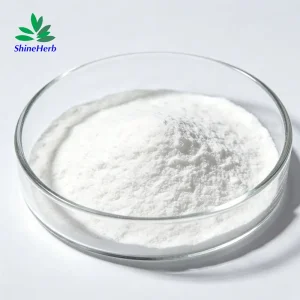
Pure Magnesium Glycinate Food Grade
View Product Dossier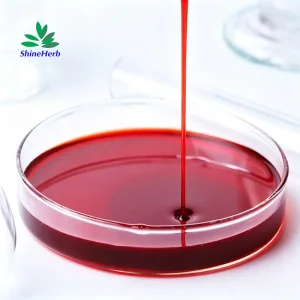
High Phospholipid Antarctic Krill Oil
View Product Dossier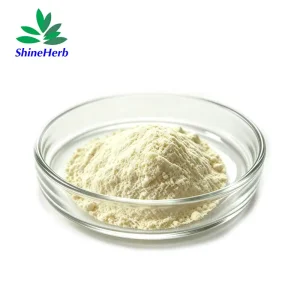
Natural Chlorella Extract CGF Powder
View Product Dossier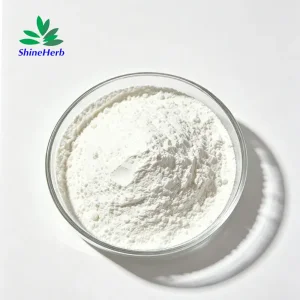
Thiamine Mononitrate (Vitamin B1) USP/FCC
View Product Dossier
Ascorbyl Glucoside AA2G (CAS 129499-78-1)
View Product DossierMolecular Profile of Leech Hirudin: The Gold-Standard Direct Thrombin Inhibitor
Understanding peptide kinetics, antithrombin units (AT-U), and structural thermodynamics for high-performance antithrombotic and cosmeceutical formulation.
Leech Hirudin is historically recognized as the most potent naturally occurring direct thrombin inhibitor (DTI) known to biomedical science. Originally discovered in the salivary secretions of the medical leech (*Hirudo medicinalis* and the Asian therapeutic counterpart *Hirudo nipponica Whitman*), hirudin is a single-chain polypeptide composed of 65 to 66 amino acids with a molecular weight of approximately 7,000 Daltons (7 kDa). Unlike indirect anticoagulants such as heparin, which rely entirely on endogenous antithrombin III (AT-III) cofactor mediation, hirudin forms an equimolar, stoichiometric 1:1 complex directly with both free and clot-bound thrombin without requiring intermediary plasmatic cofactors.
Bivalent Binding Mechanics
The hirudin polypeptide exhibits a distinct two-domain structure. Its compact N-terminal globular core (stabilized by three invariant disulfide bridges: Cys6-Cys14, Cys16-Cys28, and Cys22-Cys39) binds into the catalytic active site of alpha-thrombin, while its flexible, highly acidic C-terminal tail (residues 48–65) docks with high electrostatic affinity into thrombin's fibrinogen-binding exosite-1. This double interaction yields an ultra-low dissociation constant (Kd ≈ 20 × 10⁻¹⁵ mol/L).
Natural vs. Recombinant Forms
In native salivary gland extracts, the tyrosine residue at position 63 is post-translationally O-sulfated (Tyr-63-SO4), conferring maximum binding kinetics. Recombinant variants (*r-hirudin*), produced via *Pichia pastoris* or *Saccharomyces cerevisiae* genetic expression platforms, lack this sulfate moiety (desulfatohirudin). Desulfato forms retain substantial antithrombin activity (typically 8,000–12,000 AT-U/mg) and provide structural homogeneity without seasonal agricultural variability.
Pharmacodynamic Selectivity
Hirudin demonstrates an exceptional selectivity profile. It does not inhibit other trypsin-like serine proteases such as plasmin, factor Xa, factor IXa, kallikrein, or protein C. As a consequence, it provides surgical precision in blocking thrombin-induced platelet aggregation and fibrinogen cleavage into insoluble fibrin networks without inducing the collateral immune-mediated thrombocytopenia commonly linked to unfractionated heparins.
| Analytical Parameter | Natural Lyophilized Leech Powder | Recombinant Hirudin (EP/USP Pharma Grade) | Cosmeceutical Topical Grade |
|---|---|---|---|
| Biological Activity (AT-U/g) | 100 – 1,200 AT-U/g (Extract Dependent) | ≥ 10,000 – 16,000 AT-U/mg (Dry Basis) | 200 – 2,000 AT-U/g |
| Source / Production System | *Hirudo nipponica* / *Hirudo medicinalis* | *Pichia pastoris* High-Density Fermentation | Standardized Hydrolyzed Peptide Base |
| Molecular Weight (kDa) | Polypeptide Complex (Primary: ~7.0 kDa) | 6,963.5 Da (Monodisperse Sequence) | Fractionated Peptide Profile (<10 kDa) |
| Purity / Assay (RP-HPLC) | Total Active Nitrogen / Fibrin Assay | ≥ 98.0% (Purity by SDS-PAGE & HPLC) | Standardized Enzymatic Activity |
| Endotoxin Limit (LAL Test) | < 10.0 EU/mg (Bio-grade dependent) | < 0.05 EU/mg (Injectable / Sterile Grade) | < 20.0 EU/mg |
| Residual Solvents & Heavy Metals | Lead < 2 ppm, Arsenic < 1 ppm, Mercury < 0.1 ppm | ICH Q3C Compliant (Zero Class 1 Solvents) | Cosmetic Regulation (EC) 1223/2009 Compliant |
Why Global Procurement Anchors in Chinese Biomanufacturing
From aquaculture control to industrial chromatography: How Shaanxi ShineHerb Biotech Co., Ltd. delivers scale, compliance, and cost leadership.
Ecological Breeding Clusters
China commands over 85% of the world's commercial medicinal leech aquaculture. Through strictly regulated freshwater bio-farms in Jiangsu, Anhui, and Hubei provinces, Chinese manufacturers culture *Hirudo nipponica Whitman* under closed, pesticide-free, heavy-metal-tested aquatic environments. This vertical raw material integration completely mitigates the supply volatility, pathogen contamination, and biodiversity depletion that plague wild-harvested European counterparts.
Xi'an High-Tech QC & R&D Hub
Operating from the Hi-Tech Zone of Xi'an, Shaanxi Province, our manufacturing infrastructure leverages the premier biochemical analytical centers of Northwest China. Backed by state-of-the-art HPLC, LC-MS/MS, GC-MS, and automated chromogenic substrate microplate analyzers, every commercial lot undergoes multi-point identity verification, peptide mapping, and specific activity determination referenced against national CP standards and international USP/EP pharmacopeial monographs.
Sub-Zero Lyophilization Capacity
Hirudin's quaternary biological activity is intensely heat-labile. Our factory facilities house industrial freeze-drying chambers operating at shelf temperatures down to -50°C and ultra-deep vacuum (<10 Pa). This preservation regime prevents denaturation of the tertiary disulfide cross-links, guaranteeing that bulk leech hirudin powder retains over 96% of its native antithrombin potency through extended warehousing and intercontinental maritime logistics.
Global Industry Trends: From Natural Extracts to Precision Synthetic Biology
Market dynamics driving the adoption of leech-derived antithrombin peptides across pharmaceuticals, transdermal dermocosmetics, and medical diagnostics.
The international market for antithrombotic ingredients is experiencing a profound paradigm shift. For decades, the global healthcare supply chain depended almost exclusively on porcine-derived unfractionated heparin and low-molecular-weight heparins (LMWH). However, recurrent bio-security risks, supply disruptions in swine populations (such as African Swine Fever), and the clinically documented danger of Heparin-Induced Thrombocytopenia (HIT Type II) have accelerated pharmaceutical demands for non-heparin direct thrombin inhibitors.
Trend 1: Clinical Validation in HIT Syndromes
Recombinant hirudin derivatives (such as Lepirudin and Desirudin) have established critical footholds in clinical critical-care guidelines for managing heparin-induced thrombocytopenia and preventing deep vein thrombosis (DVT) following orthopedic surgery. The ability to achieve immediate, dose-dependent anticoagulation without relying on endogenous antithrombin levels makes hirudin raw materials irreplaceable in modern intensive care medicine.
Trend 2: Transdermal Cosmeceutical Boom
In premium dermatology and aesthetic post-procedure care, natural leech hirudin powder has emerged as a premier active. By dissolving micro-thrombi within sub-epidermal capillaries, hirudin-infused topicals dramatically accelerate hematoma reabsorption, minimize post-operative bruising following plastic surgery, improve venous stasis symptoms in varicose veins, and clear vascular-derived dark under-eye circles.
Trend 3: Pichia pastoris Yield Optimization
Synthetic biology has enabled high-density microbial fermentation yields in recombinant hirudin peptide expression. By employing optimized codon usage, methylotrophic alcohol oxidase promoters (AOX1), and continuous perfusion purification schemes, Chinese bio-factories are lowering the unit manufacturing cost of pharmaceutical-grade r-hirudin by 40–60%, democratizing global enterprise access.
Industrial Application Scenarios & Downstream Formulations
Targeted engineering approaches for integrating bulk hirudin active powders into diverse regulatory and dosage matrices.
Cardiovascular & Hematological Therapeutics
Engineered for parenteral, subcutaneous, and intravenous formulations addressing acute thromboembolic disorders, disseminated intravascular coagulation (DIC), and arterial thrombosis.
- Injectable Solutions: Sterile, endotoxin-depleted recombinant hirudin lyophilized powder for reconstitution in acute care.
- Medical Device Surface Passivation: Bio-conjugation of hirudin molecules onto polyurethane hemodialysis tubing and coronary stents to eliminate thrombogenic surface adhesion.
- In-Vitro Diagnostics (IVD): Reagents for chromogenic thrombin assay kits and specialized hematology calibration standards.
Advanced Cosmeceuticals & Transdermal Topicals
Utilizing stabilized leech extract powders with tailored transdermal liposomal carrier systems to ensure percutaneous penetration into the microvasculature.
- Post-Aesthetic Bruise Recovery Gels: Rapid clearance of subcutaneous extravasated erythrocytes and hemosiderin pigmentation.
- Varicose & Heavy-Leg Emulsions: Decongestive dermal formulas targeting localized microvascular stasis and capillary fragility.
- Scar Remodeling Preparations: Modulation of early fibrin deposition during tissue healing to prevent hypertrophic scar tissue formation.
Global Procurement Checklist: How to Qualify Hirudin Powder Suppliers
Critical analytical parameters every regulatory affairs, formulation scientist, and international procurement director must demand prior to batch release.
1. Antithrombin Unit (AT-U) Assay
Never purchase hirudin based solely on protein weight (w/w). Insist on photometric titration using synthetic chromogenic substrates (such as Chromozym TH or S-2238) against a calibrated International Standard for Alpha-Thrombin (WHO). One Antithrombin Unit (AT-U) represents the quantity of hirudin required to neutralize one National Institute of Health (NIH) unit of thrombin at 37°C.
2. Endotoxin & Bioburden Rigor
Due to the aquatic origins of natural leeches, Gram-negative bacterial endotoxins (Lipopolysaccharides / LPS) present a high risk of pyrogenic reactions. High-grade hirudin powder requires automated LAL gel-clot or kinetic chromogenic validation confirming endotoxin levels strictly adhere to target regulatory limits (<0.05 EU/mg for parenterals; <10 EU/mg for topicals).
3. Reverse Phase HPLC Profiling
Ensure chromatograms demonstrate clear resolution between active intact hirudin peptides, oxidized degradation variants, and host-cell protein residues. RP-HPLC C18 analytical runs should verify single major symmetrical peaks with retention times aligned identically against reference standards.
Frequently Asked Questions (FAQ) for B2B Importers
Authoritative answers on hirudin specifications, documentation dossiers, storage kinetics, and custom formulation services.
Heparin is an indirect antithrombin agent that functions by binding to antithrombin III (AT-III), forming a conformational complex that accelerates the inactivation of thrombin and factor Xa. However, heparin cannot inhibit thrombin that is already bound within a fibrin clot. In contrast, Hirudin is a direct thrombin inhibitor (DTI) that binds directly to both free circulating thrombin and clot-bound thrombin independently of antithrombin III. Crucially, hirudin does not bind to platelet factor 4 (PF4), eliminating the trigger mechanism for Heparin-Induced Thrombocytopenia (HIT).
Potency is measured in Antithrombin Units (AT-U). We employ standard photometric titration methods using chromogenic synthetic substrates (such as Tos-Gly-Pro-Arg-pNA / Chromozym TH). The rate of p-nitroaniline liberation is monitored spectrophotometrically at 405 nm. One AT-U is defined as the amount of hirudin that neutralizes one NIH unit of standard alpha-thrombin at pH 8.3 and 37°C. Every commercial shipment leaves our facility with a lot-specific Certificate of Analysis (COA) confirming the AT-U/g activity.
Every batch ships with a full regulatory release dossier: a comprehensive Certificate of Analysis (COA) documenting physical, chemical, microbiological, and specific antithrombin assays; Material Safety Data Sheet (MSDS); Technical Data Sheet (TDS); Heavy Metal & Residual Solvents Certificate (ICH Q3C); TSE/BSE-free statement; Non-GMO statement; and where applicable, ISO, HALAL, and KOSHER compliance certificates.
In its lyophilized powder form, bulk hirudin is remarkably stable when protected from atmospheric moisture and elevated temperatures. For long-term commercial warehousing (>12 months), we recommend storage at -20°C in hermetically sealed, nitrogen-flushed, light-resistant pharmaceutical aluminum foil pouches. For operational handling and short-term processing (up to 3 months), storage at 2°C to 8°C under dry conditions is fully sufficient to maintain >95% residual bio-potency.
Yes. Shaanxi ShineHerb Biotech Co., Ltd. specializes in tailored contract bioprocessing. We can formulate standardized powders at targeted biological activities (e.g., exact 500 AT-U/g, 1,000 AT-U/g, or 10,000 AT-U/g), adjust particle size distribution via ultra-fine micronization down to 300 mesh, and manufacture specialized liposomal or nano-encapsulated hirudin solutions to maximize transdermal bioavailability for cosmetic brands.
Explore Additional Bulk Active Materials in Our Export Portfolio
Consolidate your international raw material supply chain with our cGMP-certified bioactive peptides, vitamins, and plant extract concentrates:
Oyster Peptide Food Grade Bulk Powder
View Product Dossier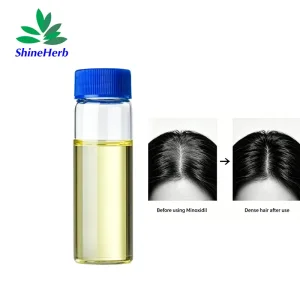
5% Minoxidil Solution / Minoxidil Powder
View Product Dossier
Inositol Powder (CAS 87-89-8) Food Grade
View Product Dossier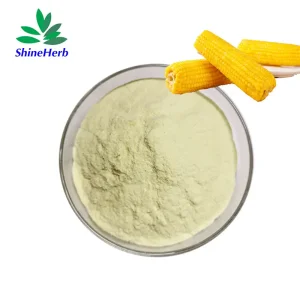
Corn Protein Peptide Natural Extract 80%
View Product Dossier
High-Bioavailability Liposomal Quercetin
View Product Dossier
Vitamin B2 Riboflavin (CAS 83-88-5) Bulk
View Product Dossier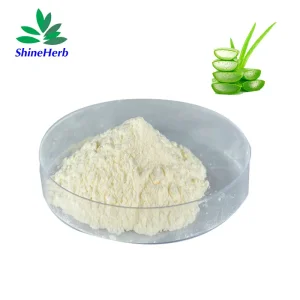
Freeze Dried Aloe Vera Powder 100:1
View Product Dossier