
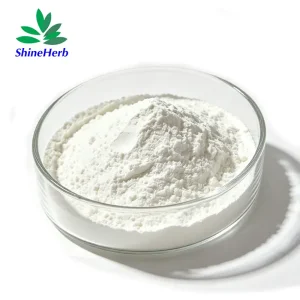
China Niacinamide Vitamin B3 Powder 99% for Skin Care & Supplements Manufacturers, Factory
View Specification
Standardized factory-direct botanical extracts, vitamins, and high-potency intermediates manufactured to strict USP/EP specifications with full batch-level Certificate of Analysis (COA).
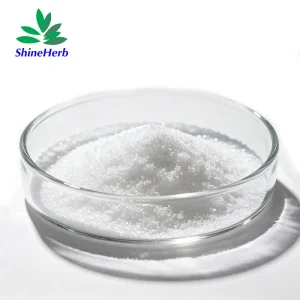
Shikimic acid (CAS 138-59-0, (3R,4S,5R)-3,4,5-trihydroxycyclohex-1-ene-1-carboxylic acid) represents one of the most critical chiral biochemical scaffolds in industrial chemistry. Serving as the primary upstream starting precursor for the synthesis of Oseltamivir phosphate (Tamiflu) and expanding into advanced cosmetic formulations and fine agrochemicals, maintaining a reliable wholesale pipeline is essential for multinational supply chain resilience.
CAS 138-59-0 remains irreplaceable in the stereospecific multi-step synthesis of neuraminidase inhibitors. Global pharmaceutical stockpiling strategies against seasonal and pandemic influenza strains (H1N1, H5N1) mandate strict vendor pre-qualification, lot consistency, and high enantiomeric purity to eliminate optical isomers.
The cosmetic industry has experienced an exponential surge in shikimic acid demand. Acting as a non-irritating alternative to glycolic acid and salicylic acid, it exhibits superior tyrosinase inhibition, regulates sebum excretion, and provides powerful anti-microbial action against Cutibacterium acnes.
Beyond pharmaceuticals, CAS 138-59-0 acts as an environmentally benign synthon for bio-based aromatic polymers, functional flavonoids, and crop protection agents. As corporate mandates demand scope-3 decarbonization, replacing petroleum-derived benzene rings with shikimate-pathway intermediates has become an industry priority.
Historically dependent on the seasonal harvesting of Chinese star anise (Illicium verum), the CAS 138-59-0 ecosystem has undergone a massive industrial transformation. Leading factories have modernized production using hybrid extraction-fermentation models to mitigate volatile market swings and harvest dependencies.
Traditional extraction from Illicium verum typically yields 3% to 7% shikimic acid, exposing international buyers to extreme price fluctuations caused by weather disruptions in southwest China and Southeast Asia. Modern industrial manufacturers prevent price surges by maintaining a strategic geographical reserve network and integrating bio-fermentation backups.
The primary technological challenge in manufacturing CAS 138-59-0 lies in eliminating quinic acid (CAS 77-95-2), an analogue with similar physical characteristics. Inferior manufacturers frequently produce material contaminated with quinic acid that interferes with downstream chiral crystallization. Our state-of-the-art resin column separation processes maintain residual quinic acid at < 0.2%.
Cross-border pharmaceutical and nutritional buyers encounter severe regulatory audits requiring end-to-end provenance. From raw botanical harvest logging to final crystallization solvent residue verification, certified supply chains must provide complete transparency via fully auditable Batch Production Records (BPR).
Every bulk batch of CAS 138-59-0 released from Shaanxi ShineHerb Biotech Co., Ltd. is evaluated under validated HPLC and chiral chromatography protocols. Below are the definitive acceptance criteria mandated for pharmaceutical, cosmetic, and fine chemical applications.
| Test Parameter | Standard Specification | Typical Factory Result | Analytical Methodology |
|---|---|---|---|
| Appearance | White to off-white crystalline powder | Conforms (Fine crystalline) | Visual / Organoleptic Inspection |
| Assay (Purity via HPLC) | ≥ 98.0% (Standard) / ≥ 99.0% (Pharma Grade) | 99.35% | HPLC-UV (210 nm, C18 Column) |
| Specific Optical Rotation [α]D20 | -175.0° to -185.0° (c=1 in H2O) | -181.2° | Polarimetry (Chiral verification) |
| Melting Point Range | 185.0°C to 189.0°C | 186.4°C – 187.8°C | Capillary Melting Apparatus |
| Loss on Drying | ≤ 1.00% | 0.38% | Thermogravimetric (105°C, 2h) |
| Residue on Ignition (Ash) | ≤ 0.10% | 0.04% | Sulfated Ash (800°C furnace) |
| Heavy Metals (Pb, Cd, As, Hg) | ≤ 10.0 ppm total (As < 1ppm, Pb < 2ppm) | Conforms (< 2.5 ppm total) | ICP-MS (Inductively Coupled Plasma) |
| Residual Solvents | Ethanol ≤ 5000 ppm, Methanol ≤ 3000 ppm | Conforms (Ethanol < 240 ppm) | GC-Headspace (FID Detection) |
| Total Aerobic Microbial Count | ≤ 1,000 CFU/g | < 50 CFU/g | Microbiological Plate Method (EP/USP) |
To decouple manufacturing from seasonal climatic disruptions, current R&D centers on engineered Escherichia coli and Corynebacterium glutamicum strains. By disrupting the shikimate kinase (aroK/aroL) pathways, microbial fermentation achieves titrations exceeding 60 g/L directly from glucose feedstocks.
Our manufacturing facilities implement closed-loop continuous countercurrent extraction using pure water-ethanol systems. By operating under subcritical conditions, extraction cycle times decrease by 70%, while heat-sensitive stereochemical bonds remain protected from thermal degradation.
Using real-time PAT (Process Analytical Technology) driven crystallization, particle size distribution (PSD) is strictly controlled to 80-120 mesh. This uniform particle structure ensures consistent bulk density and rapid dissolution rates for downstream blending.
Procurement security relies on comprehensive documentation and smooth regulatory clearance. ShineHerb Biotech provides complete compliance dossier packs that reduce audit friction for custom clearance and institutional buyer qualification.
Each production lot is accompanied by a batch-specific COA, fully transparent Manufacturing Process Flowcharts (BPR summaries), SDS conforming to GHS Revision 9, Non-GMO declarations, and TSE/BSE safety statements.
We provide REACH documentation for European chemical imports, FDA Facility Registrations for U.S. customs entry, and INCI/CosIng dossier filings for cosmetic brands entering the European and East Asian personal care sectors.
Shikimic acid requires moisture-barrier packaging to prevent agglomeration. All export units feature double-layer polyethylene liners with aluminum foil secondary barriers inside 25 kg fiber drums, supported by optional temperature-controlled DDP shipping services.
Key answers regarding analytical assays, packaging protocols, sample testing, and contract manufacturing for CAS 138-59-0 buyers.
Discover high-potency ingredients and functional nutrition components supplied directly from our modern Xi'an manufacturing base to global manufacturing facilities.
Connect directly with our engineering sales specialists in Xi'an. We offer custom batch sizing, dedicated HPLC batch verification, and commercial FOB/CIF/DDP pricing for high-volume supply contracts.