Primary Bulk Ingredients & Bio-Nutrient Solutions
Direct factory allocation of verified pharmacopeia-grade compounds, amino acids, synthetic peptides, and plant derivatives engineered for high-potency formulations.
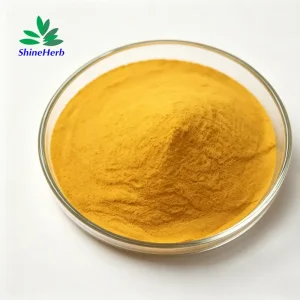
Wholesale Riboflavin /Vitamin B2 Raw Material Powder Food Grade Companies, Company
Product Specifications
Buy Food Grade Zinc Glycinate Supplement Raw Material Supplier Factories, Factory
Product Specifications
China L-Glutamic Acid CAS 56-86-0 for Nutrition Enhancers Manufacturer, Companies
Product Specifications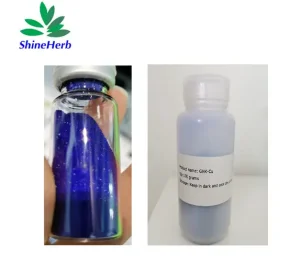
High-Quality Copper Tripeptide-1 Ghk-Cu Copper Peptide For Anti-Wrinkle Manufacturers, Factories
Product Specifications
Wholesale Feed Grade 20% Cysteamine HCl Powder CAS 56-57-0 Growth Promoter for Livestock Companies, Exporter
Product Specifications
High-Quality Hot Sale Citric Acid Monohydrate CAS 5949-29-1 Acid Condiment Exporters, Exporter
Product Specifications
China Freeze Dried Aloe Vera Powder 100:1 Cosmetic Raw Material Shineherb In Stock Companies, Exporters
Product SpecificationsPanax Ginseng Berry: The Superior Ginsenoside Re Matrix
While traditional nutraceutical formulations historically centered on 4-to-6-year-old Panax ginseng roots, modern bioanalytical science has revealed that the ephemeral Panax ginseng berry possesses an extraordinarily dense and metabolically distinct saponin profile.
Ginsenoside Re Dominance & Bioavailability
The perennial Panax ginseng C.A. Meyer blooms only once a year, bearing crimson berries for a narrow window of 7 to 10 days before senescence. Quantitative high-performance liquid chromatography (HPLC-DAD-MS/MS) demonstrates that Ginseng Berry Extract contains up to 4 to 6 times higher total ginsenoside concentrations compared to subterranean taproots. Crucially, Ginsenoside Re represents greater than 50% to 70% of the entire dammarane-type tetracyclic triterpenoid fraction in mature berries.
Unlike root-derived protopanaxadiol (PPD) glycosides such as Rb1, which undergo slow intestinal deglycosylation, Ginsenoside Re operates as a potent protopanaxatriol (PPT) derivative. Its polar sugar moieties facilitate rapid dissolution in physiological gastric media, promoting superior intestinal transcellular permeability and faster onset of therapeutic target interaction.
Metabolic Signaling & Glycemic Regulation Pathways
Peer-reviewed pharmacological investigations have established Ginseng Berry Extract as a master regulator of metabolic homeostasis. Through the targeted activation of 5' AMP-activated protein kinase (AMPK) in hepatic and skeletal muscle tissues, Ginsenoside Re upregulates Glucose Transporter 4 (GLUT4) translocation, significantly enhancing insulin sensitivity without causing hyperinsulinemic strain on pancreatic beta cells.
Simultaneously, berry saponins inhibit uncompetitive aldose reductase, counteracting the sorbitol-mediated osmotic stress underlying peripheral metabolic stress. This dual mechanism renders standardized Panax ginseng berry extract an indispensable functional ingredient in modern anti-diabetic formulations, metabolic syndrome therapies, and longevity dietary supplements.
| Analytical Parameter | Standard Panax Ginseng Root Extract | ShineHerb Ginseng Berry Standard Extract | Testing Monograph / Method |
|---|---|---|---|
| Primary Bioactive Marker | Ginsenosides Rb1, Rg1 (PPD fraction) | Ginsenoside Re > 20% to 45% (PPT fraction) | HPLC-UV (USP <563> / EP 2.2.29) |
| Total Ginsenoside Assay | 10.0% – 20.0% Total Triterpenoid Saponins | 30.0% – 70.0% Standardized Berry Saponins | HPLC-DAD / External Reference Standard |
| Rare Saponin Fraction (Rg3, Rh2, C-K) | Trace levels (< 0.05%) | Catalytically Enrichable up to 8.5% | Ultra-High Performance LC-MS/MS |
| Extraction Dynamic Carrier | High starch & polysaccharide bulk | Low polysaccharide, high anthocyanin/flavonoid | Gravimetric / Anthrone Method |
| Primary Target Indication | General Adaptogen, Immune Tonification | AMPK Activation, Metabolic Health, Longevity | In-Vitro Phosphorylation Bioassays |
Global Commercial Status & Supply Bottlenecks
The international dietary supplement landscape is experiencing an accelerating paradigm shift from crude herbal powders toward clinically substantiated, targeted phytochemical isolates.
North American Nutraceutical Shift
In North America, consumer demand for non-stimulatory cognitive enhancers, blood sugar stabilizers, and healthy aging supplements has propelled Ginseng Berry Extract into top-tier SKU hierarchies. Brand owners face intense regulatory scrutiny under 21 CFR Part 111, requiring absolute authenticity testing to eliminate commercial adulteration with cheap Panax quinquefolius or spent root residues. ShineHerb provides uncompromised isotopic traceability and complete batch documentation to satisfy these demanding regulatory audits.
European Regulatory Tightening
European brand marketers navigate rigorous EFSA botanicals frameworks and emerging Novel Food categorizations. Sourcing requires zero detectable ethylene oxide (ETO), strict polycyclic aromatic hydrocarbon (PAH4) limits below 10 μg/kg, and absolute compliance with Regulation (EC) No 396/2005 for multi-screen pesticide residues. Our closed-loop manufacturing pipeline provides clean-label assurance validated through accredited third-party European partner laboratories.
APAC Cosmeceutical & Nutra Integration
Across East Asia (South Korea, Japan, Greater China), Ginseng Berry Extract occupies a dual role in oral systemic supplements and transdermal cosmeceuticals. Its unique anthocyanin and syringic acid phenolic matrix works synergistically with Ginsenoside Re to inhibit matrix metalloproteinase-1 (MMP-1), conferring photoprotection and collagen matrix maintenance. This dual positioning drives massive B2B contract manufacturing requirements across the Pacific Rim.
State-of-the-Art Factory Technology Matrix
Industrial extraction of delicate Panax ginseng berries demands advanced thermodynamic and separation engineering to safeguard heat-sensitive malonyl-ginsenosides and complex glycosidic linkages.
Continuous Countercurrent Extraction
Our multi-stage continuous ultrasonic-assisted countercurrent extraction units maintain low core extraction temperatures (40°C – 50°C). This entirely avoids thermal degradation while optimizing extraction yield to ≥95% of native berry saponins within automated stainless-steel 316L sanitary columns.
Macroporous Resin Chromatographic Fractionation
Crude extracts transit through food-grade synthetic polymeric adsorbent resins (AB-8 and D101). Targeted ethanol gradient elution selectively isolates Ginsenoside Re and protopanaxatriols from monosaccharides, inorganic salts, and heavy waxes, yielding clean powders standardized up to 80% purity.
Enzyme-Assisted Biotransformation
For advanced pharmaceutical applications, ShineHerb utilizes proprietary recombinant beta-glucosidase biocatalysis. Controlled enzymatic cleavage selectively trims outer glucose moieties from Ginsenoside Re and Rg1, manufacturing rare, highly bioactive saponins like Ginsenoside Rh1 and F1 with high molecular precision.
Low-Temperature Vacuum Drying
To prevent caramelization and preserve natural crystalline solubility, concentrated eluents undergo continuous vacuum belt drying or cryogenic freeze-drying (lyophilization). This produces a completely non-caking, free-flowing granular powder with immediate dissolution kinetics in aqueous matrices.
Chinese Manufacturing Resilience & Agro-Industrial Dominance
Shaanxi ShineHerb Biotech Co., Ltd. capitalizes on unique ecological and logistical geography to guarantee unbroken year-round bulk supply, shielding overseas partners from raw-material market volatility.
Geographic Origin & GAP Farming
Our raw Panax ginseng berries are cultivated across standardized Good Agricultural Practice (GAP) cooperative bases nestled along the Changbai Mountain volcanic perimeter and pristine high-altitude valleys in Shaanxi. Volcanic mineral soils, distinct diurnal temperature variations, and strict organic soil management ensure maximum secondary metabolite synthesis and zero heavy metal leaching from virgin terroir.
Vertically Integrated Processing Capacity
Operating from our 8,600 m² production complex in the Xi'an Hi-Tech Zone, ShineHerb processes over 1,200 metric tons of fresh botanical biomass annually. In-house flash-freezing cold rooms preserve raw berries immediately post-harvest, decoupling extraction campaigns from seasonal agricultural constraints and ensuring continuous inventory reserves for our tier-1 contract manufacturers.
Multimodal Global Freight Logistics
Xi'an is an international logistics nexus under China's Belt and Road Initiative, with express bonded warehousing and direct rail-to-Europe access alongside high-speed air-cargo links via Xi'an Xianyang International Airport. We execute seamless door-to-door, DDP, and CIF shipping with verified climate-controlled shipping containers, preserving phytochemical integrity to client warehouses globally.
Finished Product Application Scenarios
Engineered for versatile physical stability and organoleptic compatibility, ShineHerb Ginseng Berry Extract integrates across four dominant consumer product formats.
Metabolic Health & Weight Management
Ideal for two-piece hard gelatin or pullulan capsules, compressed tablets, and stick packs targeting postprandial glucose blunting. Standardized 30% Ginsenoside Re combined with Chromium Picolinate and Berberine creates a synergistic AMPK-activating metabolic matrix with superior clinical relevance.
Functional RTD & Nootropic Beverages
Our 100% water-soluble powder yields a crystal-clear, sediment-free solution across a broad pH spectrum (2.8 – 6.5). The extract's clean, slightly astringent berry profile blends effortlessly into clean-energy drinks, sparkling adaptogenic sodas, and zero-sugar nootropic shots without bitterness.
Nutricosmetics & Cellular Longevity
Targeting "beauty-from-within" formulations, oral berry saponins reduce systemic advanced glycation end-products (AGEs) and stimulate microvascular dermal perfusion. Formulated into pectin gummies, liquid collagen elixirs, or effervescent tablets to maximize consumer compliance.
Active Sports Nutrition & Stamina
Berry ginsenosides augment cellular ATP turnover and reduce blood lactate accumulation during strenuous exercise bouts. Readily co-formulated with electrolytes, branched-chain amino acids (BCAAs), and creatine for pre-workout intra-workout powder drink mixes.
Analytical Rigor, Pharmacopoeial QC & Global Compliance
Every lot released from our Xi'an manufacturing plant is governed by ISO 9001, cGMP, and HACCP validated quality systems, accompanied by full-spectrum batch testing certificates.
Chromatographic Fingerprinting
Identity and purity are confirmed utilizing validated High-Performance Thin-Layer Chromatography (HPTLC) and Ultra-Performance Liquid Chromatography coupled with Quadrupole Time-of-Flight Mass Spectrometry (UPLC-Q-TOF-MS). This guarantees true Panax ginseng berry fingerprinting, distinguishing genuine material from Asian or American root derivatives.
Trace Contaminants & Toxicological Screening
Using Inductively Coupled Plasma Mass Spectrometry (ICP-MS), every production lot is verified to meet stringent international standards: Lead (Pb) < 0.5 ppm, Arsenic (As) < 0.5 ppm, Cadmium (Cd) < 0.1 ppm, and Mercury (Hg) < 0.05 ppm. Multi-residue pesticide screens cover over 400 compounds via GC-MS/MS and LC-MS/MS under USP <561> and EP 2.8.13 protocols.
International Regulatory Dossiers
To accelerate local market product filings, ShineHerb provides comprehensive technical dossiers containing complete Master Batch Records (MBR), flow diagrams, Non-GMO statements, Allergen declarations, residual solvent profiles (USP <467>), and certified HALAL, KOSHER, ISO 22000, and FDA facility registration documents.
Frequently Asked Questions by Formulation Engineers & Buyers
Detailed technical and commercial answers addressing core product development, qualification audits, and supply chain logistics.
Why choose Ginseng Berry Extract over traditional Ginseng Root Extract?
What analytical standardization profiles are commercially available?
What is the moisture, bulk density, and physical stability profile?
How do you ensure total absence of adulteration with common root extracts?
What are the Minimum Order Quantities (MOQ) and lead times for overseas delivery?
Does ShineHerb accommodate custom particle sizing, carriers, and premixes?
Specialty Nutraceutical & Functional Formulation Catalog
Expand your brand's therapeutic portfolio with our factory-direct specialty vitamins, microencapsulated lipids, functional peptides, and neuroprotective compounds.
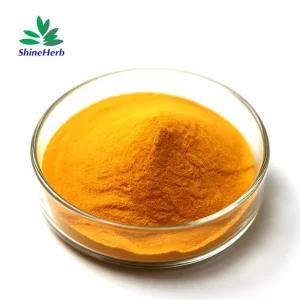
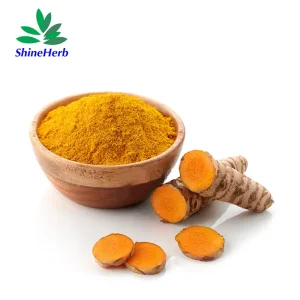
Buy Liposomal Curcumin Powder Natural Curcumin for Supplement Factories, Factory
Product Specifications
Wholesale USP Grade Calcium L-5-Methyltetrahydrofolate L-5-MTHF for Dietary Supplements Suppliers, Companies
Product Specifications