
High-Purity Active Ingredients & Intermediates
Explore our export-certified monograph compounds, produced under ISO 9001, cGMP, and FSSC standards with comprehensive batch traceability.
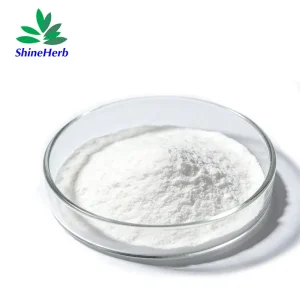
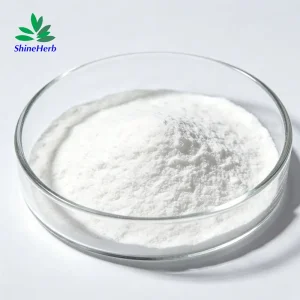
Shikimic Acid Bulk: The Strategic Chiral Hub of Industrial Chemistry
A rigorous industrial perspective on (3R,4S,5R)-3,4,5-trihydroxycyclohex-1-enecarboxylic acid: market dynamics, biosynthesis scalability, and Chinese manufacturing advantages.
Shikimic acid (CAS Registry Number: 138-59-0; Molecular Formula: C7H10O5; Molecular Weight: 174.15 g/mol) represents an invaluable cycloalkene metabolite situated at the pivotal nexus of the shikimate biochemical pathway. Historically revered as the indispensable starting material for the multi-step chemical synthesis of the neuraminidase inhibitor Oseltamivir phosphate (Tamiflu®), bulk shikimic acid has transitioned from an emergency antiviral precursor to a foundational biochemical commodity spanning cosmetic epigenetics, agricultural biochemistry, and chiral pharmaceutical synthesis.
Information Gain Note for Procurement Directors: Unlike generic commodity chemicals, shikimic acid contains three distinct, contiguous chiral centers on a cyclohexene ring. Chemical total synthesis remains economically non-viable for commercial supply due to unacceptable enantiomeric yields and high catalyst expenditures. Consequently, world manufacturing relies entirely on Chinese industrial extraction from Illicium verum (Chinese Star Anise) complemented by next-generation engineered microbial bioprocesses.
1. Global Commercial Status & Market Demand Volatility
The worldwide demand architecture for shikimic acid operates under distinct market pressures. Driven by recurrent pandemic surveillance alerts (such as avian influenza strains H5N1, H7N9, and mutated seasonal orthomyxoviruses), sovereign national stockpiles routinely mandate strategic procurement reserves of Oseltamivir. Bulk shikimic acid suppliers in China form the backbone of these governmental stockpiling programs.
Simultaneously, a structural market diversification is underway. The European and North American cosmetic sector is rapidly pivoting away from aggressive alpha-hydroxy acids (glycolic and lactic acids) toward gentler, bioactive polyhydroxy-type hydroxy-acids. Shikimic acid has emerged as the premier non-irritating exfoliating active, exhibiting potent Propionibacterium acnes lipolytic inhibitory properties and non-inflammatory skin-lightening efficacy. With cosmetic-grade demand expanding at a CAGR of 11.4%, global chemical purchasers require transparent, resilient supply lines insulated from localized harvest failures.
2. China's Factory Efficiency: The Dual Extraction & Fermentation Dominance
China commands over 85% to 90% of the world's natural star anise harvests, heavily clustered within the mountainous terroir of the Guangxi Zhuang Autonomous Region and Yunnan Province. Chinese extraction plants have evolved through three distinct technological paradigms:
- Phase I (Traditional Hydrothermal Maceration): Low yield (<3.5%), high energy expenditure, and substantial residual organic impurities requiring costly downstream crystallization.
- Phase II (Supercritical Fluid & Countercurrent Solid-Liquid Extraction): Utilizing precise temperature-pressure gradients to separate essential anise oils (trans-anethole) concurrently while preserving raw shikimic acid integrity at extract yields reaching 7.5%–9.0%.
- Phase III (Current Hybrid Architecture): State-of-the-art continuous countercurrent automated extractors linked directly to polymeric macroporous adsorption resin columns, enzymatic clarification, and membrane nanofiltration.
Furthermore, leading Chinese manufacturers, including Shaanxi-based industrial centers, have deployed metabolically engineered Escherichia coli and Corynebacterium glutamicum fermentation bioreactors. By inactivating shikimate kinase I and II (encoded by aroL and aroK genes) and overexpressing transketolase (tktA) alongside feedback-resistant 3-deoxy-D-arabino-heptulosonate-7-phosphate (DAHP) synthases, Chinese plants now buffer against natural botanical yield variations, guaranteeing year-round bulk stability at sub-100 mesh granulation.
| Analytical Parameter | USP / Enterprise Standard | Typical Factory Result (HPLC) | Analytical Methodology |
|---|---|---|---|
| Chemical Identity | Conforms to Reference Standard | Positive (Conforms) | 1H-NMR, FT-IR Fingerprinting |
| Assay (Purity on Dry Basis) | ≥ 98.0% or ≥ 99.0% | 99.35% | HPLC-UV (Reverse Phase C18, 215 nm) |
| Specific Optical Rotation [α]D20 | -178.0° to -184.0° | -181.5° | Polarimetry (c = 2.0 in H2O) |
| Melting Point Range | 184.0°C – 188.0°C | 185.5°C – 186.8°C | Automated Capillary Melting System |
| Loss on Drying (LOD) | ≤ 1.0% | 0.32% | Thermogravimetric Analysis (105°C, 3 hrs) |
| Residue on Ignition (Sulfated Ash) | ≤ 0.10% | 0.04% | Muffle Furnace (600°C to constant mass) |
| Heavy Metals (Pb, Cd, As, Hg) | ≤ 10.0 ppm Total | < 1.0 ppm Total | Inductively Coupled Plasma Mass Spec (ICP-MS) |
| Residual Solvents (Ethanol, Methanol) | Meets ICH Q3C Requirements | Undetected / Ethanol < 50 ppm | Headspace Gas Chromatography (GC-FID) |
Cross-Sector Formulations Engineered for Global Quality Standards
From cGMP Active Pharmaceutical Ingredient (API) lines to high-end dermal formulation and green agrochemical synthesis, explore how bulk shikimic acid functions across global industries.
1. API Synthesis & Antiviral Drugs
The quintessential precursor for Oseltamivir Phosphate synthesis. Through protection of hydroxyl groups and nucleophilic ring-opening azide additions, shikimic acid affords the precise chiral stereochemistry required to block viral neuraminidase enzymatic activity.
- Eliminates hazardous synthetic steps required by petrochemical starting materials.
- Conforms to strict ICH Q3A/B organic impurity specifications.
- Enables high-yield synthesis without chiral separation column costs.
2. Clinical Dermocosmetics
Revered in premium dermatological serums as a non-irritating chemical peeling agent. Exhibits comparable keratolytic activity to 50% glycolic acid at just 5% concentration without triggering cutaneous erythema or barrier breakdown.
- Selectively regulates skin microbiome and inhibits Cutibacterium acnes.
- Suppresses tyrosinase activity to target hyperpigmentation and melasma.
- Powerful antioxidant capacity protecting dermal collagen matrices.
3. Biocontrol & Sustainable Agrochemicals
Serves as an eco-benign, biodegradable plant growth regulator and microbial inhibitor. Serves as a biochemical synthon for next-generation agrochemical fungicides and herbicides targeting non-mammalian enzyme cascades.
- Exempt from harsh environmental organophosphate contamination profiles.
- Enhances plant systemic acquired resistance (SAR) against phytopathogens.
- Zero residual ecotoxicity on downstream agricultural soils and water run-offs.
Global Procurement Demands & Industrial Trends (2025–2035)
How international pharmaceutical entities, global contract manufacturers (CDMOs), and cosmetic conglomerates qualify Chinese suppliers in an evolving regulatory climate.
Synthetic Biology Convergence
The transition from pure star anise crop harvesting toward dual-platform manufacturing. Forward-thinking Chinese producers utilize continuous bio-fermentation to establish hard floor prices, decoupling international supply from climatic weather anomalies.
Decarbonized Green Extraction
Implementation of closed-loop ethanol recycling systems reducing volatile organic compound (VOC) release by over 94%. Solar thermal heating arrays and low-energy vacuum membrane concentration now satisfy European CSRD and ESG procurement mandates.
Stringent Chiral Validation
Procurement teams are shifting from legacy UV-Vis spectrophotometry to enantioselective chiral HPLC chromatography. Verifying that the synthetic or botanical route introduces zero optical enantiomer impurities (such as D-shikimic acid deviations) is mandatory for API release.
Full Supply Chain Traceability
Global buyers mandate farm-to-warehouse traceability. Batch-specific GPS crop geotagging in Guangxi alongside full transparency of botanical solvent extraction batches guarantees unadulterated product delivered directly to destination ports.
The 6-Point Technical Audit Checklist for Enterprise Sourcing
Before validating any Chinese factory for long-term supply agreements of bulk shikimic acid, international quality assurance directors should systematically confirm the following analytical documentation:
- Chromatographic Impurity Profile: Quantitative confirmation that no single unidentified related substance exceeds 0.10%, with total impurities strictly limited under 1.00%.
- Residual Solvents Chromatogram: GC headspace verification demonstrating compliance with ICH Option 1 limits, specifically verifying absence of Class 1 carcinogens (benzene, 1,2-dichloroethane).
- Botanical Authenticity Certification: DNA barcoding or HPTLC fingerprinting verifying that starting raw materials originate strictly from authentic Illicium verum Hook. f., avoiding poisonous wild adulterants such as Illicium anisatum (Japanese Star Anise, which carries toxic shikimin).
- Microbiological & Endotoxin Parameters: For buyers synthesizing intermediate injectable formulations, total aerobic microbial count (TAMC) must remain <100 CFU/g with total yeast and mold count (TYMC) <10 CFU/g, free from Escherichia coli and Salmonella.
- Bulk Density & Mesh Consistency: Tailored physical parameters (typically 80-100 mesh for pharmaceutical blending; micronized <20 microns for emulsion and serum integration) with reproducible tap density.
- Regulatory Dossier Support: Active availability of Drug Master Files (DMF), complete Technical Documentation Packs (TDP), Letter of Authorization (LOA), and full regulatory audit access.
Enterprise Buyer Q&A: Technical Clarifications
Comprehensive answers addressing regulatory, chemical, and logistics criteria for commercial importers and R&D chemists.
What is the standard purity difference between botanical extraction and microbial fermentation shikimic acid?
Why is Shikimic Acid preferred over Glycolic Acid or Salicylic Acid in premium skincare formulations?
What packaging standards are implemented for overseas maritime and air transit?
How does China's environmental policy affect bulk shikimic acid supply stability?
Can your facility provide third-party validation reports for customs entry into the EU and US?
What are the minimum order quantities (MOQ) and delivery lead times?
Complementary Raw Materials for Formulation Manufacturers
Integrate your global raw material procurement through our unified, audited production and export pipeline.
Request Bulk Shikimic Acid Quotation & Technical Dossier
Connect directly with our engineering and global export team in the Xi'an Hi-Tech Development Zone. We issue official Certificates of Analysis (COA), safety data sheets (MSDS/SDS), and evaluation samples within 24 hours.