
Precision Functional Food & Fermentation Nutrients
Engineered for clean-label formulation, metabolic enhancement, and high-yield bioprocess supplementation across industrial pharmaceutical and food systems.

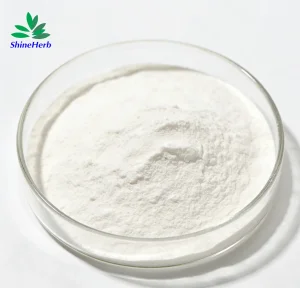
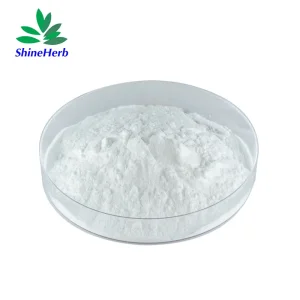
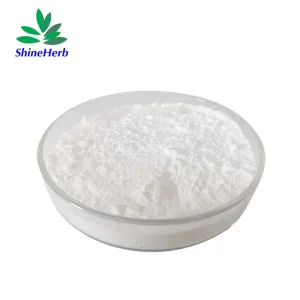
The Paradigm Shift in Latilactobacillus sakei Fermentation Technologies
Exploring genomics, class IIa bacteriocin expression, cold-adapted metabolic pathways, and clean-label bioprotective applications across the global modern food supply chain.
In modern industrial food biotechnology, Latilactobacillus sakei (formerly classified as Lactobacillus sakei prior to the formal 2020 taxonomic reclassification of the genus Lactobacillus) has established itself as the gold-standard lactic acid bacterium (LAB) for commercial bio-preservation and controlled food fermentation. Historically isolated from spontaneous rice-koji fermentations and artisanal dry-cured charcuterie, this facultatively anaerobic, homofermentative, psychrotrophic gram-positive bacterium is uniquely adapted to low-temperature, high-salt, and protein-dense matrices.
As food safety regulations globally tighten under European Food Safety Authority (EFSA QPS) and United States FDA GRAS mandates, industrial processors face unprecedented pressure to eradicate synthetic curing agents (sodium nitrite, potassium nitrate), chemical antimicrobial additives (sorbates, benzoates), and heat-intensive pasteurization regimes that degrade organoleptic and nutritional integrity. Latilactobacillus sakei addresses these systemic challenges through competitive microbial exclusion, superior lactic acid generation, and the endogenous biosynthesized class IIa bacteriocins, primarily Sakacin A and Sakacin P.
Macro Industry Trends Driving Global Adoption
Clean-Label Hurdles & Chemical Elimination
Consumer demand for clean-label charcuterie, fermented vegetables, and chilled seafood is causing a structural shift away from chemical nitrates and artificial preservatives. L. sakei serves as an active metabolic engine, transforming natural nitrates from vegetable extracts into stable cure nitric oxide while inhibiting rancidity through enzymatic redox control.
Targeted Listeria monocytogenes Elimination
Ready-to-eat (RTE) meat, vacuum-packed cold-smoked salmon, and sliced deli goods carry continuous risk of Listeria monocytogenes contamination. L. sakei thrives in refrigerated environments (4°C to 8°C), out-competing psychrotrophic pathogens and penetrating cellular membranes via ribosomally synthesized antilisterial sakacins without souring non-target foods.
Plant-Based Meat Fermentation Matrix
Next-generation vegan charcuterie and non-dairy functional analogs lack natural animal-protein buffering capacity, often suffering from off-flavors caused by volatile aldehydes and hexanal. Selected strains of L. sakei metabolize plant hexoses efficiently, eliminating "beany" off-notes while conferring firm, cohesive textures comparable to traditional cured meats.
Global Sourcing Requirements & Critical Quality Attributes (CQA)
Comprehensive specifications required by quality assurance directors, industrial biotechnologists, and international purchasing consortia.
Potency & Viability Kinetics
Global food manufacturing plants demand minimum starter cultures of 1.0×10¹¹ CFU/g in lyophilized powder. Viability retention during direct-vat inoculation (DVI) guarantees that lag-phase latency is kept below 120 minutes under production ambient temperatures (18°C–24°C).
Cryoprotectant & Allergen-Free Matrix
International buyers strictly avoid milk-derived lactose or whey bases to prevent allergen labeling. Modern sourcing mandates non-GMO maltodextrin, trehalose, and vegetal sodium ascorbate matrices that protect cell walls during ultra-cold lyophilization and multi-year storage.
Genomic Purity & Antimicrobial Resistance
Full-genome sequence profiling (Whole Genome Sequencing / 16S rRNA) confirms the absence of transferable antimicrobial resistance (AMR) genes against vancomycin, ampicillin, and erythromycin, meeting stringent EFSA Feedap/BIOHAZ and FDA requirements.
Cold-Chain Resilience & Vacuum Integrity
Industrial starters must withstand ambient transport spikes without losing activity. Dual-layer aluminum foil hermetic packaging under inert nitrogen flushing guarantees <1.5% moisture and shelf survival at -18°C for 24 months, with minimal viability drop at 4°C.
| Analytical Parameter | Export Quality Specification | Analytical Verification Method | Industrial Importance |
|---|---|---|---|
| Viable Cell Count (Potency) | ≥ 1.0 × 10¹¹ CFU/g (Lyophilized) / ≥ 1.0 × 10¹² CFU/g (Concentrate) | ISO 7889 / IDF 117 Plate Count on MRS Agar | Guarantees rapid dominance over indigenous spoilage microflora in direct-vat meat processing. |
| Bacteriocin Expression (Sakacin P/A) | Positive (Zone of inhibition ≥ 14 mm vs L. monocytogenes) | Agar Well Diffusion Assay / RP-HPLC | Provides bioprotection against foodborne pathogen outgrowth in cold-stored refrigerated meats. |
| Acidification Dynamic (pH Drop) | ΔpH > 1.2 within 18 hrs at 20°C in standard meat broth model | Calibrated Automated Glass Electrode Potentiometry | Enables safe drop below the critical isoelectric threshold (pH 5.3) for rapid protein gelation. |
| Residual Moisture Content | ≤ 2.0% w/w | Karl Fischer Coulometric Titration (USP <921>) | Prevents intracellular ice recrystallization and oxidative membrane degradation over time. |
| Non-Starter Contaminants | Yeasts & Molds < 10 CFU/g; Enterobacteriaceae < 1 CFU/g | ISO 21527-1 / ISO 21528-2 Culture Isolation | Ensures high starter purity, preventing batch failures, blown packaging, or off-flavor generation. |
| Heavy Metals & Toxins | Pb < 0.2 ppm, As < 0.1 ppm, Cd < 0.1 ppm, Hg < 0.05 ppm | ICP-MS (Inductively Coupled Plasma Mass Spectrometry) | Fully compliant with international food safety thresholds (EC 1881/2006 and China GB 2762). |
China Factory 4.0: Biofermentation Scale, Quality Control & Cost Leadership
How deep automation, localized raw material synergies, and cutting-edge continuous deep-freeze engineering position Chinese manufacturers as strategic global biotech partners.
Over the past decade, Chinese biomanufacturing has evolved from bulk ingredient production into a high-tier biopharmaceutical and functional microbial fermentation powerhouse. Driven by state-of-the-art biological infrastructure, Chinese facilities leverage advanced Factory 4.0 automation architectures that fuse automated distributed control systems (DCS), in-line high-density sensor arrays, and multi-stage aseptic submerged fermentation to produce starter cultures with consistent batch-to-batch homogeneity.
Multi-Stage High-Density Fermenters
Our operations deploy 30m³ to 100m³ 316L sanitary stainless steel bioreactors equipped with automated mass-flow controllers for dissolved oxygen, computerized alkali titration, and continuous glucose-fed batch strategies. This infrastructure yields biomass densities exceeding 5.0×10⁹ CFU/mL prior to separation, delivering scale economies without compromising cell vitality.
Continuous Low-Shear Centrifugation
High harvest yields depend on separating fragile microbial membranes without shearing flagella or cell envelope proteins. We utilize German and Swedish continuous disk-stack disc centrifuges operating under closed sterile refrigeration, concentrating biomass ten-fold while keeping cell viability above 98.5%.
Cryogenic Pellet Freezing & Lyophilization
Biomass droplets are flash-frozen in liquid nitrogen at -196°C into micro-spherical beads, followed by continuous vacuum sublimation freeze-drying within Class 100,000 cleanrooms. This avoids crystal puncturing of bacterial envelopes, preserving critical enzymatic systems like nitrate reductase and leucine aminopeptidase.
Supply Chain Agility & Raw Material Security
China's comprehensive biochemical and agricultural upstream sectors provide reliable domestic access to fermentation media essentials, including high-purity pharmaceutical yeast peptones, pharmaceutical glucose, and corn steep solids. By decoupling from volatile cross-border inputs, Chinese production facilities guarantee continuous delivery schedules, stable annual contract pricing, and rapid factory expansion during global supply disruptions.
- Real-Time Traceability & Batch Integrity: Full electronic batch records (EBR) compliant with 21 CFR Part 11 and ISO 22000, tracing seed-bank mother strains through to final vacuum-sealed palletization.
- Integrated Multi-Hub Logistics: Direct integration with temperature-controlled global airfreight out of Shanghai (PVG), Beijing (PEK), and Zhengzhou (CGO), alongside direct -20°C reefer ocean freight corridors reaching Rotterdam, Hamburg, Los Angeles, and Singapore within target transit windows.
- Tailored Blending & Contract Manufacturing (OEM/ODM): In-house micro-blending systems allowing client-specific formulation of L. sakei with complimentary strains (e.g., Staphylococcus carnosus, Staphylococcus xylosus, Pediococcus pentosaceus, and Debaryomyces hansenii).
Global Commercial Landscape: Industrial Sectors Capitalizing on L. sakei
Across European dry-cured meats, North American ready-to-eat products, and Asian fermented foods, Latilactobacillus sakei serves as an essential biofermentative anchor.
Traditional Salami & Charcuterie (EU & Americas)
In Mediterranean slow-fermented salamis (such as Milano, Genoa, and Chorizo) and German Rohwurst, L. sakei dominates due to its salt tolerance (up to 8% NaCl) and ability to ferment at lower temperatures (15°C–20°C). It controls acidification gradually, preserving tenderness, activating muscle cathepsins for flavor complexity, and maintaining casing color.
Industrial Seafood & Smoked Fishery Preservation
Smoked fish and seafood cannot undergo high thermal sterilization without altering texture and appearance. Spraying or dipping fillets with a mild protective solution of L. sakei prevents L. monocytogenes growth and psychrotrophic Pseudomonas spoilage throughout extended cold storage, helping maintain food safety without affecting flavor.
Fermented Vegetables, Kimchi & Sauerkraut
In large-scale commercial Kimchi and pickled brassica processing, indigenous fermentation can lead to batch variability and mushy textures. Inoculating with isolated cold-adapted L. sakei provides uniform lactic fermentation, crisp cell-wall retention, extended shelf stability, and characteristic tang without yeasty off-flavors.
Industrial Inoculation Protocols & Hurdle Technology Guidelines
Detailed dosing guidelines, temperature-pH processing windows, and synergy considerations for production batch managers.
Standard Direct-Vat Inoculation (DVI)
Recommended Dosage: 10 to 25 grams per 100 kg of raw meat or vegetable batter (delivering ~1.0×10⁶ to 5.0×10⁶ viable CFU per gram of finished substrate).
Hydration Protocol: Rehydrate powder in 10x volume of chlorine-free, potable sterile water at 20°C–22°C for 15 minutes before blending into the curing mixture.
Fermentation Environmental Parameters
Temperature Window: Initial warm cycle at 20°C–24°C for 24–48 hours for rapid acidification down to pH 5.0; transition to drying rooms at 12°C–15°C for ripening.
Target pH Targets: Acidification trajectory designed to reach pH < 5.3 within the initial 30 hours to inhibit Staphylococcus aureus enterotoxin production.
Synergistic Multi-Strain Stacking
For accelerated color fixation and cured aroma profiles, pair L. sakei (60% weight ratio) with Staphylococcus carnosus (30%) and Debaryomyces hansenii (10%). The staphylococci generate nitrate reductase to fix nitrosomyoglobin redness, while yeasts consume excess lactic acid to balance acidity.
Frequently Answered Sourcing & Engineering Questions
Clear, technically detailed answers regarding starter microbiology, logistics, customs clearance, and bioprocess performance.
How does Latilactobacillus sakei prevent Listeria monocytogenes in raw meats?
L. sakei uses a two-step mechanism: competitive nutrient exclusion and the synthesis of ribosomally generated class IIa bacteriocins (Sakacin P, Sakacin A). These cationic peptides bind to mannose phosphotransferase system (PTS) receptors on the Listeria outer membrane, creating nanometer-scale pores that cause proton-motive force dissipation, intracellular ATP leakage, and rapid cell lysis, even in cold-storage conditions down to 2°C–4°C.
What is the standard viable shelf life, and what cold-chain conditions are required?
When stored in intact hermetic nitrogen-flushed foil packs at -18°C (deep-freeze), cell viability remains within 95% of initial potency for 24 months. At 4°C, cultures remain stable for 6 months. For air shipments under ambient conditions (<25°C), viability drop is negligible (<0.05 log reduction) within 7–10 days, provided products are placed in sub-zero freezers immediately upon customs receipt.
Can L. sakei replace synthetic sodium nitrite in European-style dry sausages?
While L. sakei itself does not produce nitrate reductase, it is an essential component of clean-label "no-nitrite added" meat systems. When combined with natural celery extracts containing vegetable nitrates and a nitrate-reducing bacterium (such as Staphylococcus carnosus), L. sakei rapidly drops pH to activate color fixation, prevent pathogen growth, and provide a stable cure without adding synthetic sodium nitrite salts.
What regulatory documentation accompanies export shipments from your factory?
Every commercial batch is accompanied by an itemized Certificate of Analysis (COA) specifying viable CFU/g, moisture content, absence of pathogens (Salmonella, Listeria, E. coli), and heavy metal assays. Supplementary compliance files include Non-GMO declarations, TSE/BSE-free statements, Allergen audits, ISO 9001, ISO 22000, FSSC 22000, Halal, and Kosher certifications for seamless import clearance.
What are the distinct advantages of L. sakei over L. plantarum or L. curvatus?
While Lactiplantibacillus plantarum ferments faster at warmer temperatures (>30°C), it can produce harsh, sharp acetic acid notes and risks over-acidifying meat products. L. sakei is psychrotrophic, thriving at 15°C–22°C with self-limiting acidification (plateauing around pH 4.8–5.0), preventing sour batch issues while producing clean aroma notes and effective antilisterial sakacins.
Do you support customized microencapsulation and private-label blends?
Yes. Our Factory 4.0 bio-facility provides custom strain blending, specialized carrier selection (maltodextrin, dextrose, or microcrystalline cellulose), and lipid-core microencapsulation. Microencapsulation delays starter release until specific thermal or shear mixing stages are reached, helping protect cultures during intensive blending or thermal processing.
Complementary Nutrients, Amino Acids & Minerals
High-purity bio-fermentation buffers, chelates, and natural functional compounds designed for high-potency formulations and multi-component nutritional solutions.
Partner With a Proven Chinese Food Starter Exporter
Combining rigorous microbiological engineering, certified cleanroom manufacturing, and dedicated international documentation teams, we help major global food brands innovate clean-label fermented foods safely and efficiently.