Primary Catalog
Featured Industrial Raw Materials & Co-Formulation Actives
Direct manufacturing outputs verified through multi-point assays (HPLC, GC, UV), stabilized for immediate deployment in commercial functional food and supplement pipelines.
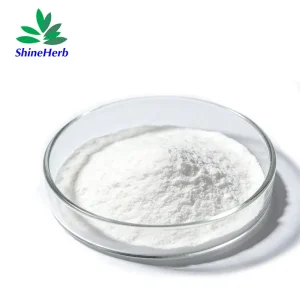
China Food Grade Sodium Caseinate supplier Factories, Factory
Procure Formulation
Wholesale Factory Supply EDTA Calcium Disodium 99% Food Grade Manufacturer, Exporters
Procure Formulation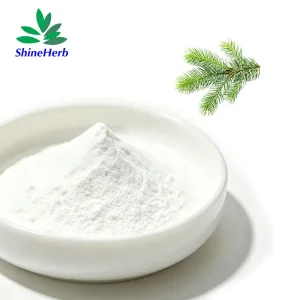
Buy Cephalotaxine 98% Powder CAS 24316-19-6 Manufacturer Manufacturer, Companies
Procure Formulation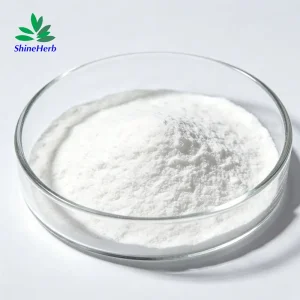
High-Quality Supplements Magnesium Taurate High quality Magnesium Acetyl Taurate Magnesium Manufacturers, Factory
Procure Formulation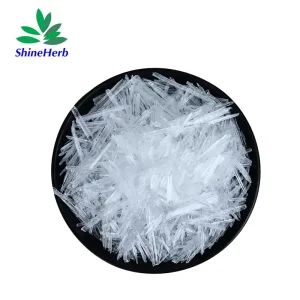
China Wholesale Menthol Crystals 100% Natural High Quality Menthol Crystal Manufacturers, Company
Procure Formulation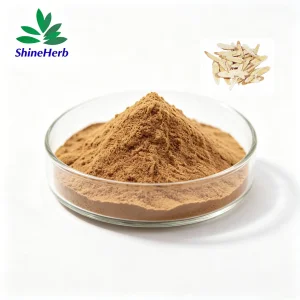
Best Astragaloside IV Powder Astragalus Root Extract Factory supply Manufacturers, Factory
Procure Formulation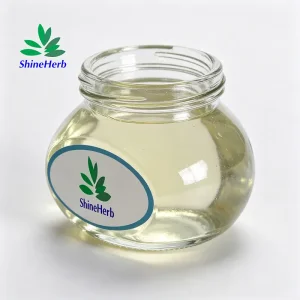
Best Natural Squalane Oil High Stability Cosmetic Raw Material for Skincare Formulas Company, Factory
Procure Formulation
Industry Intelligence
Global Landscape of Lactobacillus fermentum Bulk Active Production
The global probiotics raw material market is experiencing an unprecedented structural shift toward heterofermentative, high-potency lactic acid strains driven by validated metabolic end-points.
Microbiome Market Expansion
Global demand for pure Lactobacillus fermentum bulk powder is projected to reach unprecedented heights by 2030, accelerated by functional food fortifiers, clinical oral biotics, and anti-pathogenic cosmeceuticals. Enterprises are aggressively pivoting from simple yogurt consortia toward isolated, strain-verified biomass.
Metabolite Functional Diversity
Unlike classical homofermenters, L. fermentum operates through complex 6-phosphogluconate pathways to generate bioactive short-chain fatty acids (SCFAs), carbon dioxide, ethanol, and proprietary bacteriocins (fermenticins) capable of inhibiting multidrug-resistant enteric pathogens.
Shelf-Life Stabilization Demands
Traditional freeze-drying typically forfeits up to 70% cell viability during real-time logistics. Modern pharmaceutical procurement entities require microencapsulated formulations guaranteeing cell membrane integrity across wide thermal fluctuations and humidity gradients.
500B+
CFU/g Biomass Potency
≤0.2 aw
Ultra-Low Water Activity
150,000L
Bioreactor Capacity
100%
Genotypic Identity Match
Infrastructure & Scalability
China Factory Manufacturing Efficiencies & Technical Superiority
Operating at the intersection of automated high-density fermentation and stringent multi-stage crystallization, our factory facility addresses systemic vulnerabilities in batch predictability and unit economics.
Continuous Centrifugation
Utilizing cold-chain tubular disc separators operating at ultra-high G-force to isolate intact live cells without inducing thermal shear stress or bacterial wall rupture.
Cryoprotective Embedding
Patented lipid-protein micro-matrix shields bacterial enzymes and ribosomal structures against phase transitions during deep -50°C lyophilization runs.
Integrated Supply Scale
Direct access to domestic high-purity carbon and nitrogen fermentation feedstocks reduces production cycles by 40% compared to Western contract manufacturers.
Pharma-Grade Traceability
Every lot is accompanied by 16S rRNA gene sequencing data confirming strain authentication, complete absence of plasmid-borne antibiotic resistance genes, and zero cross-contaminants.
Release Parameters
Industrial Specifications: L. fermentum Lyophilized Powder
Documented quality gates verified via international compendial methods (USP, FCC, Ph. Eur.) supporting seamless regulatory submissions and customer audits.
| Analytical Parameter | Technical Criterion | Test Standard / Methodology | Compliance Significance |
|---|---|---|---|
| Viable Cell Count | ≥ 1.0 × 10¹¹ to 5.0 × 10¹¹ CFU/g | ISO 7889 / IDF 117 Plate Count | Guarantees industrial punch formulation viability |
| Loss on Drying (LOD) | ≤ 4.0% w/w | USP ⟨731⟩ Vacuum Desiccation | Inhibits metabolic activation inside bulk drums |
| Water Activity (aw) | ≤ 0.20 aw | Chilled Mirror Dew Point Sensor | Critical metric preventing room-temp cell degradation |
| Heavy Metals (Pb, As, Cd, Hg) | < 0.1 ppm individual limits | ICP-MS (Inductively Coupled Plasma) | Conforms to strict EU Regulation (EU) 2023/915 |
| Enteric Pathogens (Salmonella, E. coli) | Negative / 25g | BAM Chapter 4 & 5 Standard PCR | Absolute cGMP safety threshold for infant formulas |
| Particle Morphology & Mesh Size | 100% passes 80 mesh sieve | Laser Diffraction (Malvern Mastersizer) | Ensures homogeneous dispersion in dry powders |
Functional Verticals
Targeted Industrial Sectors & Formulation Applications
Engineered to retain cellular viability and metabolite stability across complex matrix conditions, our bulk strain integrates seamlessly into four high-margin commercial sectors.
Targeted Dietary Capsules
High compaction resistance allows direct encapsulation without cell destruction. Formulated for women's vaginal microflora restoration and upper gastrointestinal immune signaling.
Cosmeceuticals & Postbiotics
Cell-free lysates of Lactobacillus fermentum suppress cutaneous matrix metalloproteinases, delivering clinically proven soothing, anti-aging, and skin microbiome balance.
Functional Dairy & Beverages
Thermal-resistant freeze-dried strains engineered to withstand rapid rehydration kinetics, imparting distinctive aromatic notes while maintaining aggressive acidification profiles.
Infant Nutrition Ingredients
Manufactured under pharmaceutical allergen-free conditions, specifically non-GMO and bovine-free, supporting early-life immune maturation via innate TLR interaction.
Procurement Dynamics
B2B Sourcing Demands & Emerging Bioprocess Trends
How leading corporate purchasing directors and contract development manufacturing organizations (CDMOs) de-risk their raw material supply chains.
Single-Supplier Consolidation
Enterprises now favor integrated manufacturing hubs capable of supplying diverse portfolio matrices—blending probiotics, botanical active carriers, and enzyme co-factors under a harmonized regulatory audit trail.
Regulatory File Readiness
Global brands require transparent regulatory dossiers, including full genomic safety dossiers, EFSA QPS alignment, US FDA GRAS notices, and uncompromised Non-GMO Project verification proofs.
Logistics Risk Mitigation
Multi-barrier nitrogen-flushed aluminum packaging combined with continuous internal temp-data loggers prevents latent cell attrition during intercontinental maritime and air transit.
Verification & Due Diligence
Industrial Sourcing & Technical Questions (FAQ)
Clear engineering clarifications addressing manufacturing conditions, regulatory dossier releases, stability validation, and custom formulation options.
What analytical verification methods are used to determine viable cell potency in each batch?
Every commercial batch is enumerated using ISO 7889 / IDF 117 plate count standards using modified de Man, Rogosa, and Sharpe (MRS) agar under anaerobic incubation at 37°C for 48 to 72 hours. Furthermore, live-versus-dead membrane integrity is verified via flow cytometry (SYTO 9 / Propidium Iodide fluorescent dual-staining) to guarantee that non-viable cell remnants are excluded from total CFU potency reporting on the batch COA.
How does the factory guarantee cell survival during maritime export transport without continuous refrigeration?
Our deep microencapsulation process uses plant-derived phospholipids and maltodextrin/trehalose matrices that vitrify cell water, achieving ultra-low water activity (≤0.2 aw). Bulk powders are sealed in four-ply hermetic aluminum foil laminate bags under vacuum-nitrogen purge, shielding active cell structures from atmospheric moisture and oxygen, allowing 24-month stability at ambient conditions (≤25°C).
Can our product development team request custom strain potencies or carrier blends?
Yes. While our standard industrial production outputs pure biomass standardized at 100B, 200B, and 500B CFU/g, we regularly tailor customer formulations using organic inulin, resistant dextrin, maltodextrin, or microcrystalline cellulose (MCC). We also formulate multi-strain premixes integrating Lactobacillus, Bifidobacterium, and Streptococcus strains directly at our Xi'an facility.
What quality assurance documentation accompanies an enterprise trial shipment?
Each delivery includes a lot-specific Certificate of Analysis (COA) specifying viable count, moisture, water activity, heavy metals (ICP-MS), and pathogen screens. In addition, we supply Strain Deposition Certificates, 16S rRNA gene identification profiles, Allergen Disclosures, non-animal origin confirmations, and Kosher/Halal certification copies.
What is the standard production lead time and Minimum Order Quantity (MOQ)?
Standard catalog potencies maintain continuous revolving factory stock with typical dispatch within 3 to 5 business days. Custom fermentation runs, proprietary carrier blends, or OEM private labeling have an average production timeline of 14 working days, with a commercial MOQ of 1 kg for trial batches and 25 kg for standard production drum volumes.
Complete Sourcing Selection
Bulk Pharmaceutical Intermediates & Specialty Nutrients
Explore our complementary functional portfolio engineered to consolidate complex supply chains under one certified export infrastructure.
Wholesale L-Arginine Powder Supplier High Purity Amino Acid for Health Supplements Manufacturers, Exporters
Procure Formulation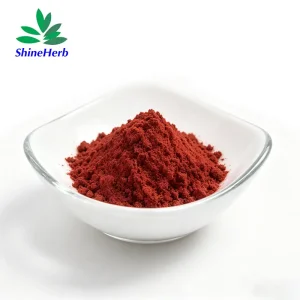
China Wholesale Chromium picolinate Nutritional Supplements Suppliers, Supplier
Procure Formulation
Wholesale High EPA DHA Omega Fish Oil Microcapsule Powder Wholesale Company, Exporter
Procure Formulation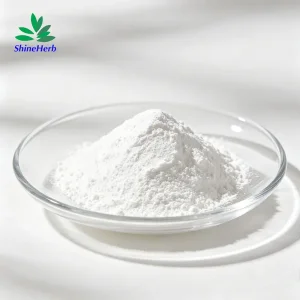
Best Bulk Polydeoxyribonucleotide PDRN 99% Cosmetics Grade Suppliers, Exporter
Procure Formulation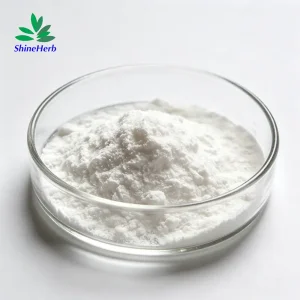
Buy Vitamin B7 high purity biotin Bulk supply Exporters, Factories
Procure Formulation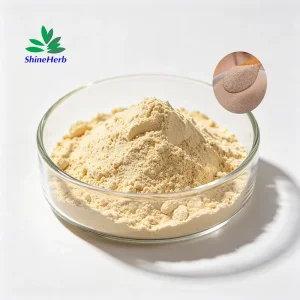
Best Shineherb biotech Supply Yeast Beta Glucan Natural Food Additive Supplier, Company
Procure Formulation
Best Magnesium L-Threonate Supplement Boost Memory Focus & Deep Sleep Manufacturers, Suppliers
Procure Formulation