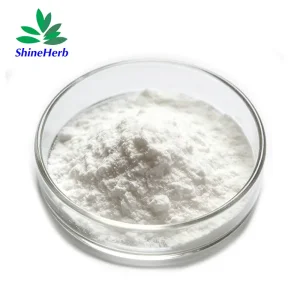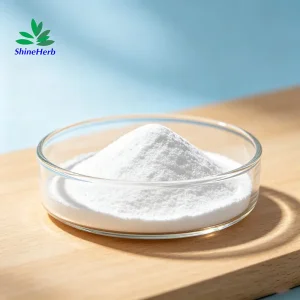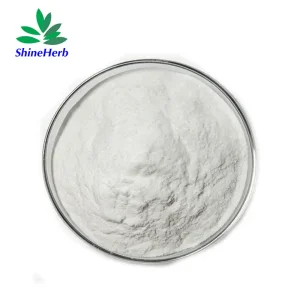
Featured High-Purity Bio-Actives & Peptide Formulations
Directly sourced pharmaceutical, nutraceutical, and cosmaceutical grade actives verified through standardized HPLC assays and certified analytical monographs.
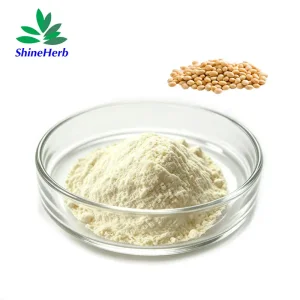
Hirudin: The Gold Standard Direct Thrombin Inhibitor (DTI)
A comprehensive molecular analysis of naturally extracted versus recombinant polypeptide hirudin, detailing structural bio-affinity, non-immunogenic profiles, and global market evolution.
Bivalent Thrombin Binding Mechanism
Unlike heparin and low-molecular-weight heparins (LMWH) which require Antithrombin III (AT-III) as an obligate cofactor, hirudin operates via an autonomous, non-enzymatic stoichometric mechanism. The N-terminal domain of hirudin binds irreversibly to the apolar active catalytic pocket of thrombin (α-thrombin), while its highly acidic C-terminal tail wraps around the fibrinogen-recognition exosite I. This dual conformation effectively arrests both free circulatory thrombin and clot-bound thrombin without triggering paradoxical platelet activation.
Natural vs. Recombinant (r-Hirudin)
Natural hirudin extracted from medical leeches (Hirudo medicinalis or Hirudinaria manillensis) features a sulfate monoester on Tyr63. Recombinant variants generated in yeast expression platforms (Pichia pastoris or Saccharomyces cerevisiae) yield desulfatohirudin. While desulfato derivatives display a modest shift in dissociation equilibrium (Kd ~10-12 M vs 10-14 M), they provide exceptionally uniform batch-to-batch reproducibility, freedom from animal blood-borne viruses, and scalable multi-kilogram yield indispensable for global enterprise procurement.
Overcoming Heparin-Induced Thrombocytopenia
A primary clinical and diagnostic driver for bulk hirudin sourcing is Type II Heparin-Induced Thrombocytopenia (HIT). Heparin regimens frequently induce platelet factor 4 (PF4) autoantibodies, precipitating catastrophic thrombotic cascades. Hirudin displays zero immunological cross-reactivity with PF4 antibodies. Consequently, it represents the primary reference molecule in specialized hematology test panels, hemodialysis circuits, and diagnostic in-vitro reagent manufacturing globally.
China Factory Efficiency & Bioreactor Ecosystem
Why Chinese biotechnology manufacturers dominate the global supply landscape: high-density microbial fermentation, automated downstream chromatography, and integrated compliance.
High-Density Fed-Batch Fermentation
Leading manufacturers in Xi'an and adjacent industrial clusters employ automated 10,000L to 50,000L computerized bioreactors. Through real-time methanol-feed control, dissolved oxygen (DO) cascading, and temperature profiling, biomass densities in Pichia pastoris strains routinely exceed 120 g/L dry cell weight. This engineering precision elevates volumetric yield to multi-gram per liter levels, driving bulk pricing down by 45–60% compared to legacy Western facilities without sacrificing stereochemical integrity.
Multi-Stage Downstream Purification
Downstream Processing (DSP) determines hirudin biological viability. Chinese bio-refineries utilize three-stage orthogonal purification cascades: cross-flow ultrafiltration (tangential flow filtration, TFF), expanded bed adsorption, and preparatory high-pressure reverse-phase chromatography (RP-HPLC). This eliminates host cell DNA (≤ 10 pg/dose) and host cell proteins (HCP ≤ 5 ppm), assuring an exceptional specific activity benchmark reaching ≥ 1,800 to 2,200 ATU/mg in pharma-pure lots.
Raw Leech Farming & Ecological Reserves
For specialized clients specifying natural leech extract over recombinant peptides, China maintains the world's largest controlled aquaculture bases for Whitmania pigra and Hirudinaria manillensis in Jiangsu, Anhui, and Guangxi. Controlled water chemistry, pathogen-free feeding protocols, and low-temperature enzymatic lyophilization guarantee that natural hirudin powder preserves its native tertiary fold and therapeutic cofactor spectrum.
Purity Benchmarks, Assay Methods & QC Parameters
Procurement teams evaluate suppliers based on verifiable physicochemical standards. Below is the industry comparison matrix across grades supplied by Chinese manufacturing hubs.
| Analytical Parameter | Cosmetic / Topical Grade | Diagnostic / Reagent Grade | Pharma / Recombinant Grade (r-Hirudin) | Primary Assay Method |
|---|---|---|---|---|
| Biological Activity (ATU/g) | 100 – 800 ATU/g | 1,000 – 1,500 ATU/mg | ≥ 1,800 – 2,200 ATU/mg | Chromogenic Substrate S-2238 / Fibrin Clotting |
| Purity (Peptide Content) | ≥ 85.0% (Crude Complex) | ≥ 95.0% | ≥ 99.0% (Single Peak) | RP-HPLC (C18 Column, 214nm detection) |
| Molecular Weight (Da) | Variable (Polypeptide Mix) | 6,963.5 ± 2.0 Da | 6,963.5 Da (± Mass Spec Match) | MALDI-TOF-MS / ESI-MS |
| Bacterial Endotoxins | ≤ 50.0 EU/mg | ≤ 5.0 EU/mg | ≤ 0.25 EU/mg (or < 0.1 EU/dose) | Limulus Amebocyte Lysate (LAL Kinetic) |
| Host Cell Protein (HCP) | Not Regulated | ≤ 50 ppm | ≤ 5 ppm (≤ 10 ng/mg) | ELISA (Platform Specific) |
| Host Cell DNA (HCD) | Not Regulated | ≤ 100 pg/mg | ≤ 10 pg/mg | Quantitative Real-Time PCR (qPCR) |
| Loss on Drying (Moisture) | ≤ 7.0% | ≤ 4.0% | ≤ 3.0% | Karl Fischer / Vacuum Desiccation |
| Heavy Metals (Pb, As, Cd, Hg) | ≤ 10 ppm total | ≤ 5 ppm total | ≤ 1 ppm total (ICP-MS) | Inductively Coupled Plasma Mass Spec |
Antithrombin Unit (ATU) Standard Definition
One Antithrombin Unit (ATU) is biochemically defined as the quantity of hirudin required to neutralize one National Institute of Health (NIH) unit of purified thrombin at 37°C in a buffered aqueous system at pH 7.4. Precision testing relies on cleavage inhibition of the synthetic substrate H-D-Phe-Pip-Arg-pNA (S-2238), monitoring spectrophotometric optical density changes at 405 nm.
Primary Sequence & Disulfide Bond Stability
Hirudin contains 65 amino acids stabilized by three rigid intramolecular disulfide bridges: Cys6-Cys14, Cys16-Cys28, and Cys22-Cys39. These covalent bonds confer exceptional thermodynamic resilience against broad pH fluctuations (stable across pH 2.0 to 9.5) and moderate heat denaturation up to 60°C, facilitating versatile processing in topical formulations and lyophilized formulations.
Localized & Global Application Scenarios
From cutting-edge dermatological clinical cosmeceuticals to diagnostic in-vitro reagent production, bulk hirudin empowers high-performance B2B formulations.
1. Advanced Cosmeceuticals & Scar Remodeling
In high-end aesthetic medicine, hirudin is the active driver in post-operative scar reduction gels, anti-bruising salves, and rosacea care. By degrading microvascular micro-thrombi and promoting local extravasated blood resorption, topical hirudin accelerates epidermal repair, restores cellular perfusion, and mitigates hypertrophic keloid formation without dermal irritation.
2. In-Vitro Diagnostic (IVD) Test Systems
Diagnostic manufacturing labs globally require reliable anticoagulants in blood vacuum tube coatings, specialty coagulation analyzer calibrators, and anti-platelet assay controls. Hirudin preserves native platelet architecture and baseline leukocyte morphological integrity better than EDTA or citrate, rendering it essential in critical hematology research kits.
3. Medical Device Bio-Compatible Coatings
Extracorporeal membrane oxygenation (ECMO) tubing, vascular graft stents, and hemodialysis dialysis membranes suffer from acute surface thrombogenicity. Advanced bio-engineers covalently graft immobilized recombinant hirudin layers onto polyurethane and titanium surfaces, inhibiting contact-activated clotting cascades without inducing systemic bleeding risks.
4. Microcirculatory Cardiovascular Wellness
Within jurisdictions permitting oral bio-active peptides under botanical or dietary enzyme frameworks, standardized hirudin derivatives are incorporated into proprietary vascular wellness formulations. Coupled with enteric enteric micro-encapsulation, it targets micro-circulation integrity, optimal blood viscosity, and venous endothelial health in aging demographics.
Industry Trends & Next-Gen Peptide Engineering
Where the hirudin manufacturing sector is headed over the 2026–2030 horizon: molecular modifications, continuous bio-manufacturing, and green chromatography.
Genetic Strain Optimization via CRISPR-Cas9
Leading R&D centers in China are deploying CRISPR-Cas9 to knock out endogenous protease genes (such as PEP4 and PRB1) in Pichia pastoris. This eliminates target peptide degradation during prolonged fermentation, ensuring that harvested crude hirudin is 98% intact, greatly accelerating downstream yield and reducing secondary truncation fragments.
Site-Directed PEGylation & Half-Life Extension
Unmodified recombinant hirudin possesses a relatively brief intravenous elimination half-life (t1/2 ~60 min). Cutting-edge academic and industrial collaborations are synthesizing site-specific mono-PEGylated hirudin conjugates (PEG-hirudin). By targeting the Lys residue or appending an engineered terminal cysteine, the circulating bio-clearance window is extended over 10-fold without occluding the thrombin active site.
Continuous Countercurrent Chromatography
Transitioning away from single-injection batch HPLC, next-generation Chinese plants are introducing simulated moving bed (SMB) and continuous countercurrent tangential chromatography (CCTC). This continuous purification pipeline decreases organic solvent consumption (acetonitrile/trifluoroacetic acid) by up to 70%, dramatically lowering environmental carbon impact while guaranteeing superior batch homogeneity.
Enterprise Procurement & Vendor Qualification Guide
A structured operational checklist for QA directors, global procurement heads, and regulatory affairs officers sourcing bulk hirudin from Chinese manufacturing hubs.
1. Monograph & COA Verification
Confirm whether the Certificate of Analysis (COA) explicitly states biological activity in ATU/mg or ATU/g via an established chromogenic substrate or thrombin titration methodology. Beware of ambiguous supplier claims quoting "crude extract ratios" (e.g., 10:1) without quantified enzyme inhibition units. Request raw RP-HPLC chromatograms showing resolution of desulfatohirudin and related degradation peaks.
2. Cold-Chain Logistics & Stability
Lyophilized hirudin powder demonstrates long-term stability at -20°C (minimum 36 months) and room temperature resistance during transit (< 30 days under dry nitrogen headspace). Confirm that the exporter uses moisture-barrier multi-layer aluminum vacuum foil pouches, desiccants, and validated thermal packaging with integrated temperature loggers for high-potency diagnostic/pharma grades.
3. Customs Clearance & HS Classification
Hirudin bulk is typically categorized under HS Code 3504.00.90 (Peptones and their derivatives; other protein substances) or HS Code 2938.90.00 depending on national customs rulings. Sourcing partners must supply complete export declarations, Non-CITES declarations (for recombinant variants), TSE/BSE-free statements, and formal Safety Data Sheets (SDS) matching GHS standards.
Frequently Asked Questions by Global Importers
Definitive answers covering assay precision, expression platforms, regulatory filings, formulation pH, and custom OEM processing.
What is the exact distinction between Natural Leech Extract Hirudin and Recombinant Hirudin?
Natural hirudin is extracted directly from the salivary glands or body tissues of dried or frozen medical leeches (such as Hirudo medicinalis or Hirudinaria manillensis). It is a native sulfated peptide (Tyr63 sulfation). However, natural leech yields are small, vulnerable to ecological fluctuations, and typically supply crude or semi-purified powder suited for cosmetics or traditional medicine. Recombinant hirudin (r-Hirudin) is produced via gene cloning in microbial hosts (predominantly Pichia pastoris), expressing high-potency desulfatohirudin (Variant HV1, HV2, or HV3) with >99% chromatographic purity and activity reaching 2,000+ ATU/mg, fulfilling strict pharmaceutical and diagnostic specifications.
How is the biological activity of bulk hirudin measured and certified?
Hirudin potency cannot be determined by dry weight alone; it must be quantified via biological antithrombin assay. The global standard employs chromogenic substrate assays (such as Chromogenix S-2238) or traditional thrombin clotting time titration against an international WHO reference standard. Activity is reported in Antithrombin Units per gram (ATU/g) or per milligram (ATU/mg). ShineHerb Biotech provides lot-traceable COAs documenting the exact enzymatic inhibition curve and calculated specific activity.
What formulation parameters guarantee hirudin stability in cosmetic or topical preparations?
Hirudin is surprisingly resilient due to its three stabilizing internal disulfide bridges. To maintain maximal bio-activity in topical gels, creams, or serums:
• pH Range: Maintain final emulsion pH between 5.0 and 7.2 (avoid strong acids below pH 2.0 or harsh alkalines above pH 9.5).
• Thermal Exposure: Introduce hirudin during the cool-down phase of production (below 45°C).
• Preservative Compatibility: Phenoxyethanol, ethylhexylglycerin, and potassium sorbate display excellent compatibility; avoid strong oxidizing agents and heavy metal catalysts.
What documentation is supplied to support our company's vendor qualification audit?
Every commercial batch is accompanied by:
1. Comprehensive Certificate of Analysis (COA) specifying assay, HPLC purity, residual solvents, heavy metals, and bioburden.
2. Material Safety Data Sheet (MSDS/SDS) compliant with GHS standards.
3. Technical Data Sheet (TDS) detailing solubility, pH curve, and storage guidelines.
4. Recombinant Non-GMO declaration, TSE/BSE-free certificate, and non-animal origin statement (for recombinant grades).
5. ISO9001, HALAL, and KOSHER manufacturing facility certificates.
Can bulk hirudin be custom-packaged or lyophilized to private label specifications?
Yes. In addition to standard export bulk packs (100g, 500g, 1kg, and 5kg double-lined sterile vacuum foil packs), we support specialized B2B contract lyophilization. This includes customized unit-dose sterile glass vials (e.g., 100 ATU to 20,000 ATU per vial with mannitol or trehalose cryoprotectants) optimized for direct diagnostic reconstitution, micro-needling applications, or research reagent kits.
What is the minimum order quantity (MOQ) and standard shipping lead time?
For standard catalog cosmetic-grade hirudin powder, the MOQ is 100 grams. For high-purity recombinant or diagnostic grades, pilot batches are available starting at 10 grams to assist formulation validation and pilot assay calibration. Regular commercial orders ship via temperature-controlled air express (DHL/FedEx/air freight) within 3 to 5 business days of order confirmation.
Complementary Bulk Actives, Amino Acids & Polysaccharides
Expand your formulation synergy with our validated portfolio of pharmacopoeia-compliant active ingredients, dietary intermediates, and bioactive peptides.