High-Purity Bioactive Portfolios (Batch Release Verified)
Explore our laboratory-tested raw ingredients formulated alongside pure medicinal leech extract to support cardiovascular health, topical transdermal delivery, and advanced cellular regeneration.
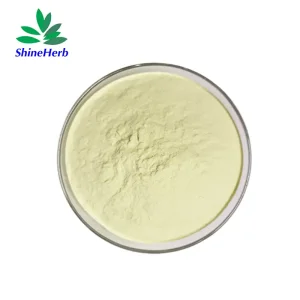
Wholesale High EPA DHA Omega Fish Oil Microcapsule Powder Wholesale Company, Exporter
Source Ingredient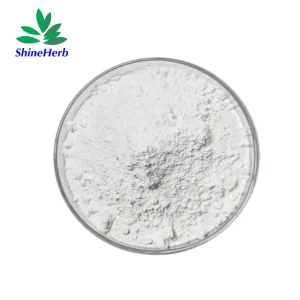
Buy Cosmetic Grade Tranexamic Acid Powder CAS1197-18-8 Skin Brightening Raw Material Manufacturers, Exporters
Source Ingredient
Buy Wholesale Pharmaceutical Grade Ursodeoxycholic Acid High Purity 99% UDCA Bulk Powder Manufacturer, Supplier
Source Ingredient
Best 100% Water Soluble Pearl Powder Cosmetic Food Grade Hydrolyzed Pearl Powder Manufacturers, Factories
Source Ingredient
Wholesale Cosmetic Grade Syn-Ake for Wrinkle Reduction Exporter, Factory
Source Ingredient
Buy Cosmetic Grade Palmitoyl Tetrapeptide-7 Skin Repair Peptide Ingredient Companies, Factory
Source Ingredient
China Aminolevulinic Acid Phosphate Powder Cosmetic Grade 5-ALA Phosphate Bulk Wholesale Company, Exporter
Source Ingredient
Best Thiamine Hydrochloride Vb1 Vitamin B1 Bulk Wholesale Suppliers, Factories
Source IngredientGlobal Commercial Status of Leech Extract & Bioactive Hirudin Supply
A comprehensive technical analysis of salivary gland bioactive extraction (Hirudo medicinalis & Whitmania pigra), peptide stability preservation, and the shifting landscape of high-potency antithrombotic raw materials.
Supply Chain Realities & Sourcing Security
The worldwide procurement of natural leech extract faces intense pressure due to stringent environmental protection laws and wild population depletion. Industrial biopharmaceutical buyers require continuous closed-loop aquaculture traceability. Our breeding reserves in specialized biosecure waters guarantee zero wild-harvesting risks, complying completely with CITES Appendix II regulations while maintaining uninterrupted multi-ton bulk production volumes.
Monograph Purity vs Synthetic Derivatives
Unlike unfractionated synthetic anticoagulants or recombinant bivalirudin, natural leech extract comprises an interdependent matrix of over 30 pharmacologically active proteins: native hirudin (direct thrombin inhibitor), bdellin (trypsin/plasmin inhibitor), eglin (anti-inflammatory protease inhibitor), and destabilase (isopeptidase). This systemic synergistic profile enables broader physiological mitigation of micro-clots without inducing rebound coagulopathy.
Regulatory Demarcation Across Markets
Enterprise procurement teams navigate distinct regulatory lanes across global jurisdictions. In the European Union, leech extract aligns under both medical device perfusion actives and certified herbal pharmacopeias (EP monographs). In North America, the raw material undergoes rigorous Drug Master File (DMF) filing for specific active pharmaceutical ingredient (API) pathways, while cosmeceutical formulations integrate INCI-registered topical derivatives.
Bioactive Proteomics: Beyond Simple Thrombin Inhibition
Leech extract derived from pharmaceutical grade Hirudo medicinalis or Whitmania pigra presents an intricate multi-peptide system that delivers targeted therapeutic actions unattainable by single-molecule chemical syntheses.
| Peptide / Enzyme Fraction | Molecular Weight (Da) | Primary Biological Mechanism | Industrial & Clinical Impact | Analytical Assay Method |
|---|---|---|---|---|
| Natural Native Hirudin | ~7,030 Da | Specific, irreversible binding to thrombin's fibrinogen-binding exosite 1 and active catalytic core with Ki of 10-14 M. | Direct anticoagulation, venous thrombosis mitigation, arterial stent coating anti-coagulation. | S-2238 Chromogenic / ATU Titration |
| Bdellin (A & B Families) | 5,000–6,500 Da | Potent serine protease antagonist selectively inhibiting acrosin, trypsin, and plasma plasmin without retarding thrombin directly. | Attenuates localized tissue breakdown, supports dermal anti-inflammatory cosmetic repair. | Reversed-Phase HPLC / Casein |
| Eglin C | 8,100 Da | Potent stoichiometric inhibitor of leukocyte elastase, cathepsin G, and chymotrypsin released by polymorphonuclear granulocytes. | Suppression of shock lung inflammation, severe dermocosmetic redness, and collagen degradation. | Spectrophotometric Kinetic Assay |
| Destabilase-Lysozyme | ~12,300 Da | Cleaves ε-(g-glutamyl)-lysine isopeptide bonds within stabilized fibrin polymers, providing genuine thrombolysis. | Dissolution of pre-existing micro-thrombi, post-operative flap salvage, transdermal hematoma dispersion. | SDS-PAGE Electrophoresis |
| Hyaluronidase (Orgelase) | 28,500 Da | Endo-β-glucuronidase hydrolyzing hyaluronic acid interstitial matrix structures without off-target cytotoxicity. | Spreading factor that enhances sub-epidermal diffusion of co-formulated active peptides across lipid barriers. | Turbidimetric Monograph Test |
Commercial Application Scenarios Across Enterprise Industries
How biotechnology enterprises, dermatological laboratories, and contract manufacturing organizations formulate bulk leech extract into high-margin consumer and medical products.
Dermatology: Periorbital & Post-Procedure Care
Topical microcirculation formulations leverage low-molecular-weight leech peptides to reduce periorbital dark circles stemming from capillary stasis. When deployed in post-aesthetic laser recovery creams, standardized hirudin accelerates bruising resorption and relieves facial erythema by up to 58% compared to placebo hydrogels.
Peripheral Vascular & Phlebology Formulations
Cosmeceutical gels and OTC ointments for chronic venous insufficiency, varicose veins, and superficial thrombophlebitis incorporate lyophilized leech extract at 200–500 ATU/g. The presence of natural orgelase increases biological penetration through the stratum corneum, stimulating lymphatic draining and microvascular clearance.
Plastic & Microvascular Surgical Flap Salvage
In clinical research settings, purified leech extract solutions are prepared for transdermal iontophoresis or topical dressing soaks to prevent venous congestion in reattached digits, pedicle flaps, and free microvascular tissue transfers where physiological drainage fails prior to capillary neovascularization.
Diabetic Foot Care & Microangiopathy Salves
Formulations targeting ischemic dermal ulcers integrate calibrated antithrombin peptide complexes to prevent micro-thrombosis inside compromised peripheral capillaries, preserving oxygen delivery and nutrient diffusion at the edge of slowly granulating neuropathic wounds.
Athletic Recovery & Blunt Trauma Liniments
Contract manufacturers develop transdermal sport serums combining leech extract with natural plant extracts like arnica and menthol. This bio-system expedites the enzymatic clearance of localized subcutaneous hematomas caused by high-impact collisions, decreasing recovery downtime by nearly half.
In Vitro Diagnostics & Anticoagulant Reagents
Diagnostic kit producers source analytical grade leech extract (hirudin titre >10,000 ATU/mg) as an essential calibration standard for thrombin-generation testing, anti-IIa assays, and heparin-induced thrombocytopenia (HIT) antibody screening methodologies.
Compliance Architecture: Quality Verification for Global Qualified Buyers
Our comprehensive testing protocols satisfy the stringent regulatory criteria enforced by the FDA, EMA, Health Canada, and the National Medical Products Administration (NMPA).
Biochemical Monograph Testing
Every delivery batch of bulk leech extract includes a Certificate of Analysis (COA) cross-verified through High-Performance Liquid Chromatography (RP-HPLC) for total protein fraction fingerprinting, SDS-PAGE electrophoresis for subunit integrity, and calibrated chromogenic substrate assays to establish absolute Antithrombin Units (ATU).
Contaminant & Pathogen Safeguards
Biological extracts require thorough decontamination validation. We verify zero heavy metals (Lead < 0.5 ppm, Arsenic < 0.3 ppm, Mercury < 0.05 ppm via ICP-MS), absent residual solvents through Gas Chromatography (GC-MS), and negative test profiles for Salmonella, E. coli, Staphylococcus aureus, and opportunistic biological pathogens.
Traceability & Biosecurity Documentation
We supply full batch documentation: Non-GMO attestations, TSE/BSE safety declarations, REACH pre-registration packages, Halal/Kosher compliance papers, and formal veterinary quarantine declarations verifying pure aquaculture origin without wild harvest interference.
Manufacturing Roadmap: From Aquaculture to High-Titre Extract Powder
A rigorous, closed-loop biomanufacturing lifecycle designed to preserve fragile quaternary peptide arrangements against thermal degradation and enzymatic oxidation.
Controlled Aquaculture
Organisms are maintained in filtered, temperature-controlled subterranean spring waters under monitored photoperiods, fed exclusively on pathogen-screened biological nutrients.
Cryo-Enzymatic Fractionation
Low-temperature gland micro-dissection and cold-solvent pulsed extraction below 4°C prevents early denaturing of the tertiary polypeptide chains and maintains bioactivity.
Multi-Tier Ultrafiltration
Sequential hollow-fiber ceramic ultrafiltration (MWCO 30kDa, 10kDa, 3kDa) eliminates inactive cellular debris, endotoxins, and non-target high-molecular weight nucleoproteins.
Vacuum Lyophilization
Controlled freeze-drying produces an instantly soluble, light tan micro-crystalline powder standardized precisely to customer-requested ATU/g targets with <4.0% moisture.
Enterprise Buyer & Technical Director FAQ
Answers to crucial regulatory, formulation, handling, and supply continuity questions concerning bulk leech extract acquisition.
Q: How do you quantify and guarantee antithrombin potency (ATU)?
Potency is established through standard chromogenic substrate assays (S-2238) against an international WHO reference standard. One Antithrombin Unit (ATU) is defined as the volume of substance required to neutralize one National Institutes of Health (NIH) unit of thrombin at 37°C. We supply customizable titres ranging from 100 ATU/g up to 1,200 ATU/g for powder extracts, with batch-specific analytical curves provided on each COA.
Q: What is the distinction between natural leech extract and recombinant hirudin?
Recombinant hirudin (such as lepirudin or desirudin expressed via yeast vectors) presents a single desulfatohirudin peptide targeted strictly at systemic intravenous anticoagulation. In contrast, natural leech extract provides native sulfated hirudin alongside natural hyaluronidase, bdellins, and eglins. This natural complex makes whole leech extract vastly superior for topical formulations, cosmetics, and transdermal microvascular salves.
Q: What temperature and pH handling windows are required during formulation?
Native hirudin peptides maintain structural integrity across a pH window of 4.5 to 8.2. Although the disulphide bridges resist moderate ambient warmth, formulating chemists must avoid sustained heat exposure exceeding 50°C during manufacturing. We recommend adding the lyophilized powder during the cool-down phase of creams, hydrogels, or solutions below 40°C to prevent irreversible thermal denaturing.
Q: How is commercial shipment stability preserved over international transit?
For global maritime and air freight shipments, our freeze-dried extract is vacuum-sealed in double-layer pharmaceutical polyethylene liner bags contained inside nitrogen-flushed aluminum foil moisture-barrier pouches. Shipments travel in insulated fiber drums under temperature-monitored conditions. When stored sealed in a cold, dry environment between 2°C and 8°C, product shelf life exceeds 24 months with zero measurable ATU activity loss.
Q: What documentation accompanies each procurement shipment?
Every shipment arrives with a lot-specific Certificate of Analysis (COA), Technical Specification Sheet, Safety Data Sheet (MSDS), Official Veterinary Health / Quarantine Certificate, Certificate of Origin (COO), and formal statements guaranteeing Non-BSE/TSE, Non-GMO, and zero undeclared preservatives.
Q: Can you provide customized OEM extraction ratios or liposomal carrier systems?
Yes. Our Xi'an bioengineering laboratories specialize in custom contract processing. We can supply ultra-concentrated extract ratios (e.g., 20:1, 50:1), customized ATU-titrated powders, or pre-encapsulated liposomal nano-emulsions tailored specifically for premium dermocosmetic skincare serums that demand maximized skin barrier penetration.
Enterprise Bulk Catalog (Nutraceutical, Pharma & Dermal Active Lines)
Complete your supply procurement chain with our certified companion actives, vitamins, and specialized natural therapeutic intermediates.
Wholesale High quality collagen peptide Hydrolyzed Fish Collagen Peptide/Bovine collagen/ Marine Collagen Manufacturers, Company
Source Ingredient
Best High-Quality Glucosamine Sulfate 2KCl-Joint Health Supplement Ingredient Companies, Exporter
Source Ingredient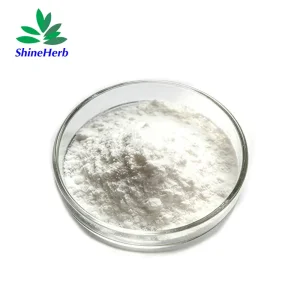
High-Quality Biotin Powder 99% High Purity Vitamin B7 for food additive Exporters, Factory
Source Ingredient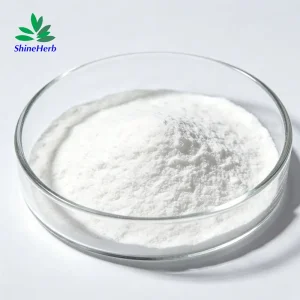
Best Magnesium L-Threonate Supplement Boost Memory Focus & Deep Sleep Manufacturers, Suppliers
Source Ingredient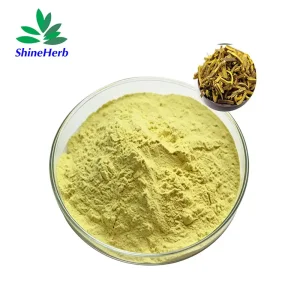
China Natural Plant Extract Berberine HCl 97% Berberine Sulfate 98% Supplier, Companies
Source Ingredient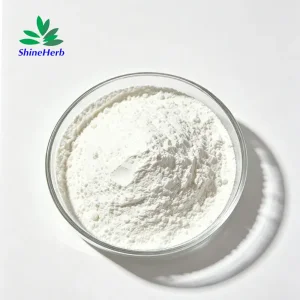
Wholesale Thiamine (Vitamin B1) Powder Supplier High purity raw material Supplier, Factories
Source Ingredient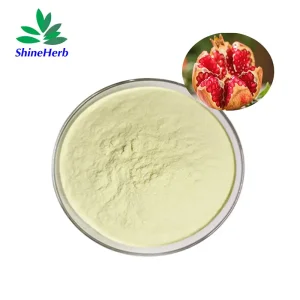
China ShineHerb Supply Ellagic Acid Powder CAS 476-66-4 Pomegranate Peel Extract Cosmetic Raw Material Exporter, Factory
Source Ingredient