Cosmetic Raw Material
Factory-direct ingredients with batch-traceable Certificate of Analysis (COA), HPLC purity assays, and international regulatory readiness.
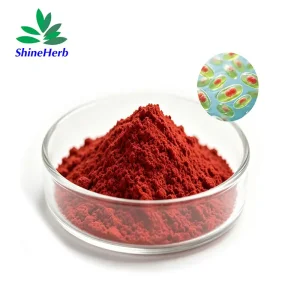
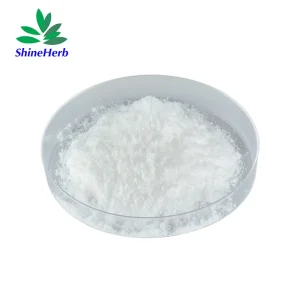
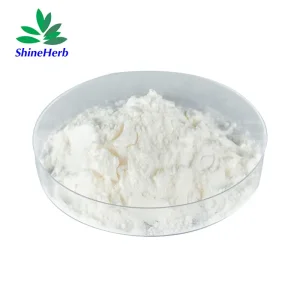
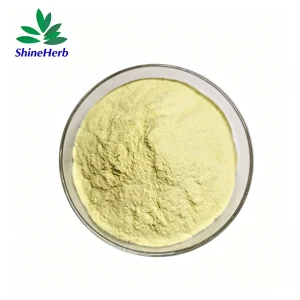
Monascus Red Pigment (Color Index Natural Red, CAS 85536-78-3) is a bio-based natural colorant derived via submerged or solid-state fermentation of Monascus purpureus or Monascus anka on non-GMO rice starch matrices.
The red chromophoric system primarily comprises azaphilone pigments: Rubropunctamine and Monascorubramine. These conjugate readily with food matrix proteins and amino acids, yielding a brilliant red hue (λmax 490–510 nm) characterized by superior protein-binding stability.
Modern Chinese biomanufacturers utilize genome-edited or strictly selected fungal strains devoid of the pksCT gene cluster responsible for citrinin mycotoxin synthesis. Batches undergo HPLC-MS/MS testing guaranteeing citrinin levels below detection limits (<0.04 mg/kg or non-detectable).
Monascus Red exhibits resilient color preservation across broad pH windows (pH 3.0 to 10.0), with thermal tolerance up to 120°C for 60 minutes under typical retort sterilization, outperforming beet red (betanin) and natural anthocyanins in low-acid systems.
| Analytical Parameter | Liquid Monascus Concentrate | Standard Powder (Color Value 1000–1500) | High-Purity Color Value (CV ≥ 2500–4000) | Verification Method |
|---|---|---|---|---|
| Color Value (E 1% 1cm @ 505nm) | 150 – 500 U/g | 1,000 – 1,500 U/g | 2,500 – 4,000+ U/g | UV-Vis Spectrophotometry |
| Citrinin Content | < 0.05 mg/kg | Non-Detectable (< 0.01 mg/kg) | Non-Detectable (< 0.005 mg/kg) | LC-MS/MS Triple Quad |
| Heavy Metals (Pb / As / Hg) | ≤ 1.0 mg/kg | Pb ≤ 0.5 mg/kg, As ≤ 0.3 mg/kg | Ultra-trace ICP-MS Monitored | ICP-MS (USP <232> / <233>) |
| Protein-Affinity Solubility | Rapid Liquid Dispersion | 100% Water Soluble, Cold Stable | 100% Water & 50% Ethanol Soluble | Turbidity Meter / Visual Solution Check |
| Aerobic Plate Count | < 1,000 CFU/mL | < 1,000 CFU/g | < 100 CFU/g (Sterile Grade Available) | FCC / USP <61> Microbial Enumeration |
China accounts for over 85% of worldwide Monascus biopigment manufacturing. Sourcing directly from certified facilities in hubs like Shaanxi, Zhejiang, and Jiangxi provides uncompromised economies of scale and traceability.
Integrating centuries of traditional solid fermentation history with 10,000L to 100,000L automated submerged fermenters, Chinese plants guarantee volume stability across agricultural off-seasons without batch variance.
Access to non-GMO raw Japonica and Indica rice production zones keeps the fermentation media cost-efficient, resilient against grain market volatility, and strictly free from genetic alterations.
Leading exporters provide comprehensive technical dossiers: full HPLC spectrum data, Citrinin GC-MS/MS certificates, HALAL, KOSHER, ISO 9001/22000, and HACCP validation packets for customs clearance.
Direct export pricing eliminates multilayered intermediary markups, offering multinational food processors raw material savings between 20% to 35% compared to synthetic red lake colorants.
Engineered to replace artificial azo dyes (such as Allura Red AC, Red 40, and Carmoisine) with clean-label biofermentation colorants across critical manufacturing verticals.
Forms strong electrostatic bonds with myoglobin and plant proteins (soy, pea, wheat gluten). Ideal for frankfurters, plant-based patties, salami, and cured hams. Resists oxidation-induced discoloration during refrigeration and cook cycles.
Stable in high-salinity and low-pH environments. Extensively utilized in barbecue sauces, sweet chili marinades, red fermented bean curd, soy sauce enhancement, and tomato paste standardization without color drop or precipitation.
Delivers bright scarlet to deep crimson hues in alcoholic RTDs, fruit wines, hard candies, fruit jellies, and cream fillings. Stable against photolytic exposure when combined with standard ascorbic acid UV shields.
Procurement teams across North America, the European Union, Southeast Asia, and Latin America face divergent regulatory criteria for Monascus products.
China, Japan, Korea, and ASEAN regions widely authorize Monascus Red as an established food additive. Compliance centers on ensuring Color Value assays match commercial invoices, microbial limits meet GB standards, and no secondary mycotoxins contaminate the cargo.
In western territories where direct food-color listing undergoes staggered evaluation, Monascus extracts are routinely sourced for nutraceutical formulations, non-food topical cosmetic applications, or specialty dietary ingredients requiring zero-citrinin and zero-monacolin K declarations.
Export packaging features double-layer pharmaceutical polyethylene inner liners inside UV-opaque aluminum foil bags and fiber drums (20kg or 25kg net). Controlled temperature maritime sea reefers and palletized air transport maintain moisture below 7.0%.
Answers to recurring verification inquiries regarding Monascus pigments, shelf longevity, testing regimens, and supply agreements.
Expand your formulation capabilities with our verified cosmetic peptides, botanical pigments, amino acid complexes, and clean-label biopolymers.